Desanitise: A New Zealand Tour

Landscape Starting Image 1676px by 1116px v3
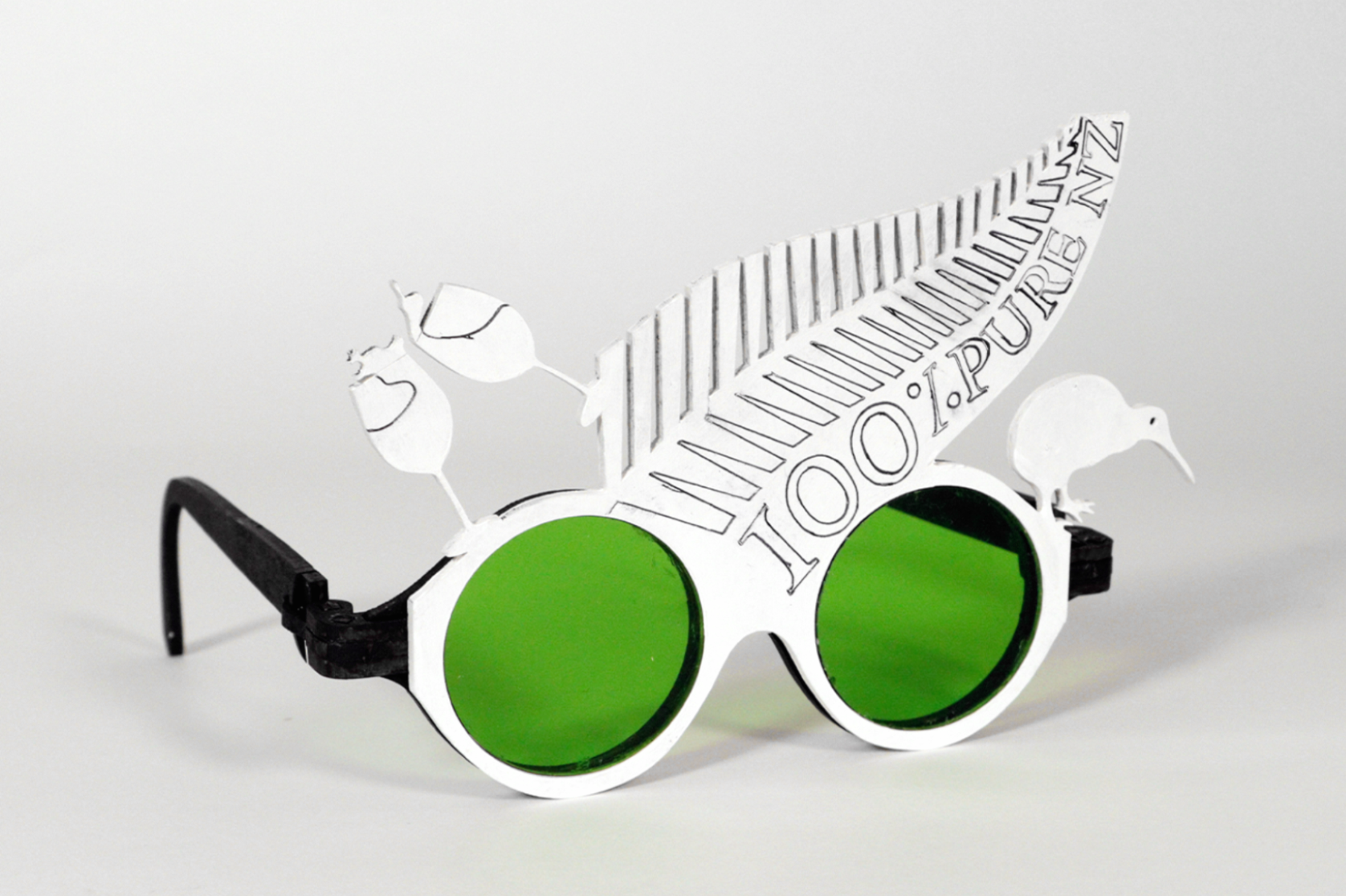
le corbusier glasses with a detachable green-tinted 100% Pure sunglass cover.

Desanitise interrogates the sanitised representations of New Zealand’s national identity in tourism. It asks how architecture can personify and subvert Tourism New Zealand’s ‘100% Pure brand’. 

Lying on the intersection of tourist studies, architecture and national identity, Desanitise reframes New Zealand in the 21st century. To maintain the “clean and green”, “pure New Zealand culture” illusion, the brand manipulates and commodifies architecture and landscape, as a vehicle for social, economic and political ideologies. This thesis fractures New Zealand’s existing narratives on national identity and argues against the construction of a “New Zealand-centred truth.” 

Packaged as a tourist itinerary, the thesis visits 3 tourism sites, bookended by the tourist’s arrival and departure. Each episode deconstructs an existing typology and presents an exaggerated, satirical reading of the current socio-political and environmental decision-making surrounding New Zealand’s future in tourism.

New Zealand’s simplified national branding constitutes a reductive and harmful representation of the nation’s complex cultural and historical identities. While this image is framed as serving the public good, it obscures the country’s contested dialogue between people, power, and landscape. By revealing the hollow ideals of 100% Pure, Desanitise prompts an optimistic stewardship rooted in honesty and responsibility.
Grounding New Zealand to reality, Desanitise reveals a land that is dirty, sullied, and against its white (and green) mythology. Tourism New Zealand’s ‘100% Pure New Zealand’ brand draws on New Zealand’s late discovery as a defining characteristic by conjuring “an image of a relatively undiscovered, untouched land.” In 2005, the brand evolved beyond the imagery of pristine landscapes, promising to be “100% pure about who we are, and how we do things.” Yet, in our obsession with perpetuating the 100% Pure brand, have New Zealanders become complicit in deceiving themselves and the world on the values we claim to cherish and uphold?

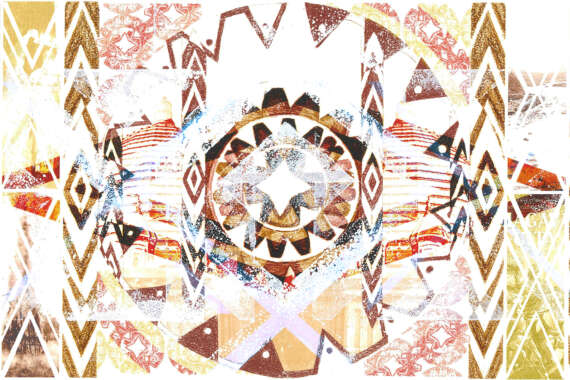
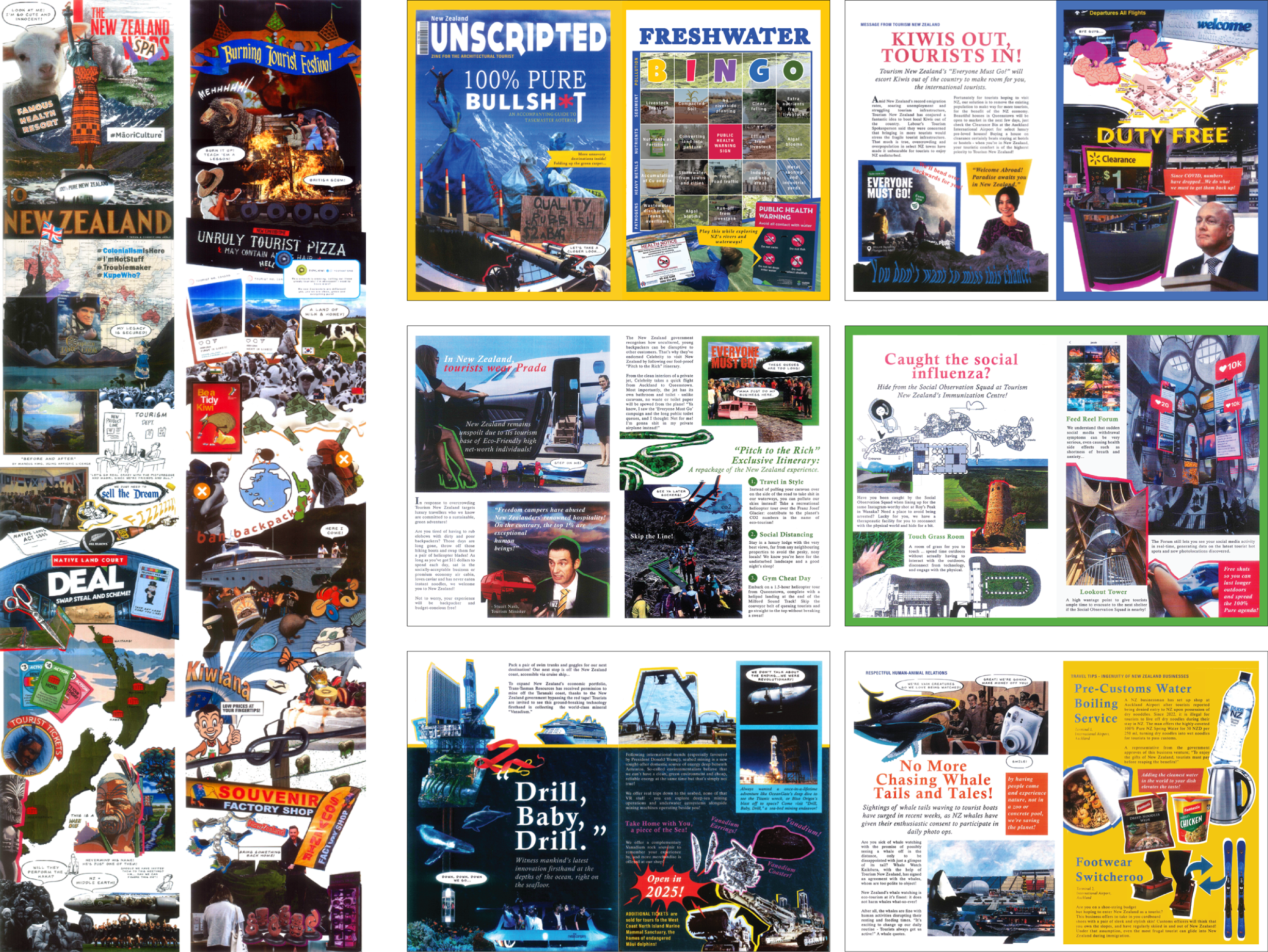
Media and architectural representation were key process drivers. Drawing on Tourism New Zealand’s promotional posters 1920-1960, the “optimistic, stripped-back graphic” focused on promoting New Zealand’s picturesque geographies and exotic indigenous culture. These magazine-like collages led to the author’s own version of the National Geographic: her 100% Pure Bullsh*t analysed the politics of New Zealand tourism, the relationship between tourist and promoter, and translated these complex issues into narrative-driven interventions. 

Please flick through as we prepare for arrival in the mystical land of New Zealand!

 
Combo width of 2460px v2
left: promotional posters collaged with new zealand tourism iconography. right: 100% Pure Bullsh*t spreads.

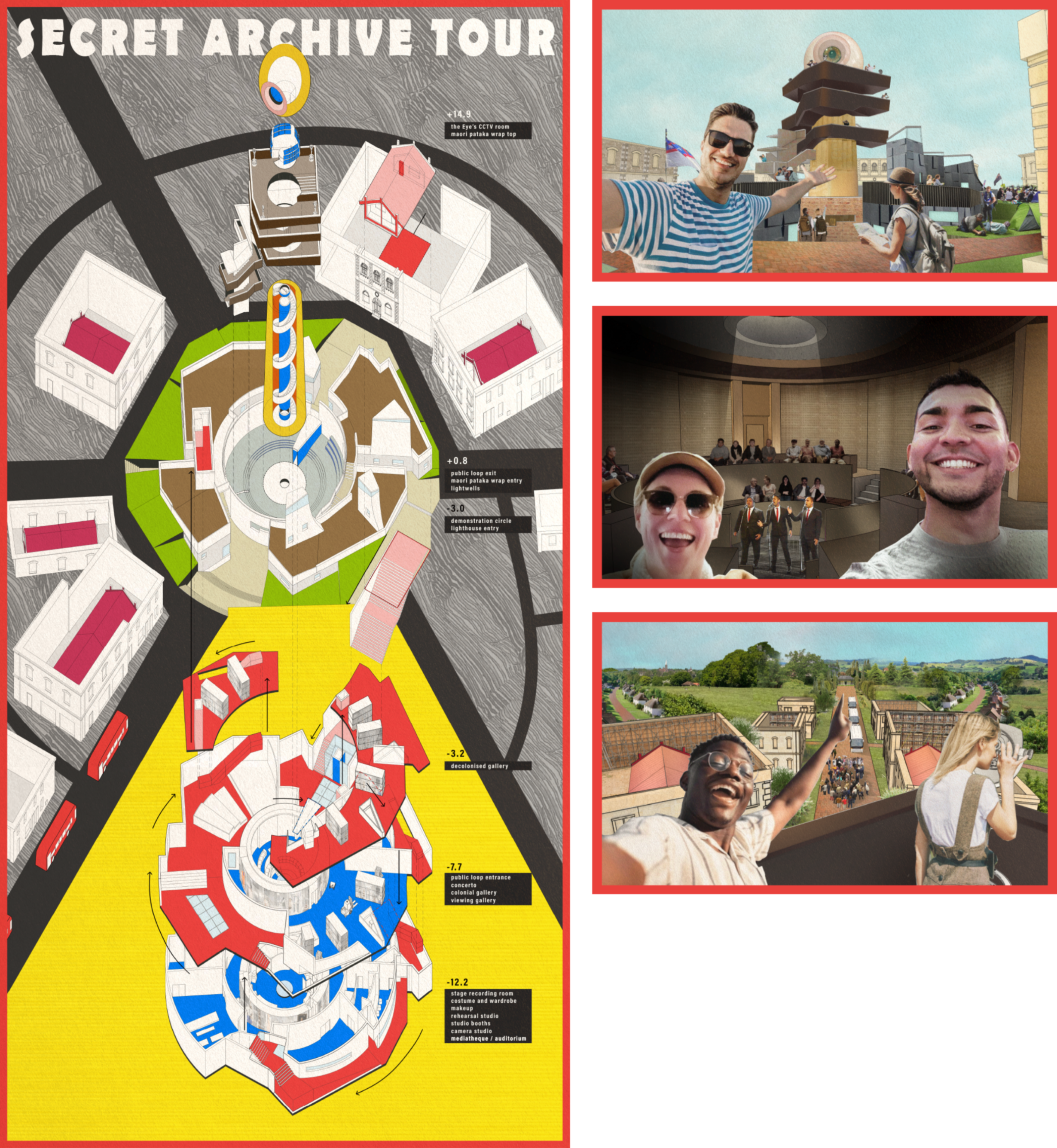
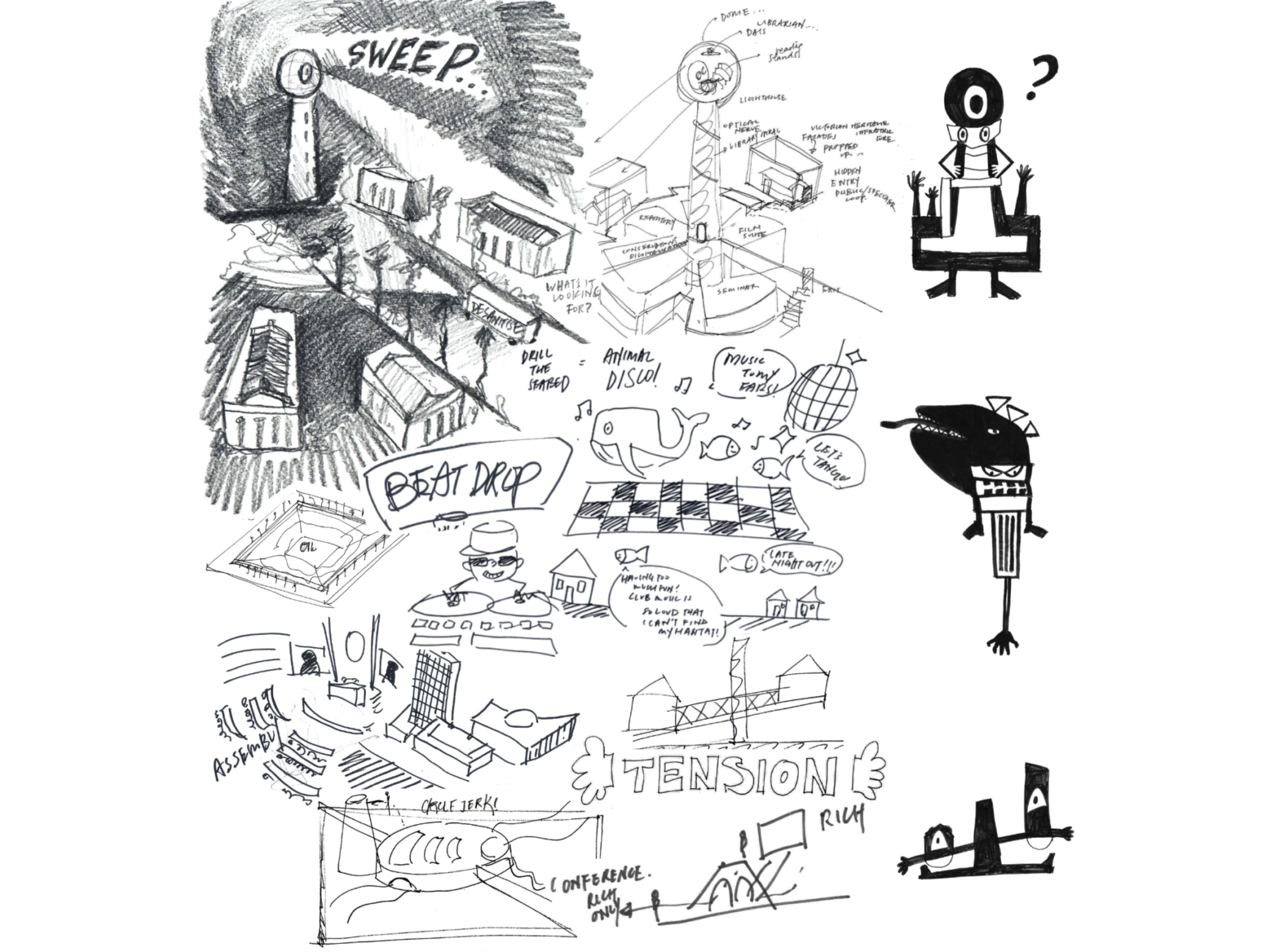
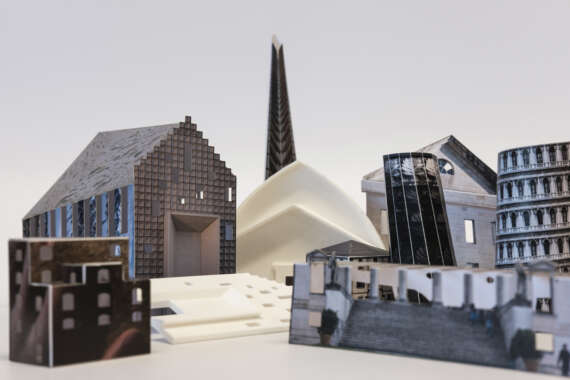
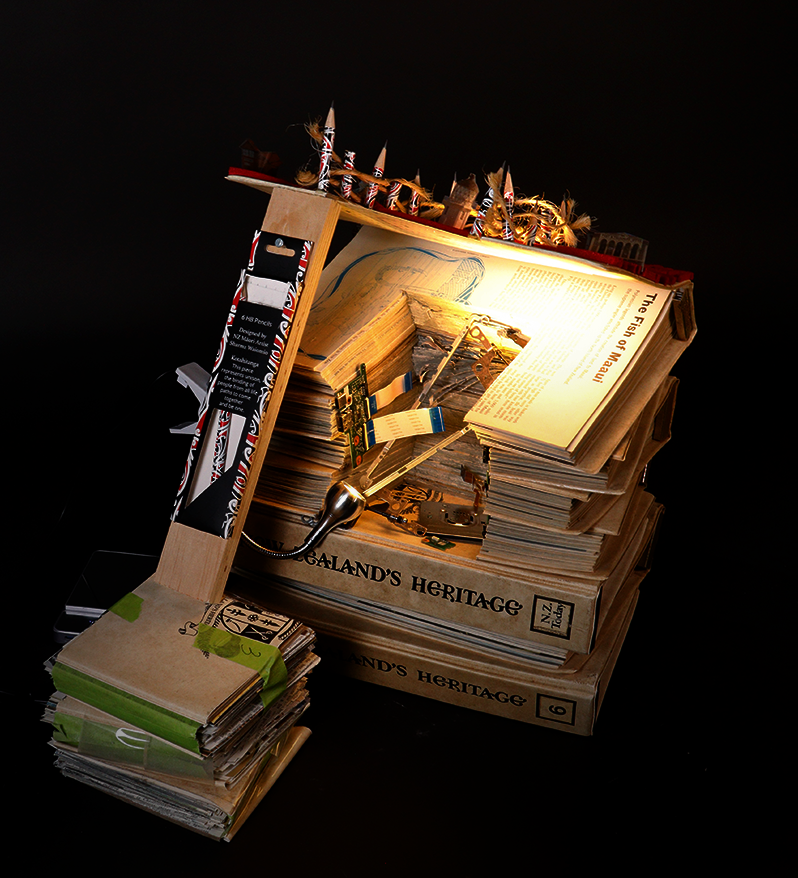
Our first destination, the Sentinel Surveillance Suburbs and Lighthouse in Waitangi, explores the act of decolonising the country and its archive. 185 years after its signing, the Treaty’s meaning and authority are constantly debated in modern politics. Tackling the use of “exotic” Māori culture in tourism marketing, the lighthouse (as a navigational wayfinding aid) is used to dispel New Zealand’s egalitarian myths. Instead of a typical lantern, the Lighthouse has been crowned with an eerie, all-seeing Eye. The small windows around the public space offers glimpses into the Archive below, but the entrance itself must be discovered. The Loop, a winding underground passage, reveals the colonial radio archive being produced in real time. A concert hall shares the softened, romanticised, and “non-threatening” sonic imagining of Māori culture, the sound spreading upwards to unify New Zealand. Climbing the Māori Pātaka Wrap reveals what the Eye sees. 

Waitangi Model width of 798px v3
savagely cutting into a series of New Zealand heritage books. have we decolonised the archive today?
Waitangi big spread width of 2460px v4
the Sentinel Surveillance Suburbs and Lighthouse in Waitangi.

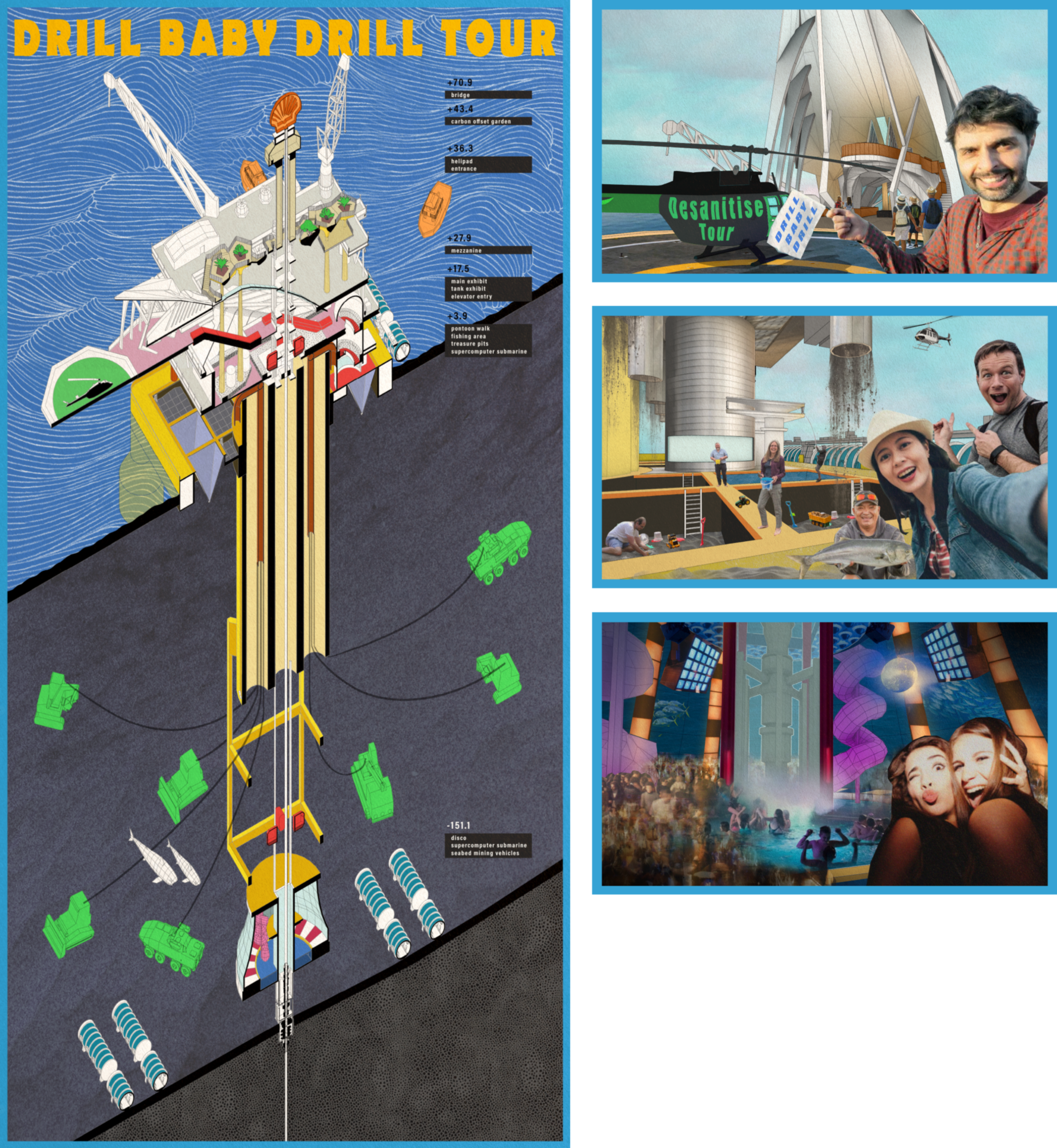
The Whale Rig takes tourists to the latest frontier: Earth's deepest oceans. Using the tools of architecture to criticise New Zealand's insufficient commitment to environmental protection, the Whale Rig investigates architecture's representation as a symbol of progress, innovation and sustainability. Off the South Taranaki Bight, huge sections of ocean are being subdivided by mining exploration permits handed out to transnational companies. By converting the industrial ruins of oil rigs into a tourist destination, the obscure industrial processes of oil, gas and seabed extraction become participatory activities tourists can engage in, bringing these exploitative practices to the forefront. 

Taranaki Model width of 798px
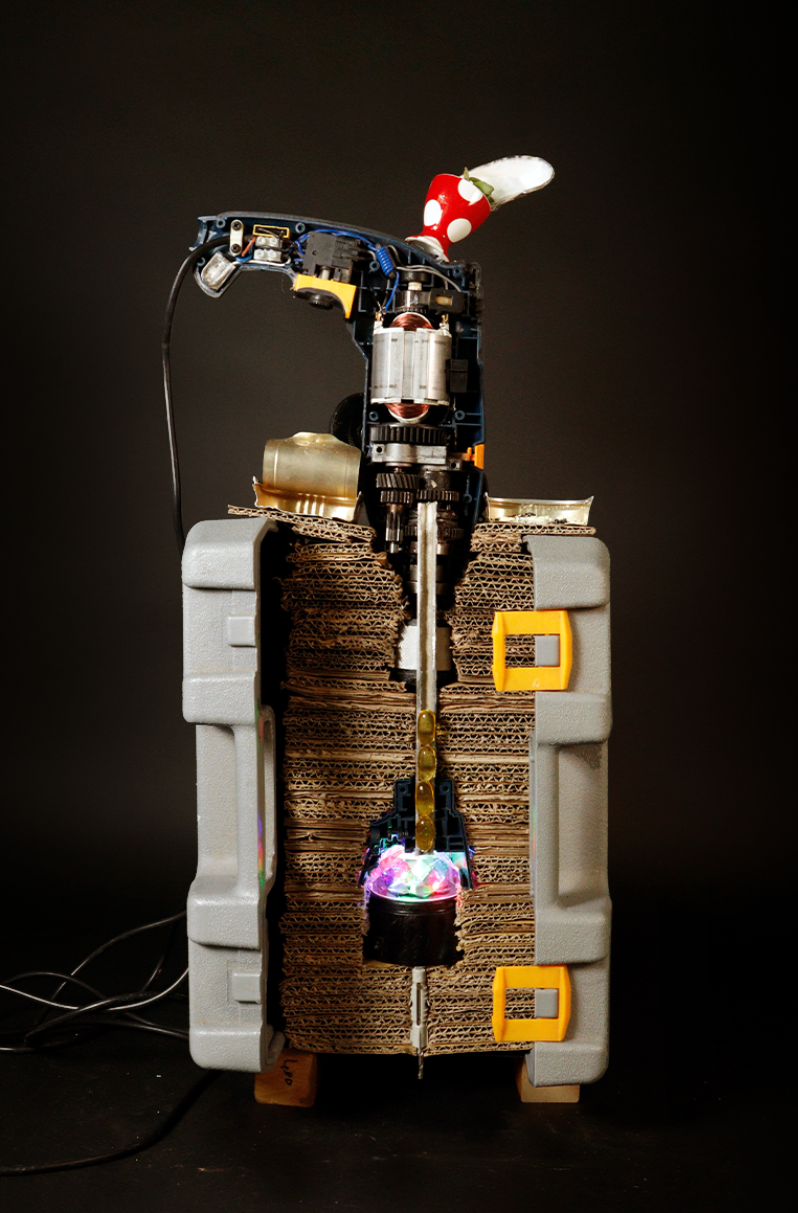
a hand-held drill reveals a complex interiority underneath its plastic cover and sucking nutrients from nature.
Taranaki big spread width of 2460px
the Whale Rig in Taranaki.

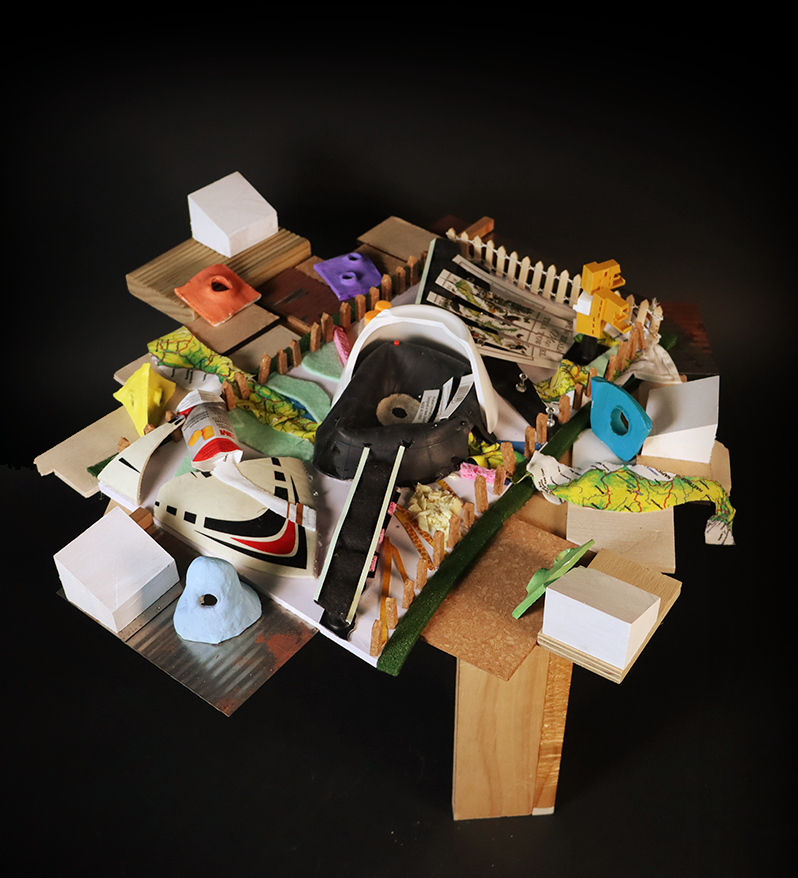
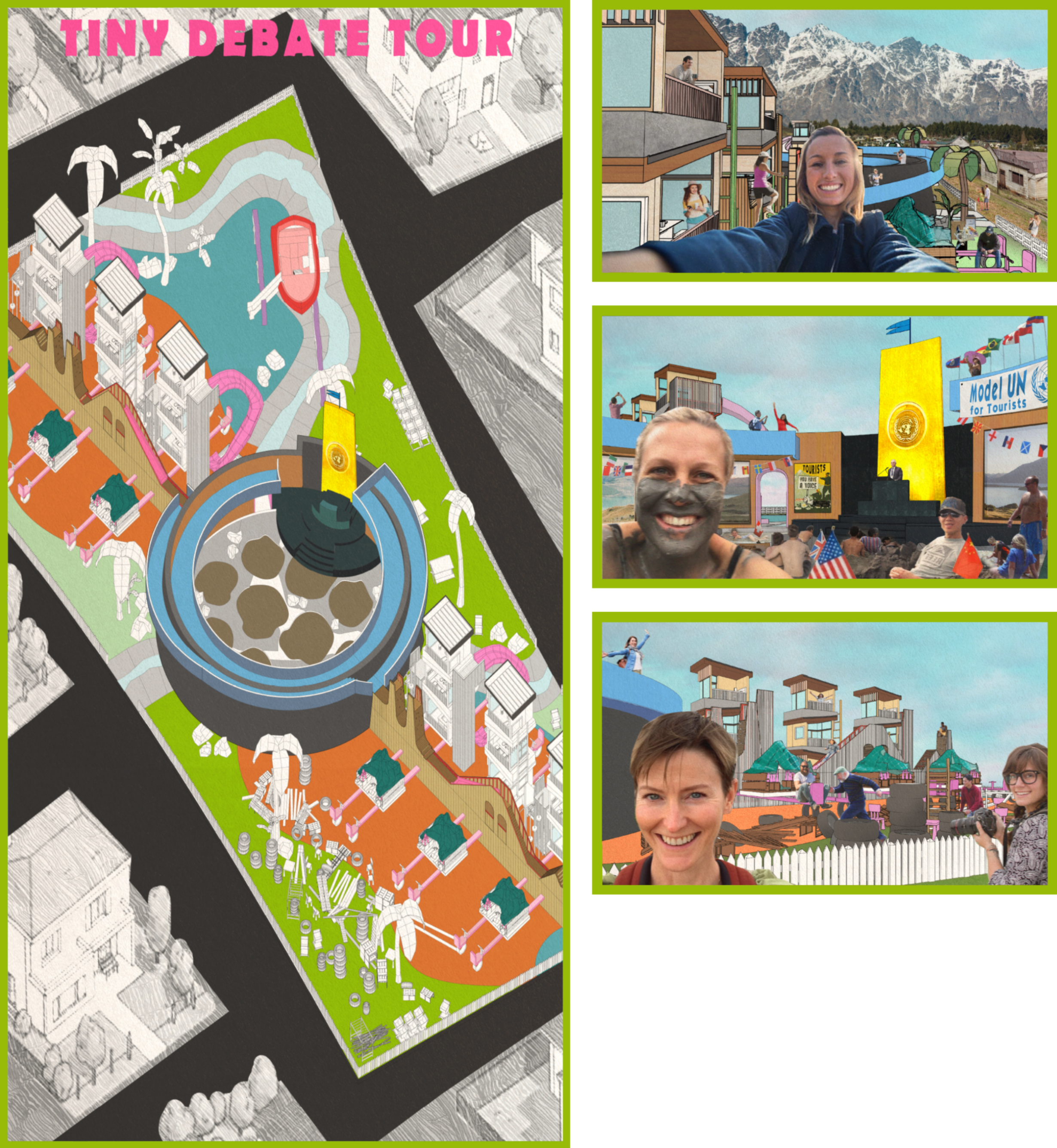
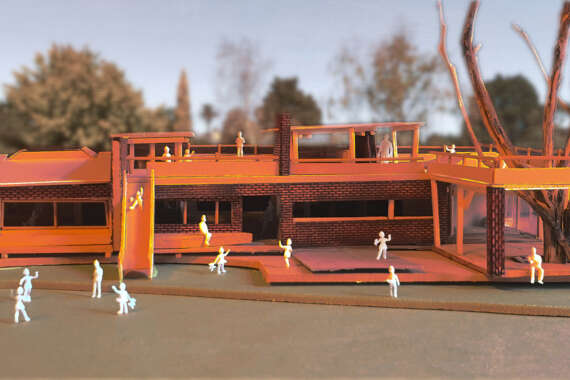
Welcome to Queenstown, New Zealand’s playground for the international tourist elite. At the Model UN playground, shop for an architect-designed Airbnb for the night. A minaturised UN General Assembly becomes a space for tourists to become key decision-makers in charting Queenstown's greater potential for tourism. The traversable Remarkables Wall divides the playground into 2 sides: the luxury elite and the working migrant force. Seesaws allow for play interaction between the 2 groups - supporting 11 tourists on one side, and 1 migrant worker on the other. Attracting global interest, the effects of overtourism in Queenstown spread beyond its “playground” limits. Could what is happening to Queenstown happen to other New Zealand towns if we’re not careful?

Queenstown Model width of 798px v2
butchering domestic items i.e, sponges, ear buds, rugby ball, timber cladding to create an international playground.
Queenstown big spread width of 2460px
the Model UN playground in Queenstown.

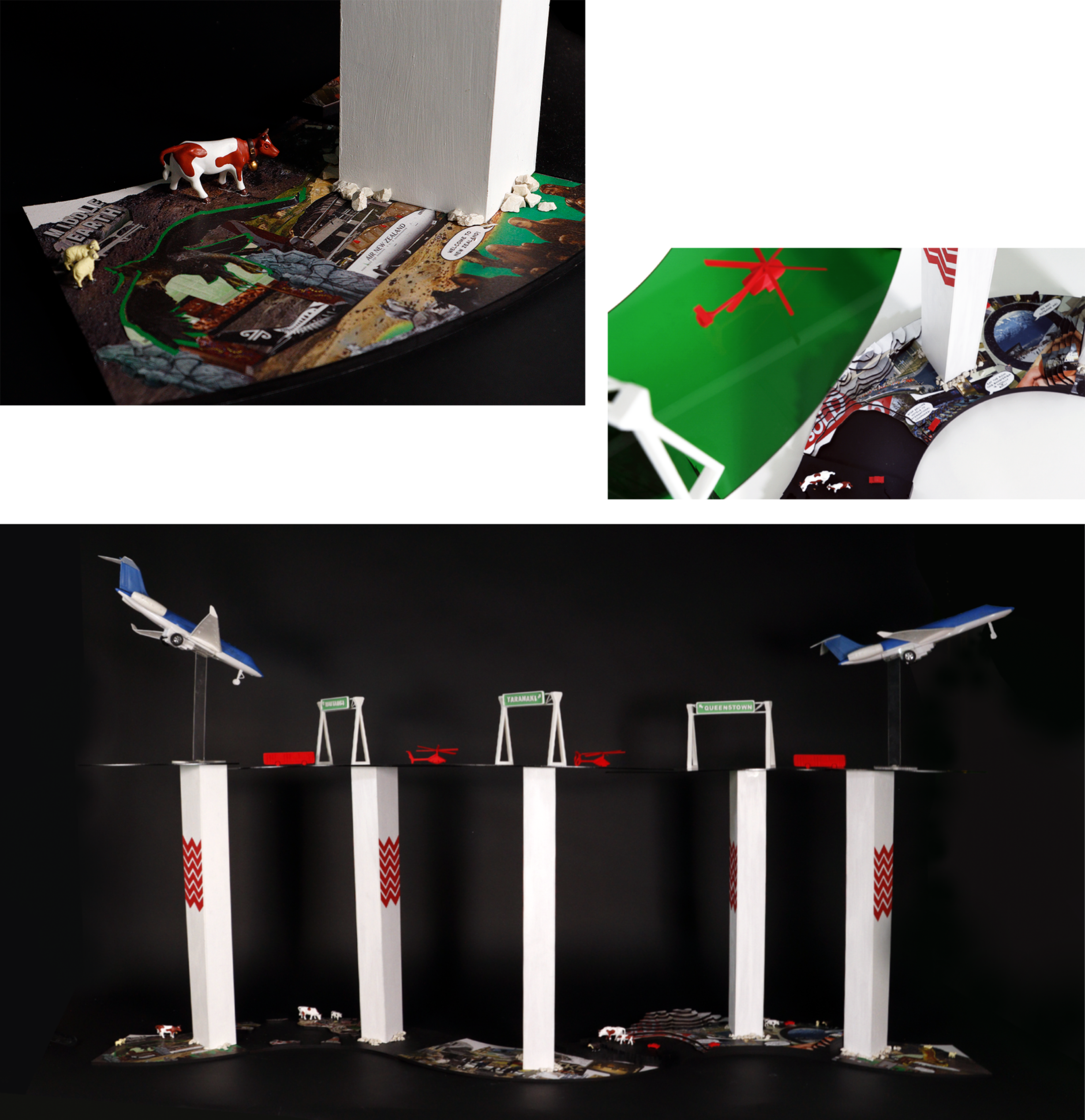
The presentation imagines the 100% Pure brand as the green highway that connects existing New Zealand sites. It is supported above the land by structural columns with a Maori tukutuku pattern slapped ontop like decor. Desanitise utilises the same highway but the tour then invites the audience to look sideways, not through the green lens. 

 
Highway model combo width of 2460px v3 1
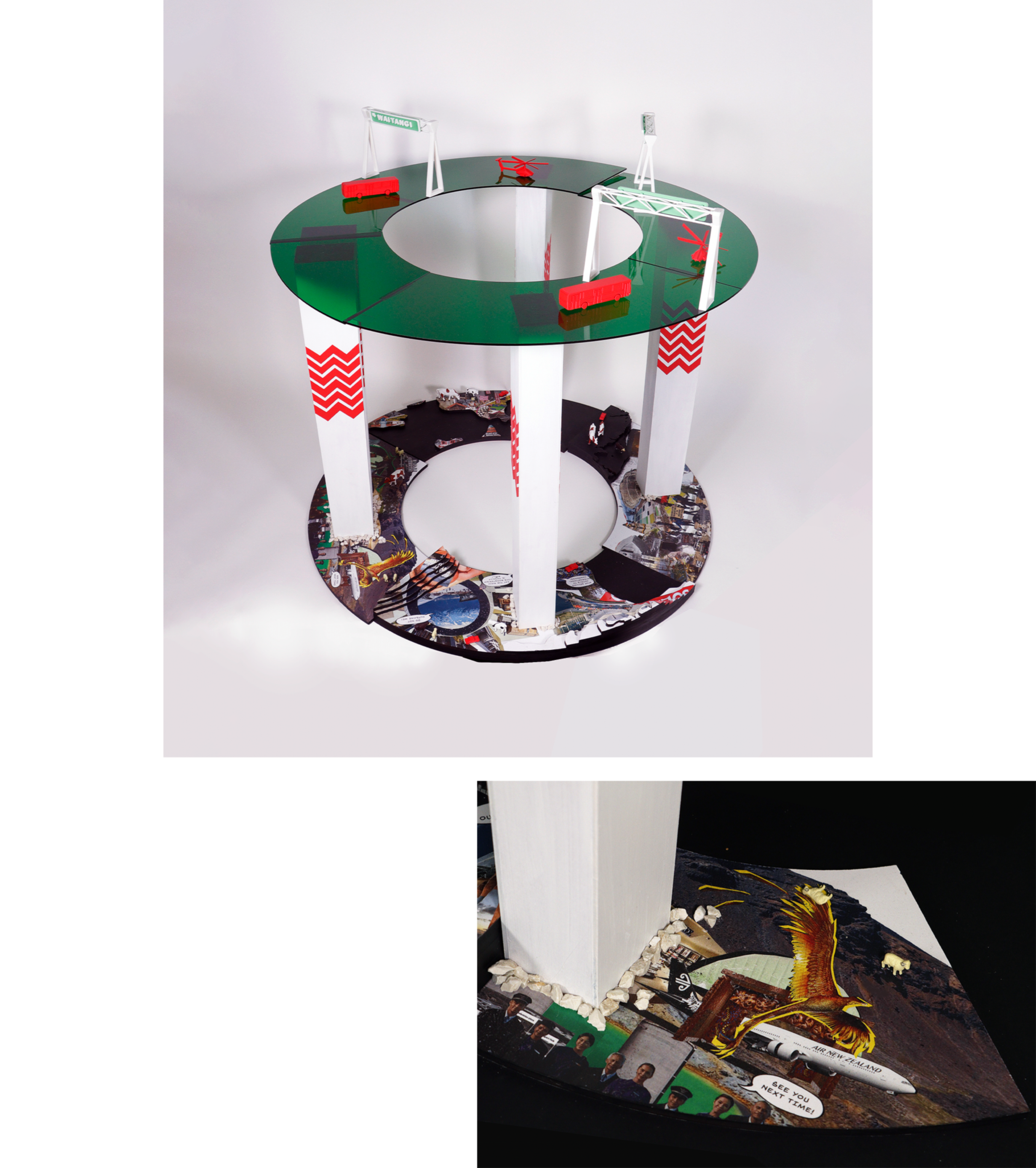
Highway model combo width of 2460px v3 2
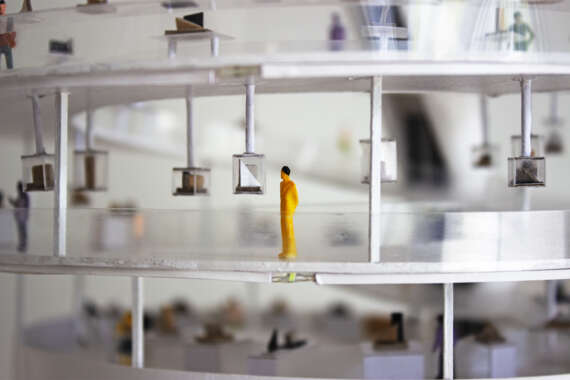
The highway can be reconstructed to form a circle, symbolising the cyclic shuffling of tourist groups from one attraction to the next, entering and leaving from the airport.
Sketches v2 width of 2460px