The Feline Negotiation: Reimagining Domestic Space Through Multispecies Design
Belinda Gong

[email protected]
Modos Intro Image Final 01 01

Mocha: “I’m Mocha, king of the block.”

Sticky: “I’m Sticky, the eldest in the house.”

Creamy: “I’m Creamy, mum’s best boy.”

All: “Human, please take a seat. We’d love to have a decent negotiation with you.” 

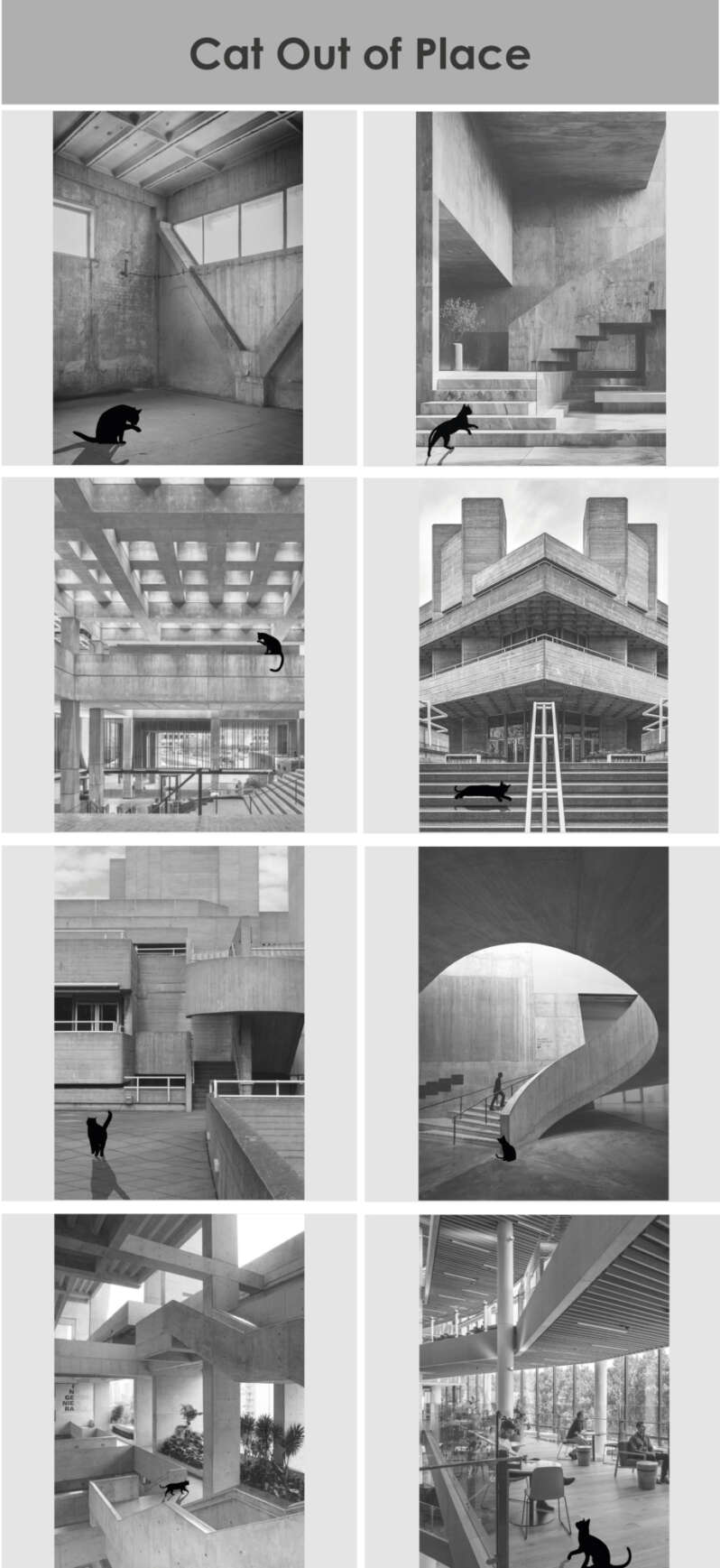
The human-centric concept of domestic architecture has run through the entire architectural history, and home space has long been designed around human needs. Cats and other species are often seen as accessory passive occupants rather than the users of space. In the urban context, this deeply rooted anthropocentrism not only limits feline welfare but also neglects the potential of architecture as a medium to support inclusive cohabitation relationships. 

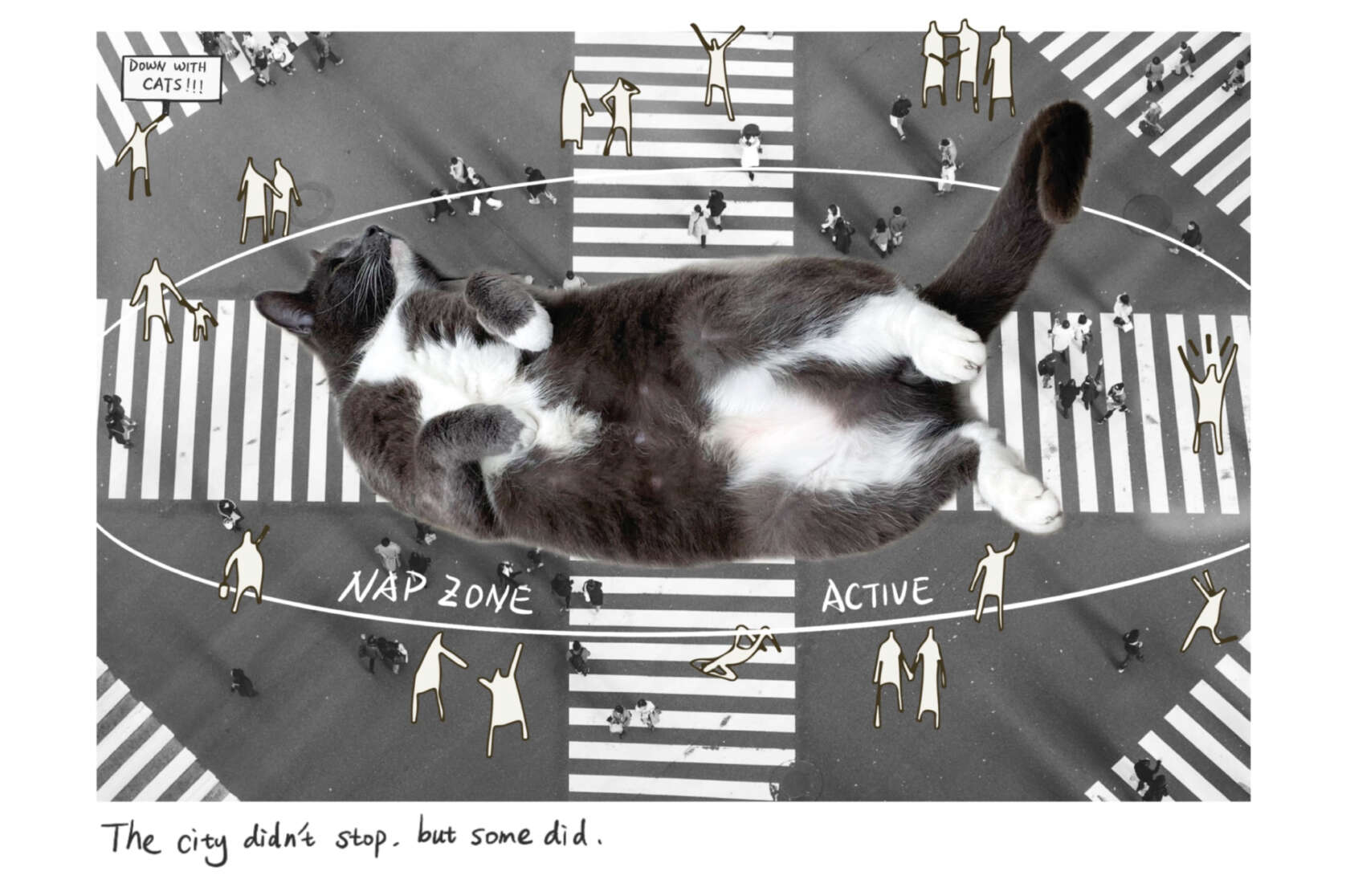
This thesis attempts to propose a new perspective, when cats are recognised as one of the spatial subjects, and design framed by the negotiation between humans and cats, how will domestic architecture and urban environment be reimagined? By guiding design thinking beyond humans, this study aims to explore an open and inclusive multispecies lifestyle. 

 
Belinda New 14

This thesis aims to reinterpret “home” as a place in negotiation, a multi-species co-living system that acknowledges the subjectivity of cats and incorporates their behaviour, perception, sensory, and well-being needs into spatial design.  By treating cats as cohabitants rather than secondary occupants, this thesis proposes relational design approaches to challenge the traditional typology of apartments and explore new methods of multi-species coexistence. 

 
Belinda 06

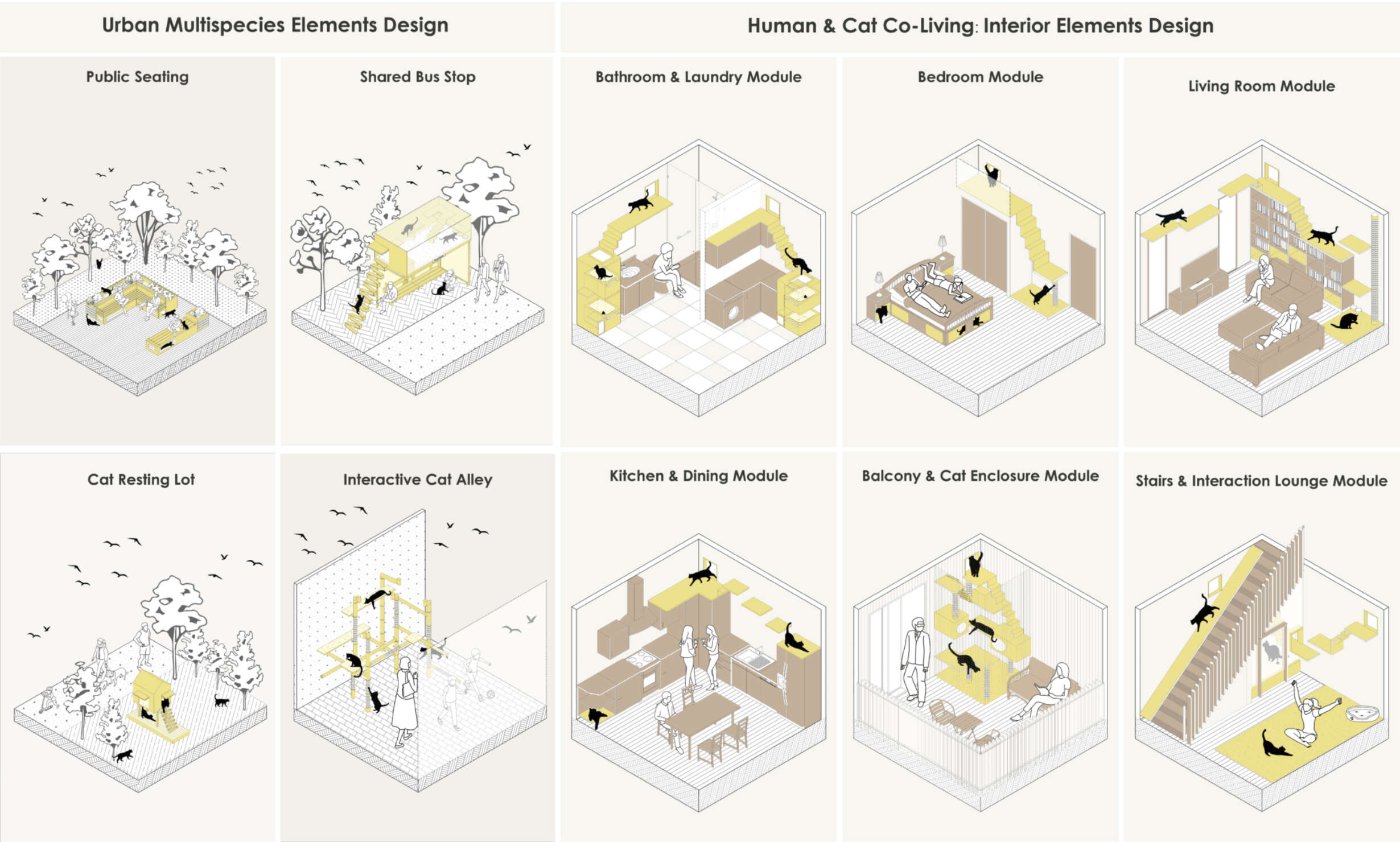
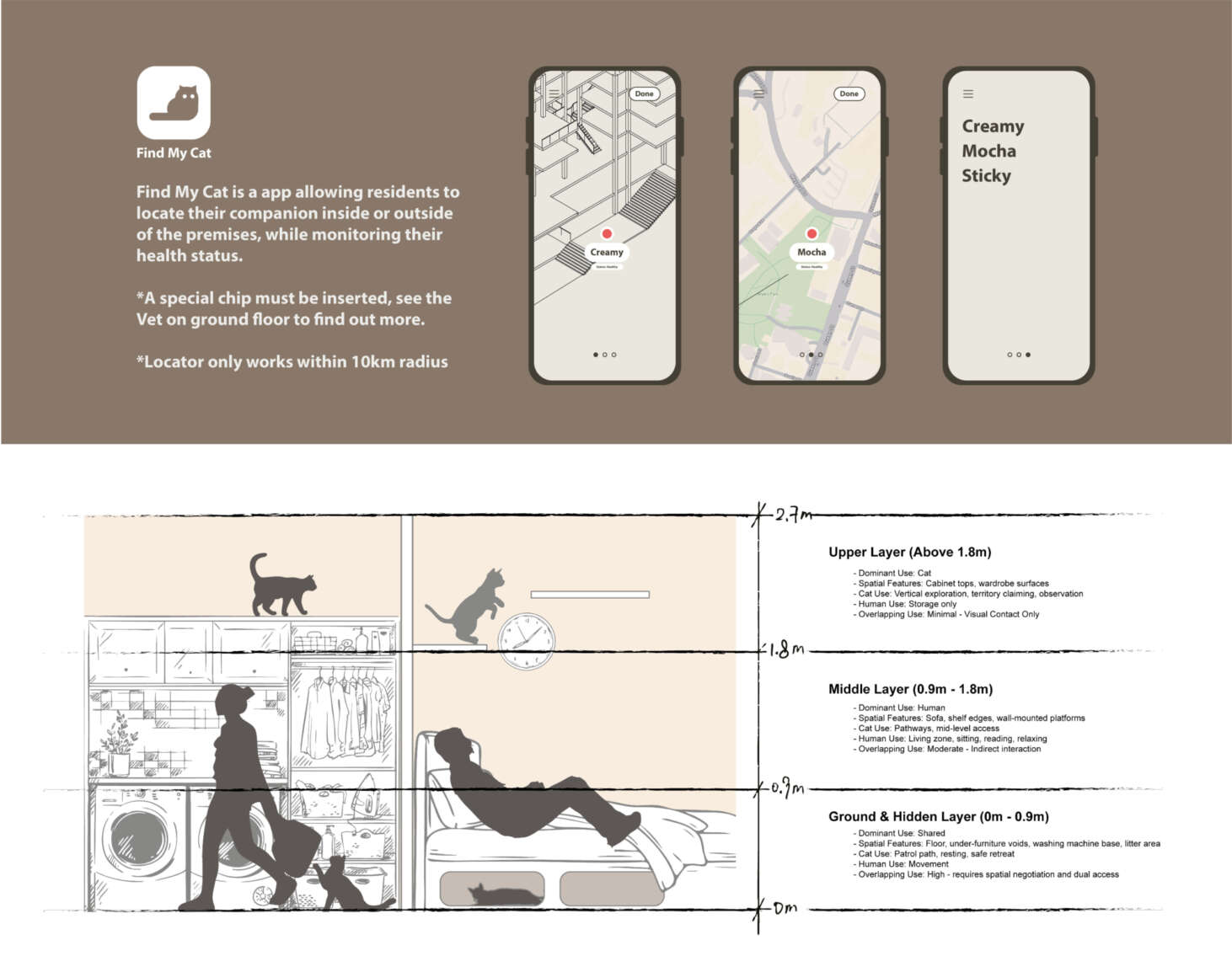
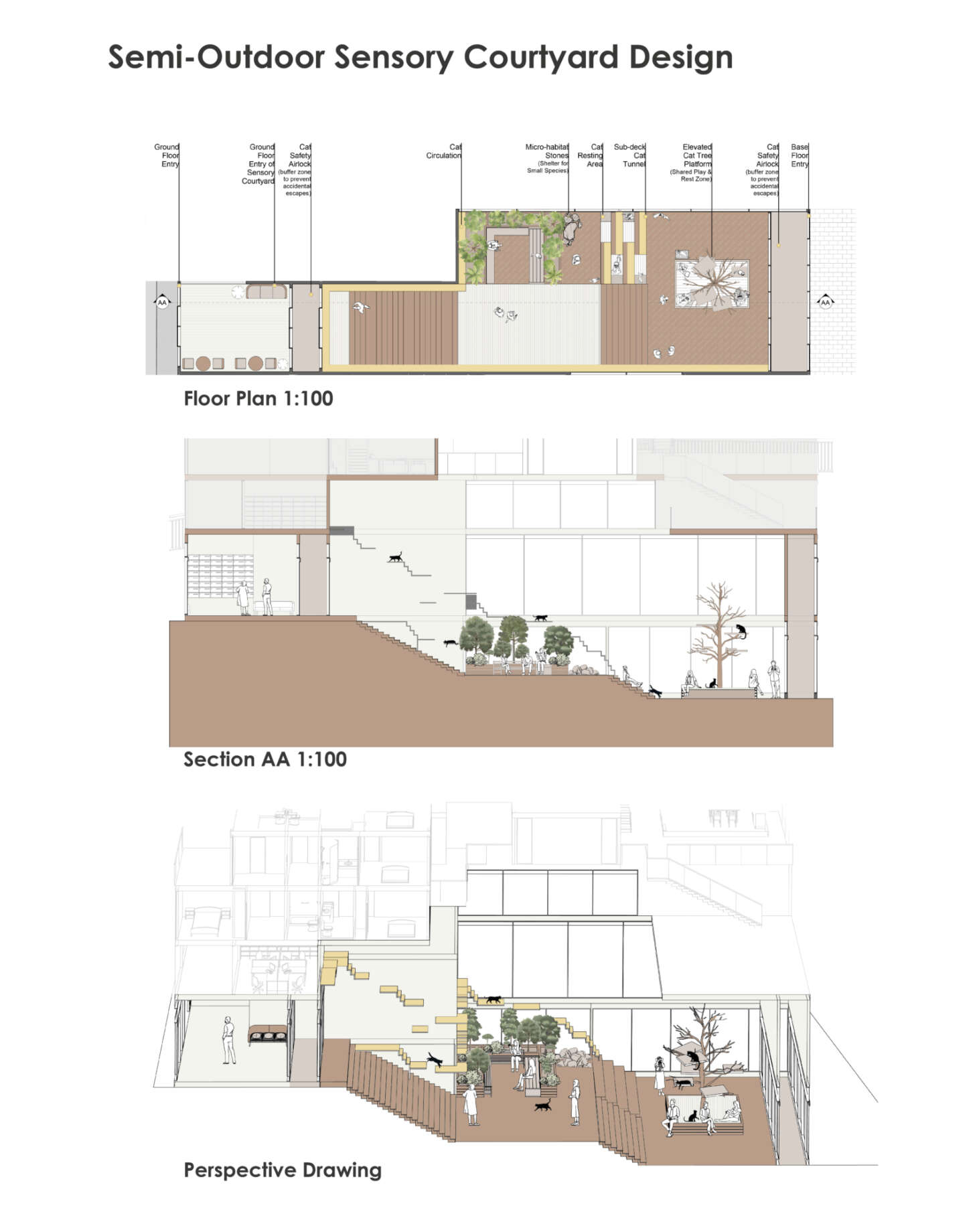
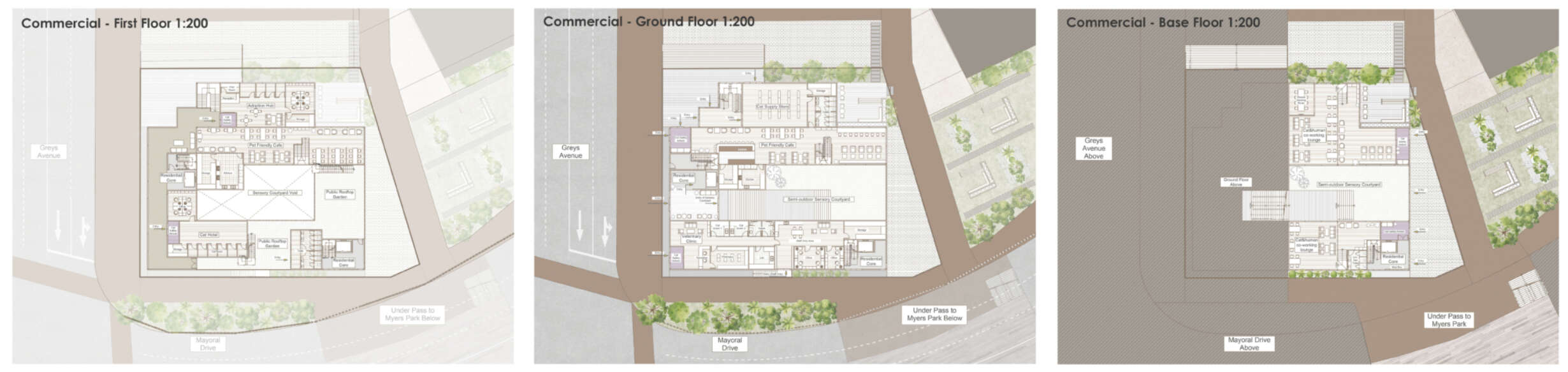
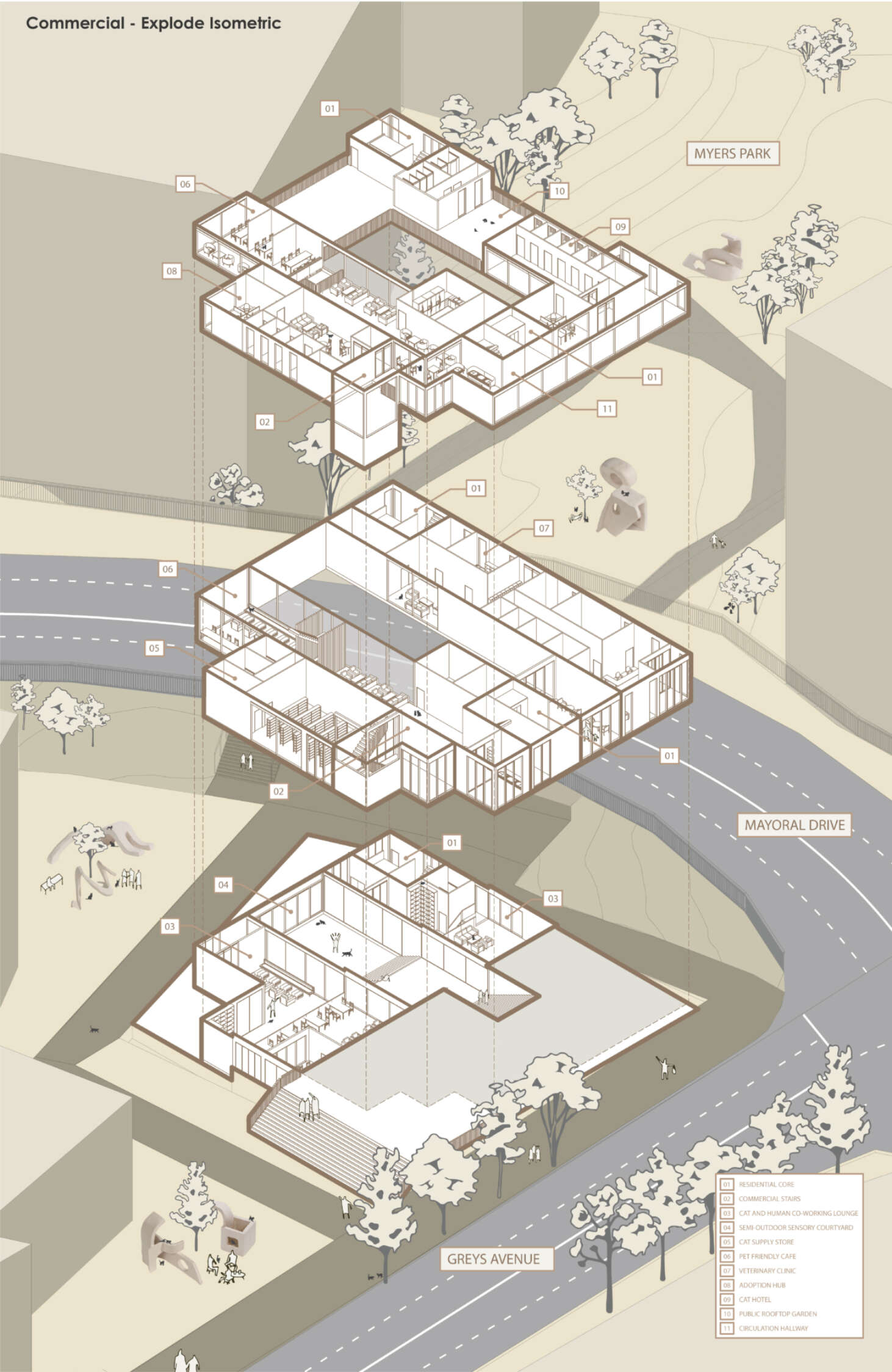
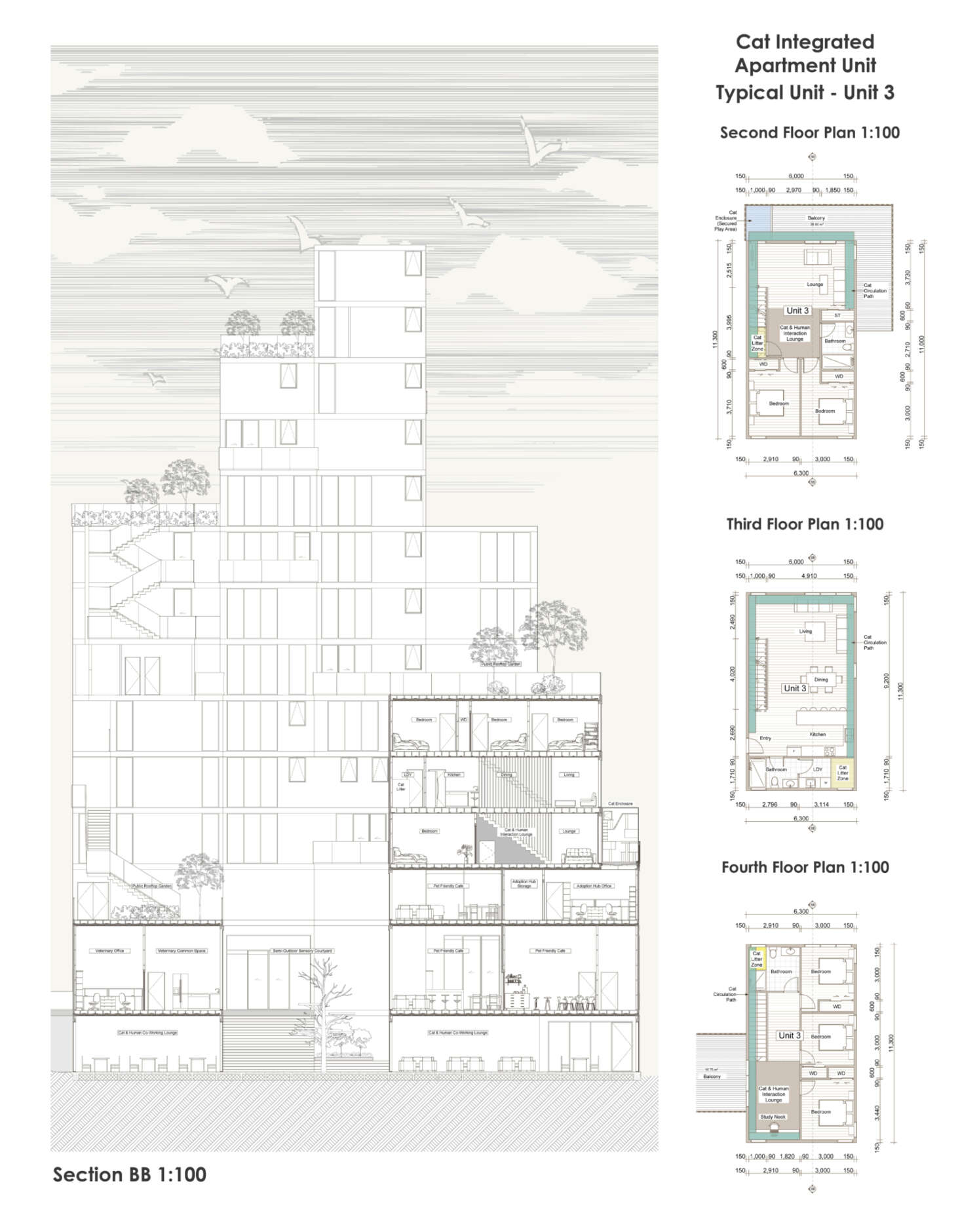
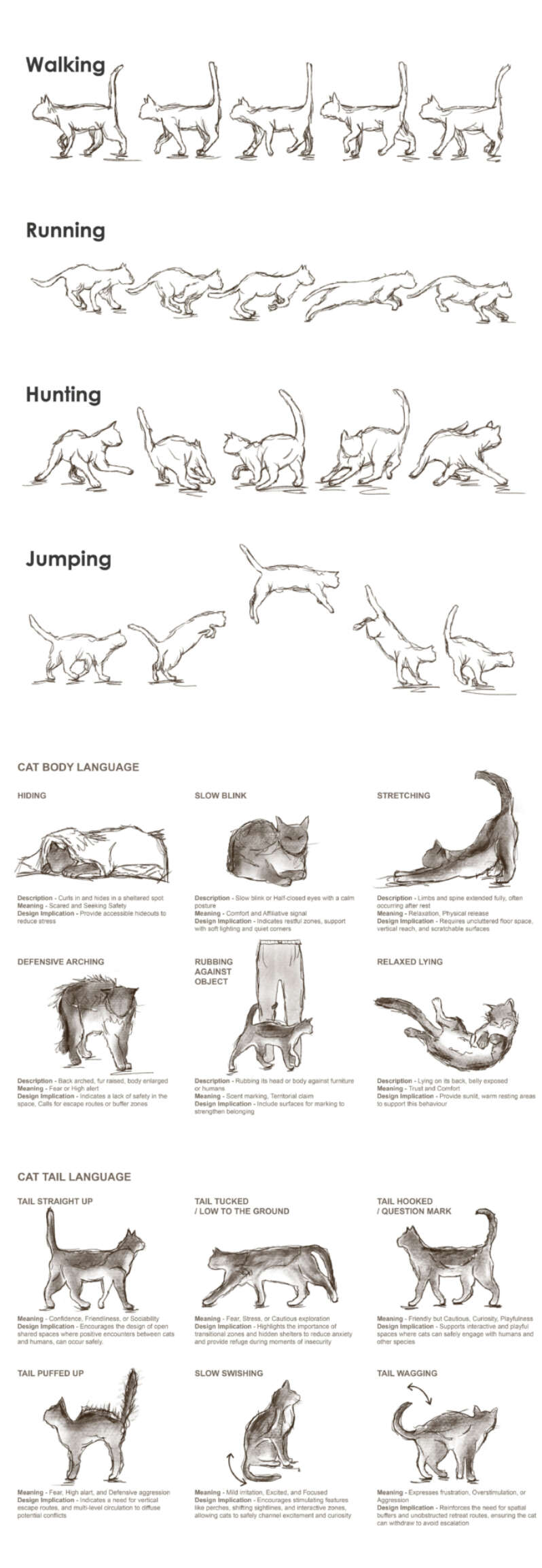
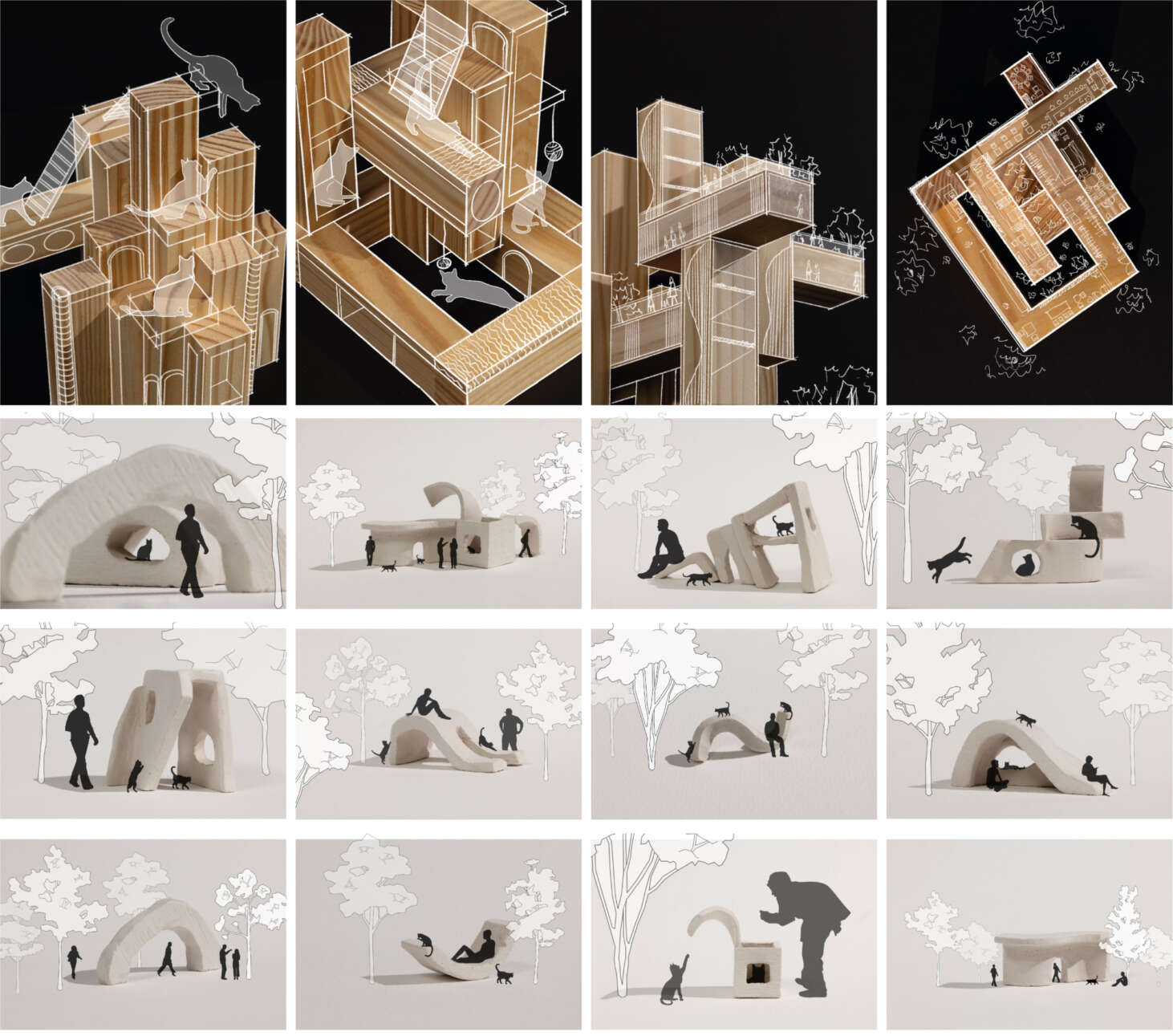
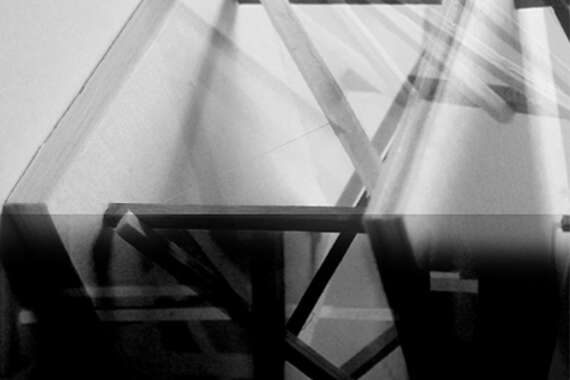
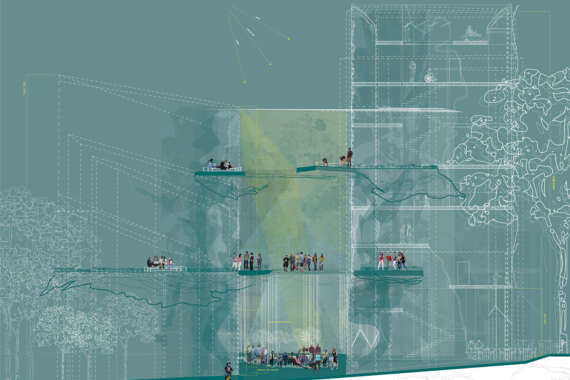
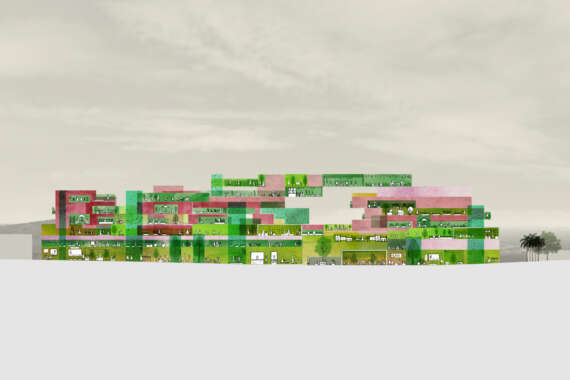
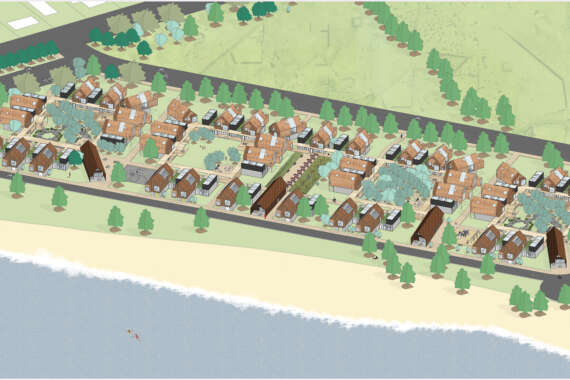
The theoretical framework is derived from posthumanism, multispecies studies, and criticism of anthropocentrism. The practical part is based on observations of three feline companions: Mocha, Sticky and Creamy. These insights provide a fundamental understanding of spatial logic, which integrates feline movement paths and functions along with human needs. The design experiment includes unit reorganized, cat enclosure balcony design, vertical movement system, and multispecies urban design. Collages, diagrams, drawings and physical models are also used to demonstrate the influence. 

 
Belinda 02
Belinda 09
Belinda 01
Belinda 11
Belinda 08
Belinda 03
Belinda new 04

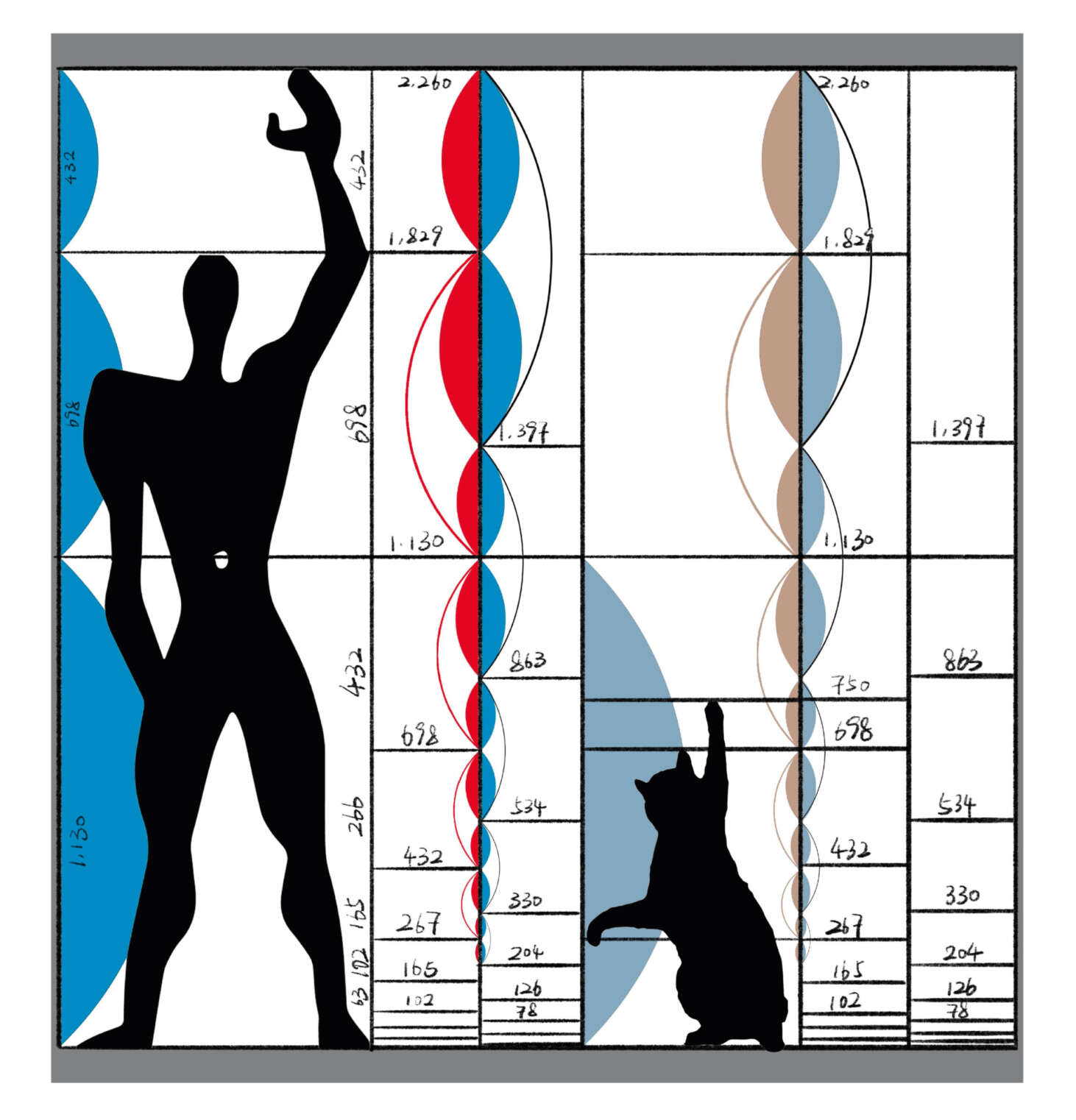
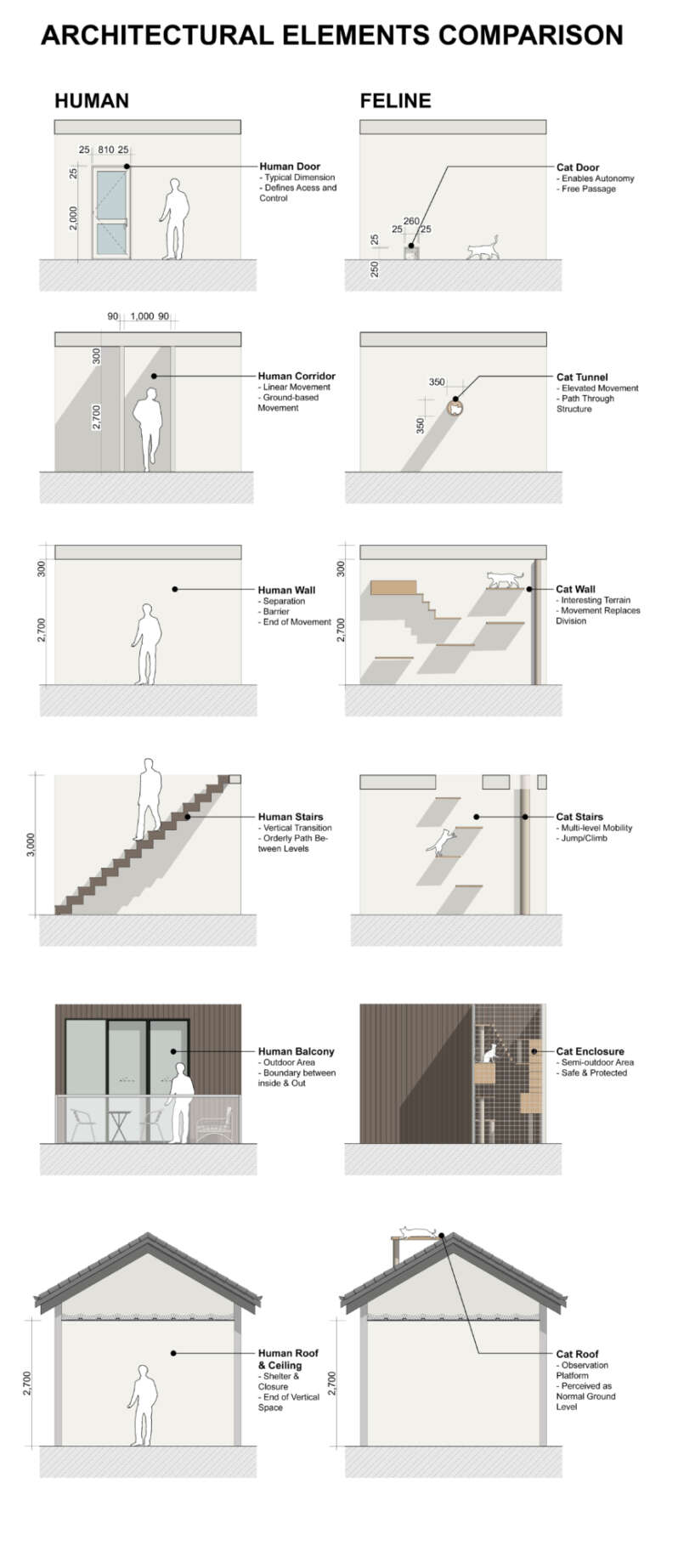
The proportion scale, movement habits, and perception methods of cats and humans are significantly different, which leads to the formation of different architectural languages. Meanwhile, the differences among cats in terms of age, health conditions, and personality also affect spatial needs, which emphasize the importance of negation and adaptive design. 

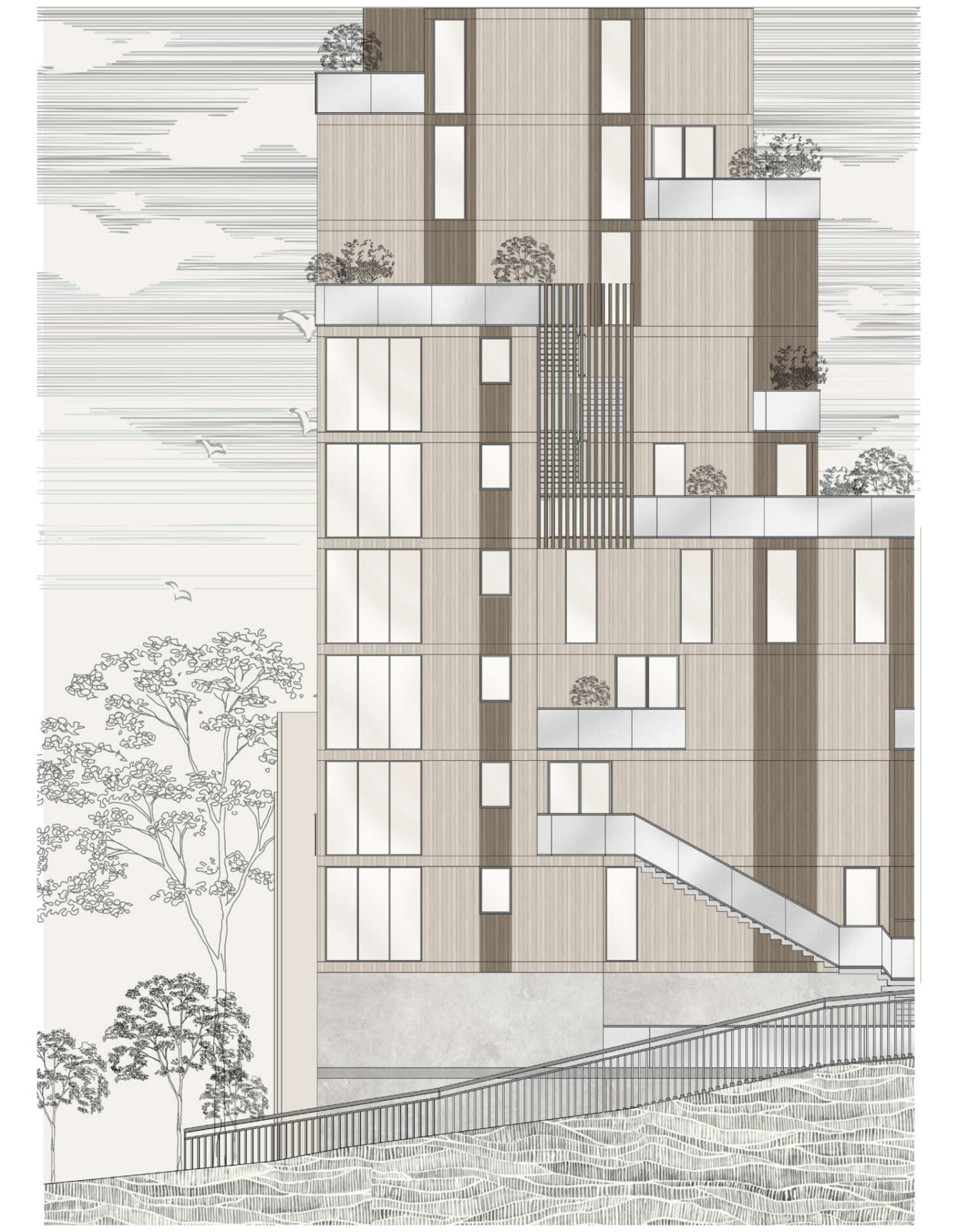
This thesis aims beyond pet-friendly design, it uses the apartment as an experimental medium to propose a multispecies perspective to redefine design and city. The negotiation principles and relationship logic can also be applicable to urban ecology. In the context of Auckland, these methods offer the possibility of creating cat-friendly urban space which also improve the urban welfare of urban animals. 

 
Belinda new 09
Belinda new 11
Belinda new 12
Belinda new 13

In conclusion, this thesis positions cat as co-creators of space, providing urban architecture as extensible multispecies design framework. Also, enable architects to participate in building a better ecological system, and make more positive contribution to all species in the broader environment.