From Crisis to Community

Kraustofersen Samoro Reyes

[email protected]
Heading Pic Copy
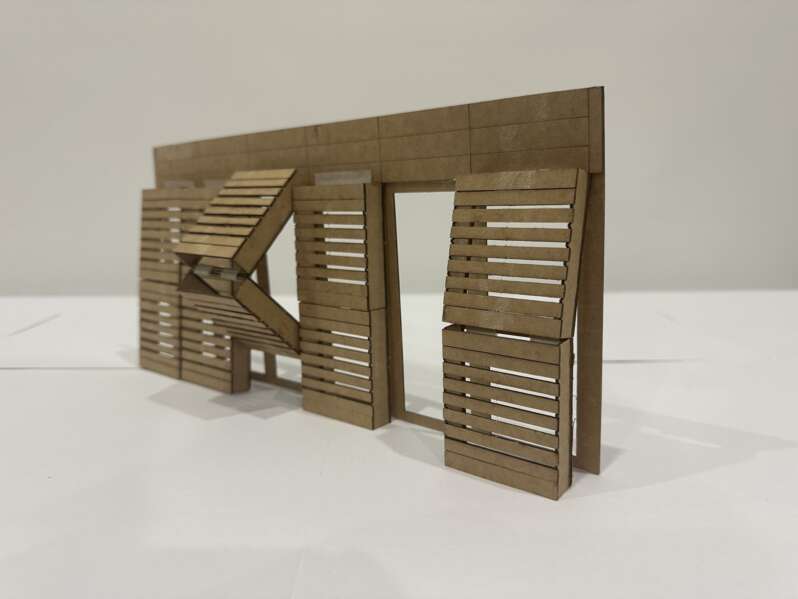
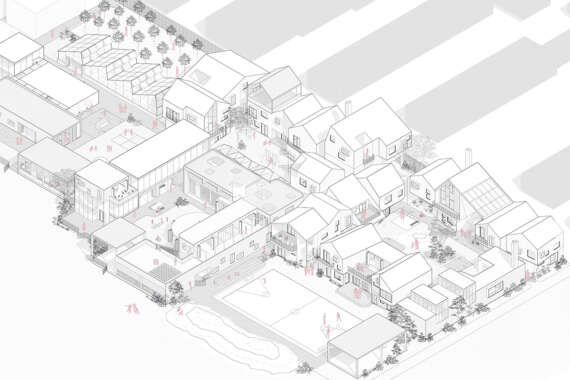
A snippet of the Onehunga site showcasing where interactable upcycled wood pallets are positioned

New Zealand is facing a growing emergency and transitional housing crisis, driven by unaffordability, natural disasters, and socio-economic inequalities. Existing solutions often fail to provide safe, reliable, and socially connected living environments. In my thesis, From Crisis to Community, I explore how a ‘Circular Economy’ based framework–with its core principles of material reuse, designing for disassembly, and regeneration–can be leveraged to create housing that is not only sustainable but also actively fosters social reintegration and community development. This research will develop adaptable modular strategies that provide immediate shelter needs while creating opportunities for resident upskilling and engagement.
Bridging the Gap

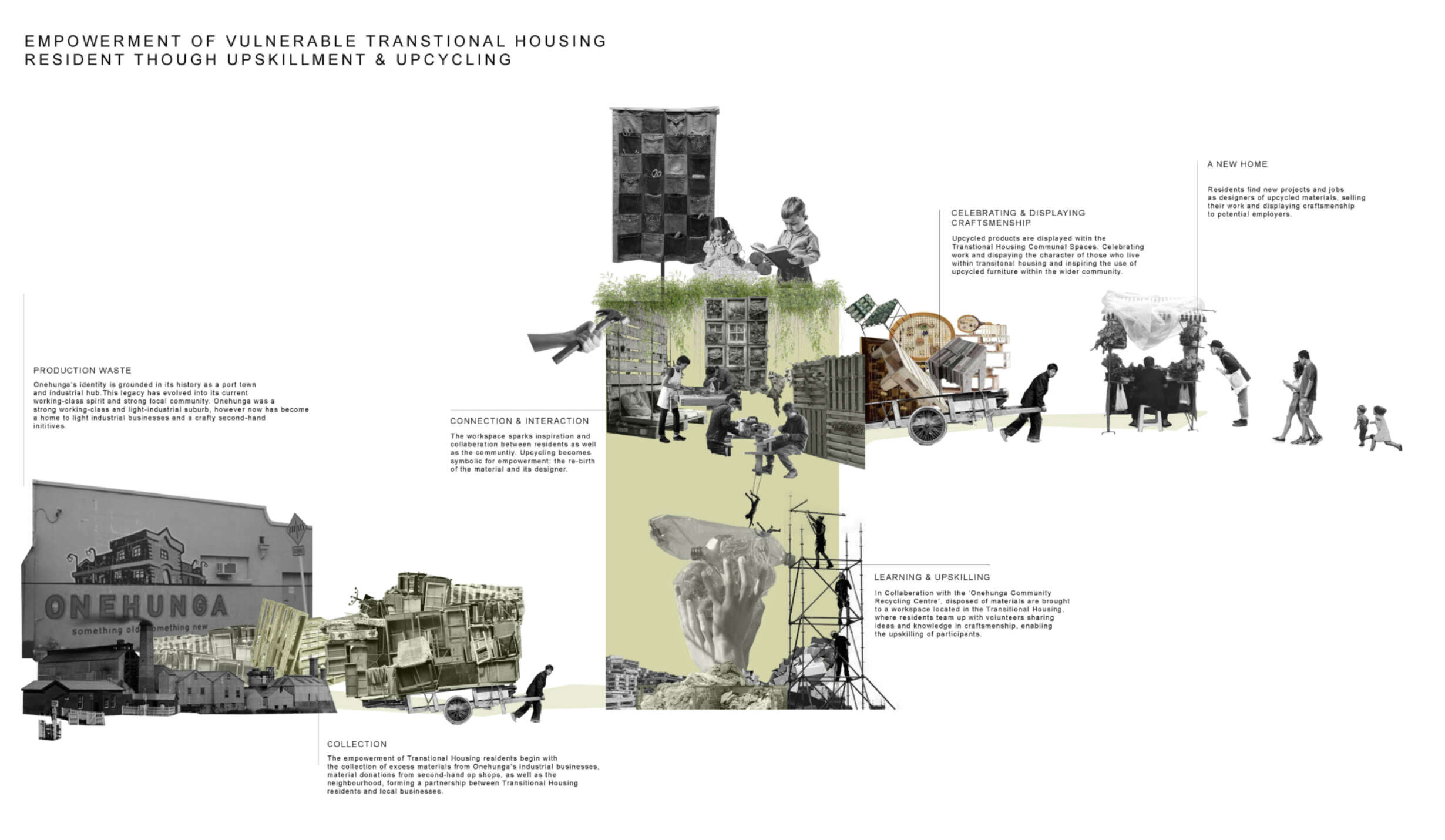
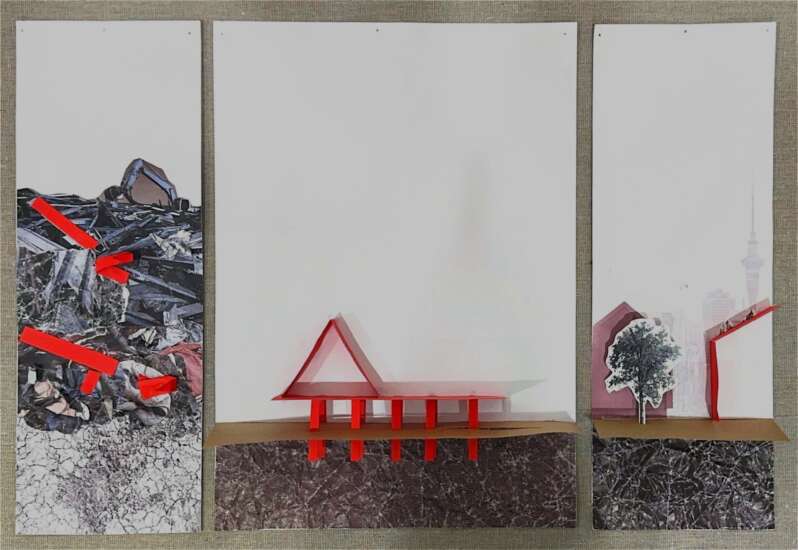
The essence of the proposed architectural intervention is to bridge the gap between vulnerable individuals and families and their right to a home/community. The project provides a framework designed to aid people within transitional housing through the principles of circular economy as the main driver or catalyst to spark empowerment and get residents out of the “loop” of falling in and out of transitional housing systems.

Bridging the gap 2
A speculative collage illustrating the core idea of my design
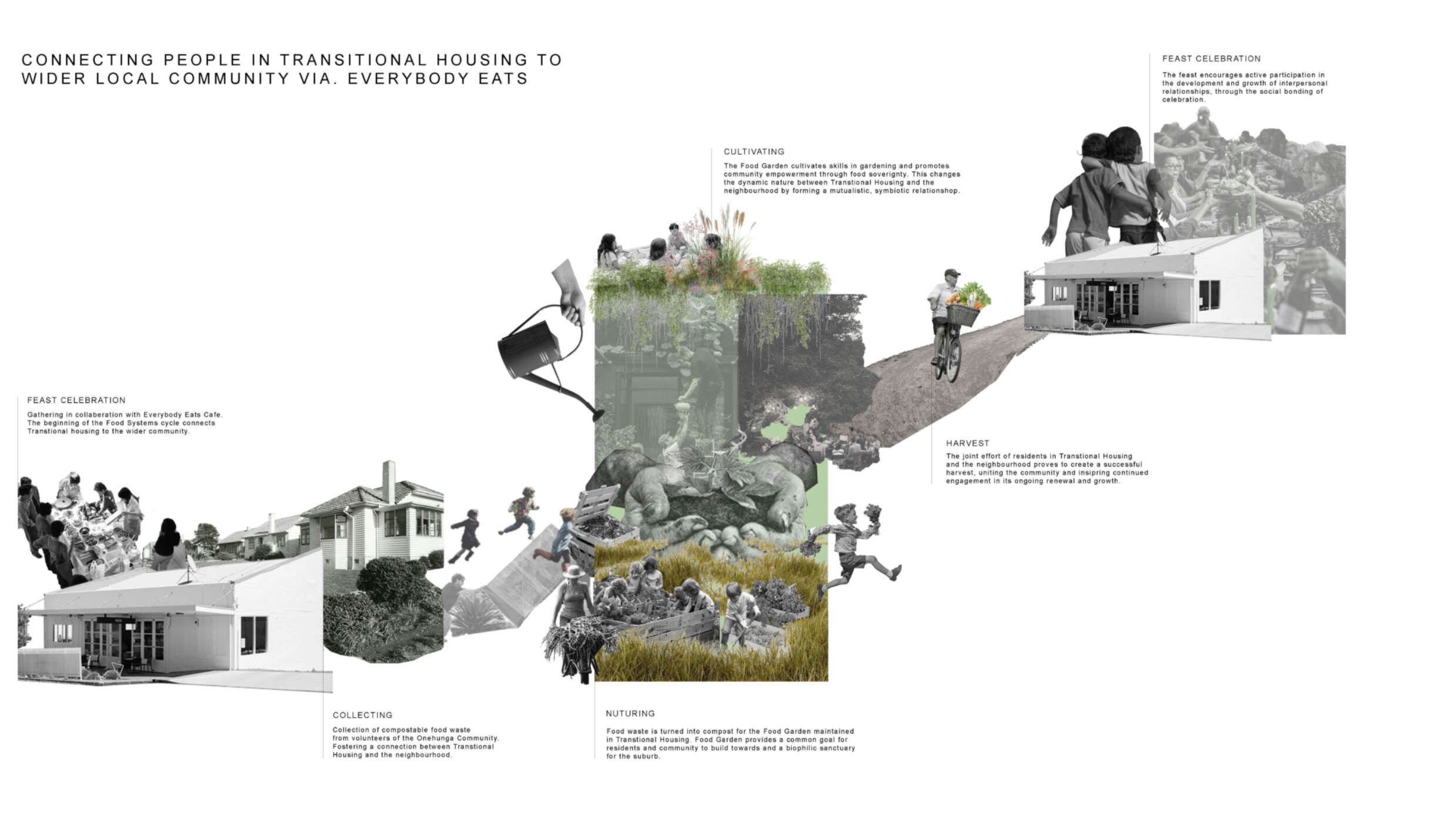
Community Connection
Collage illustrating how the proposed framework would connect transtional housing residents with the wider community via. Everybody Eats
Community Connection 2
Collage illustrating how the proposed framework would connect transtional housing residents with opportunities of upskilling via. upcycling

Scales of Modularity

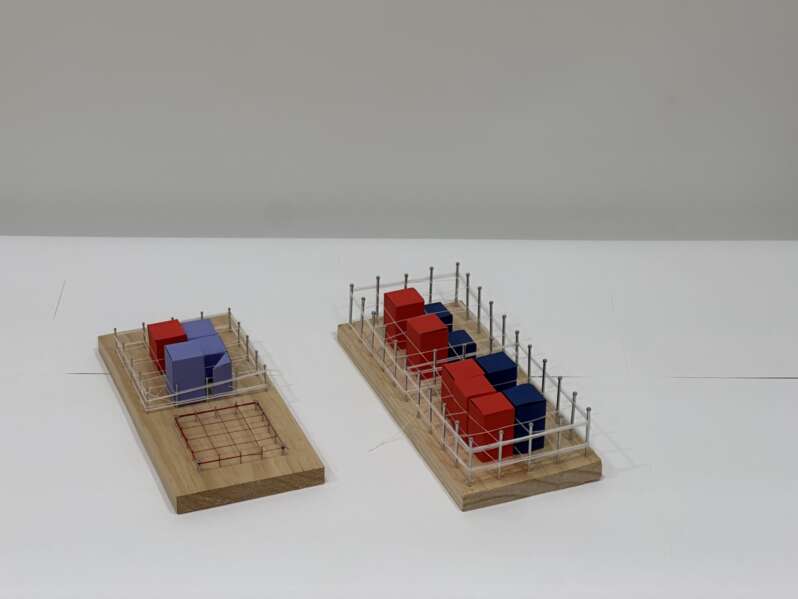
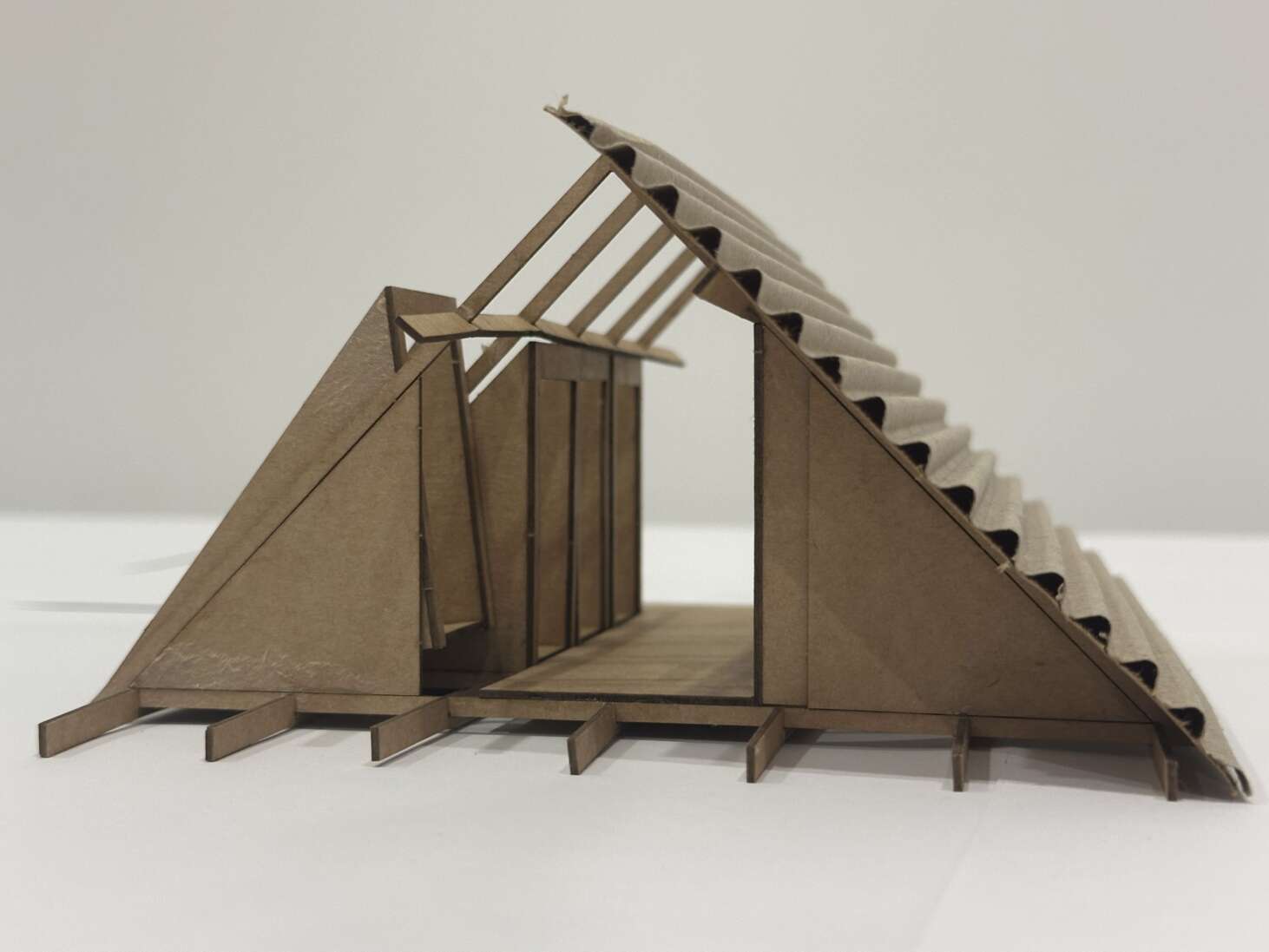
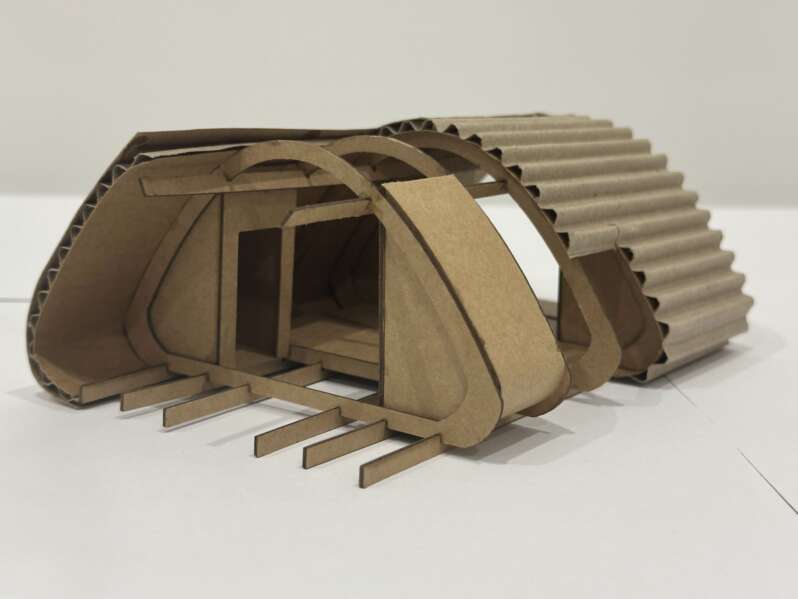
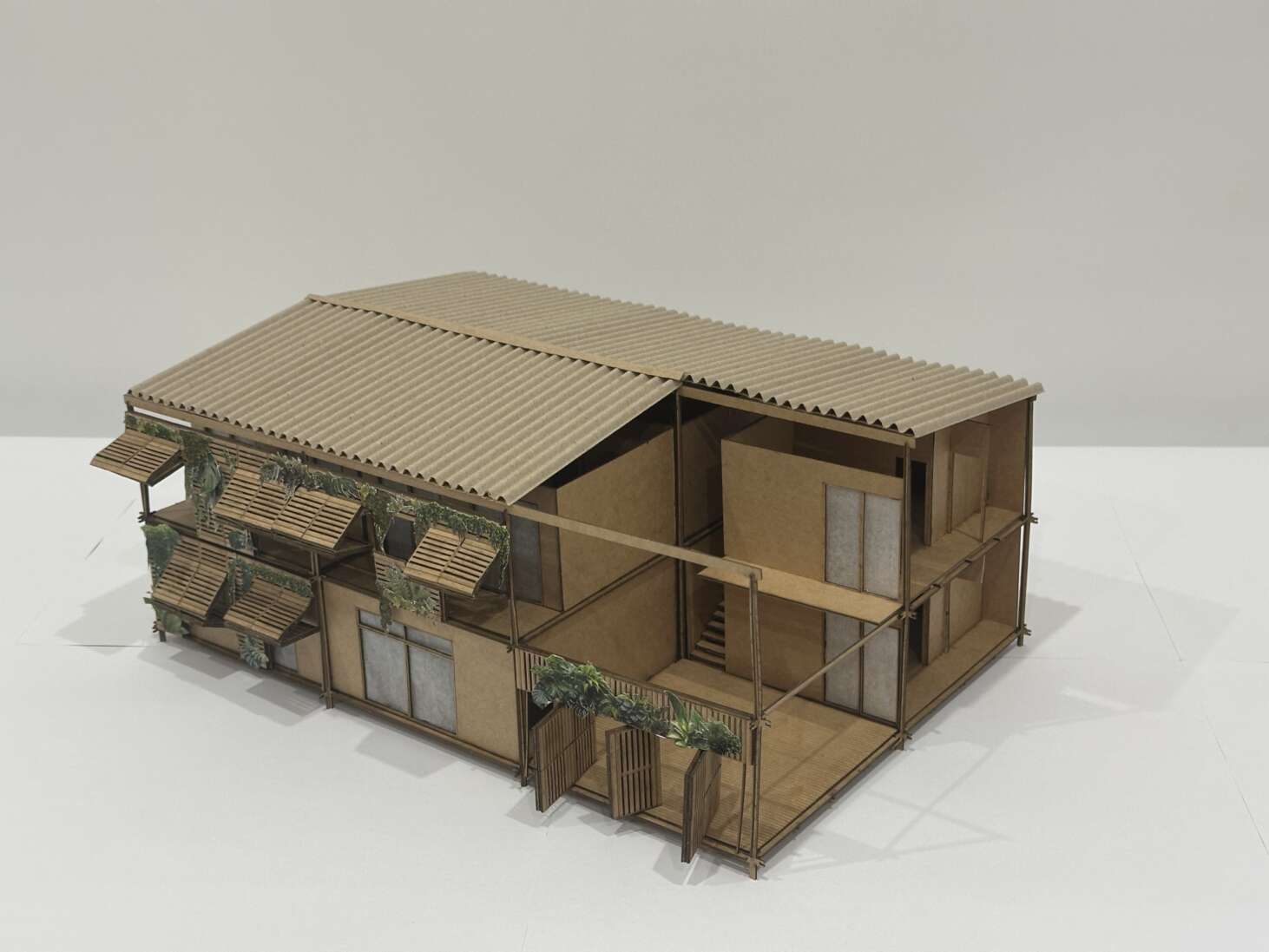
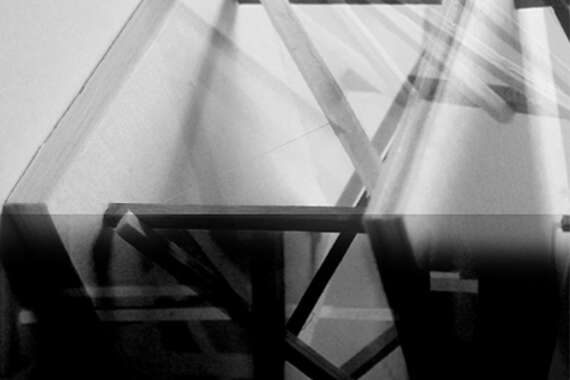
The design research utilises physical modelling to explore potential methods and components used for prefabrication and modular strategies. Modular design is quintessential for designing for dissassembly— enabling components to be safely and efficiently deconstructed and materials to be reused

IMG 8344
Speculative model exploring programming within a grid
IMG 8360
Second iteration of model influenced by Essential Homes model
IMG 8356
Interpretive model of the Essential Homes Housing Prototype
IMG 8332
Final Model influenced by my modelling experiement
IMG 8362
1:50 scaled model representing adjustable repurposed wood pallets

The Masterplan: Onehunga Site


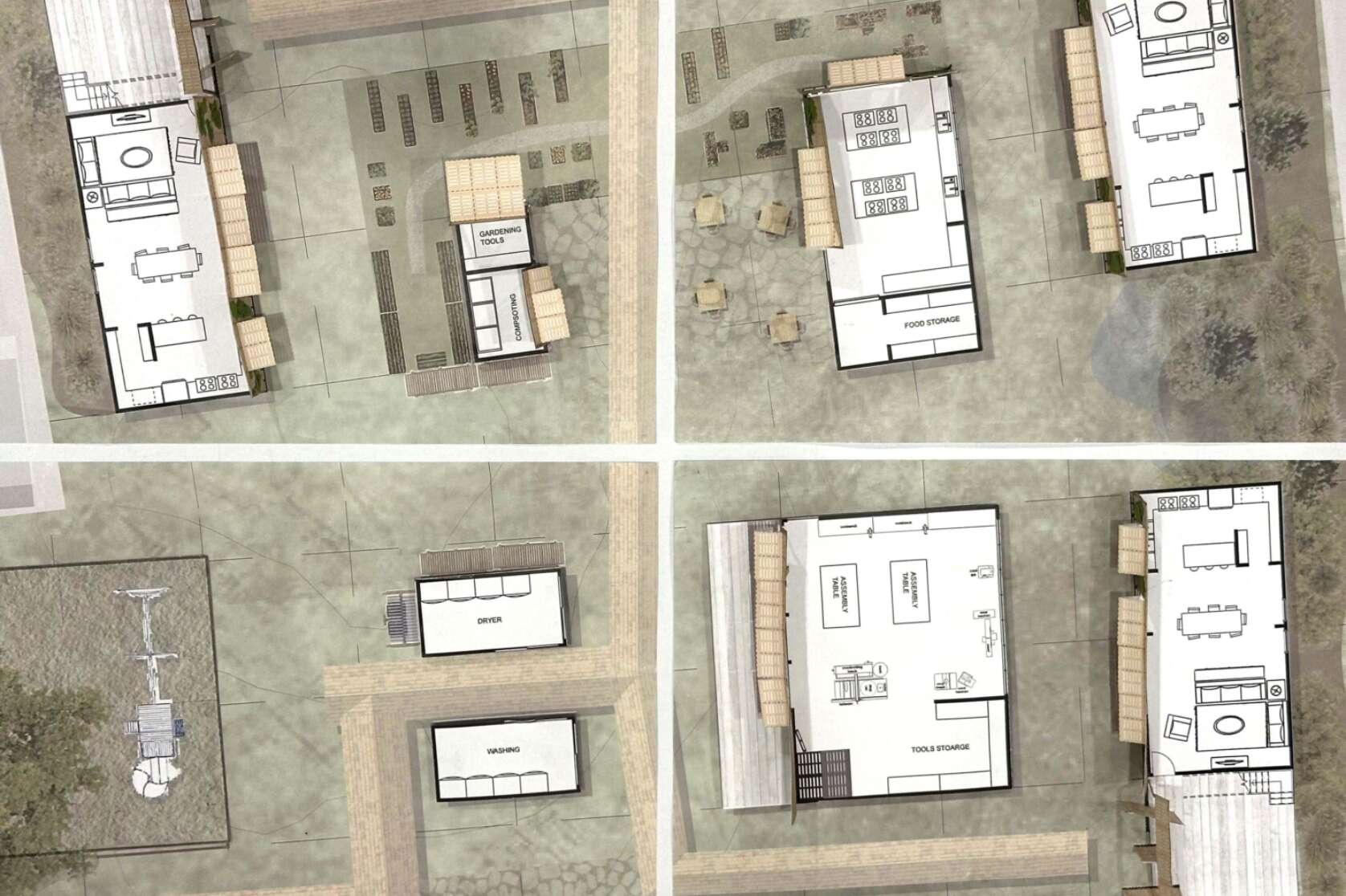
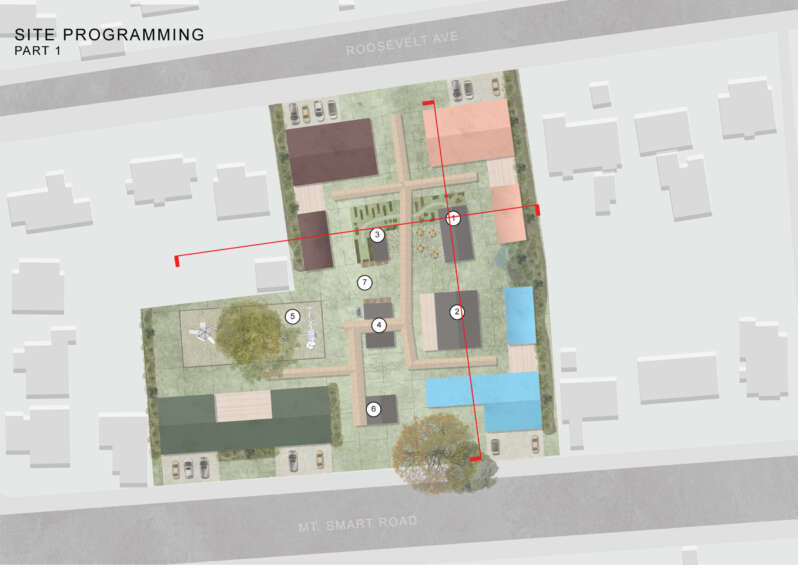
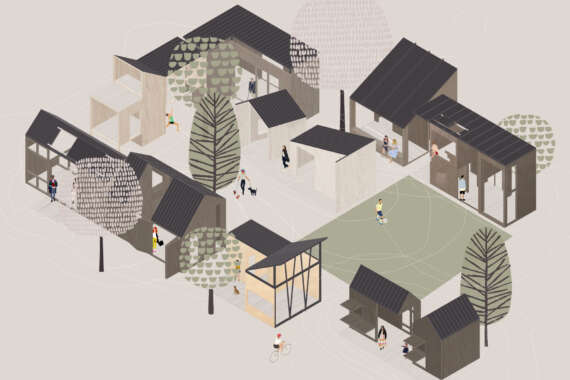
The site is broken down into a 6x6m grid that which is overlaid in the siteplan. This formed the language of the site and reasonable spacing in and between spaces. This created clusters of community for residents— acting as mini neighbourhoods within the site. The main programs are located in the middle to promote wider interaction between the different clusters. The open plan allows for natural surveillance to increase the feeling of safety throughout the site.

Untitled 1 copy
1:500 siteplan illustrating all the programs within the Onehunga site
Scanned Documents Page 1 Image 0001 copy
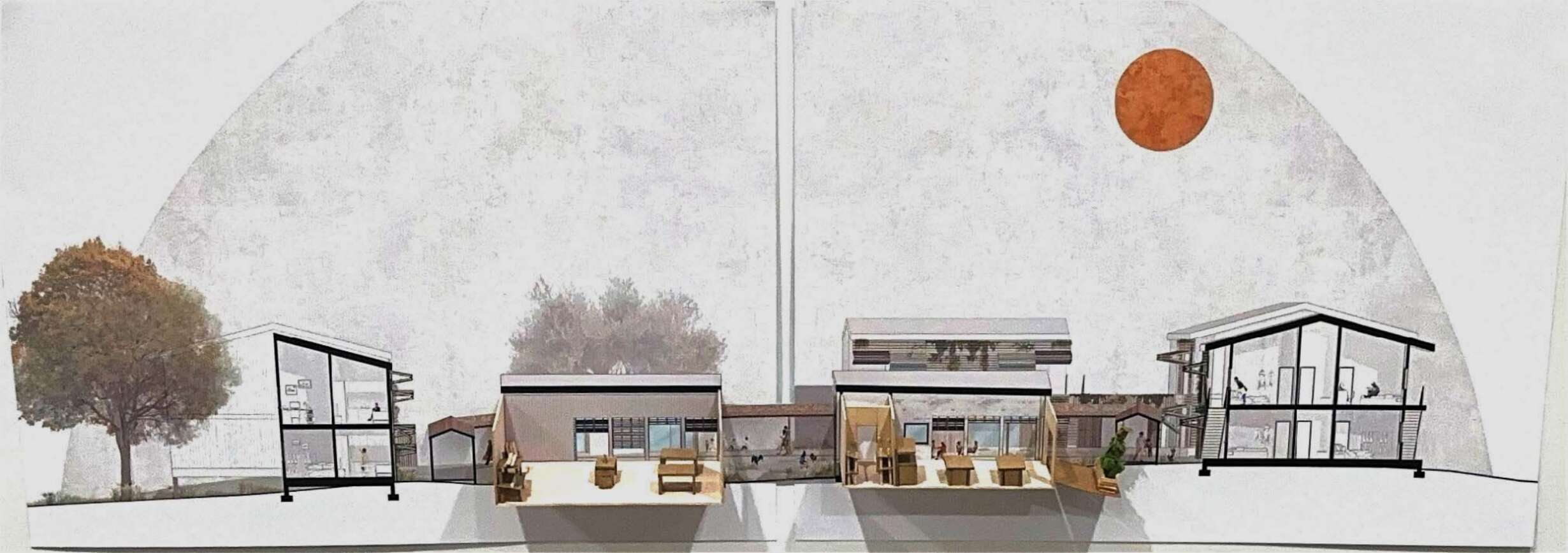
1:100 site section highlighting the upcycling workshop and communal kitchen
Scanned Documents Page 4 Image 0001 copy
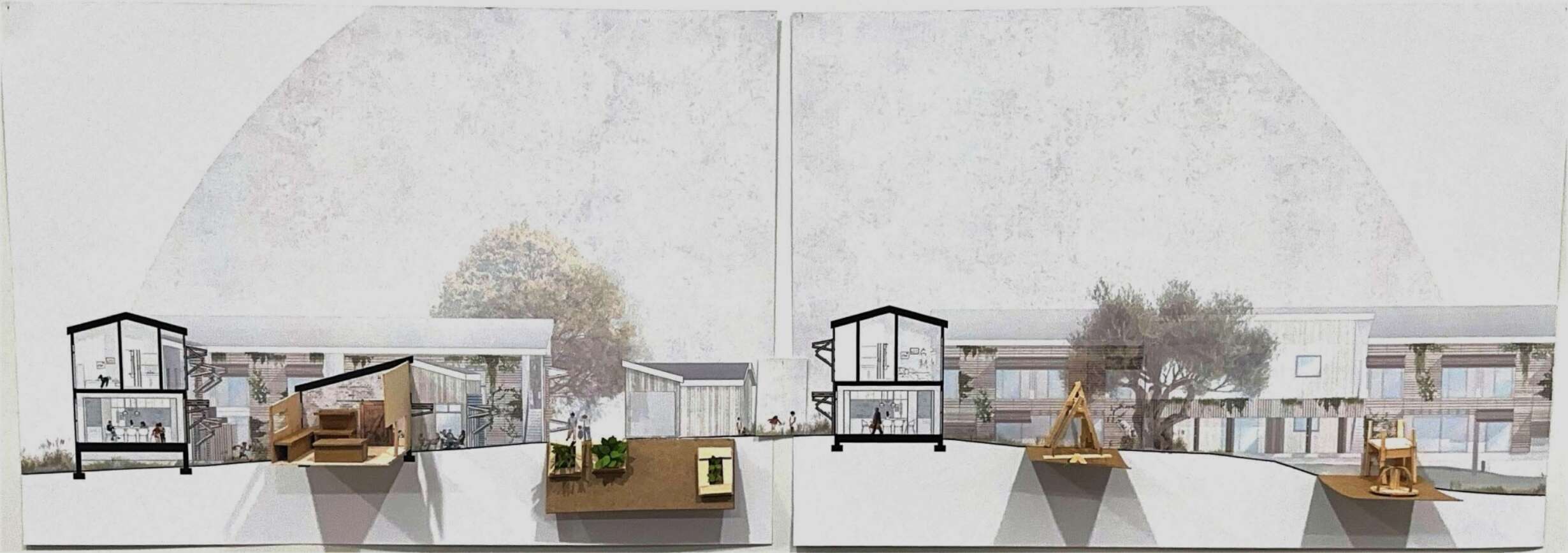
1:100 site section highlighting the food growing area and kids playground