Here We Are Again, Anyways

Intro image Artboard 6

Here we are again, faced with the same thing everyday, anyways.

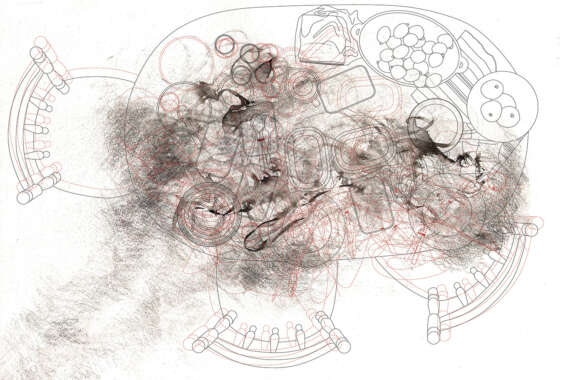
The everyday is overlooked until disruption comes, suddenly the everyday we take for granted spills out, it’s exposed. This thesis can be broken in two parts- “Here we are again” and “anyways”. The first refers to noticing where we are now and what is right here. The objects we use, the moments we experience, and the happenstances we encounter, our homes. The latter breaks this cycle of the mundane, when disruption comes. 

Disruption becomes an invitation to sit, notice, and remember before we forget (and before it forgets about us.) It gives meaning to what is otherwise meaningless. It teaches the urgency to document what is right before us because of the anxiety that we simply don’t know the future and all we have is this moment. To notice, dwell in, and document the everyday and to allow these findings to shape architecture creates a space that is rich with stories. It becomes a holder of memories and therefore a place of recovery, of hope. 
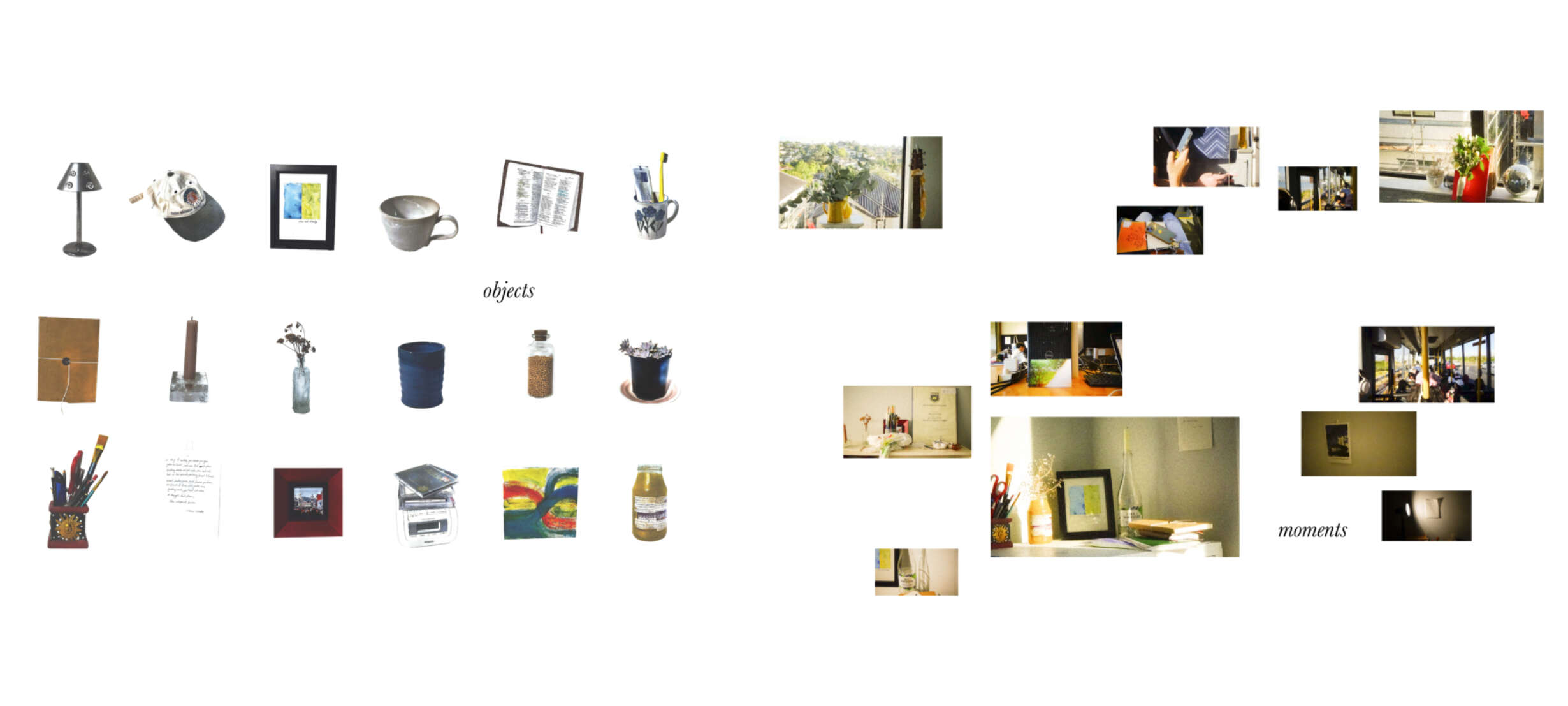
“Anyways” is an indication of a change, an iteration of what will or could happen. This “anyways” breaks out of the mold of the mundane. We rarely ever document what is around us close enough that we are able to create our own perception of it rather than what is plainly seen. In doing so we create a new room within a room, a new moment within a moment, and a home within a house- before it’s gone.

To explain and measure something intangible was a hard thought to think and is a hard act to follow yet somehow all it required was to dwell and to notice. The author refers back to a memory of experiencing the 2023 Auckland floods. The night before the flood, the living room was empty- and this emptiness felt like a good disruption from the everyday, but what happened the next day was far from good. Trying to be faster than the water, caught up on saving things but soon realising not everything could be saved- and what was saved suddenly became rich with stories, rooted in what was and carrying memories of home before loss. Urgency. The urgency to look, to document, to record what is because it won’t always be in front of us. 

 
Intro image Artboard 2
Intro image Artboard 26
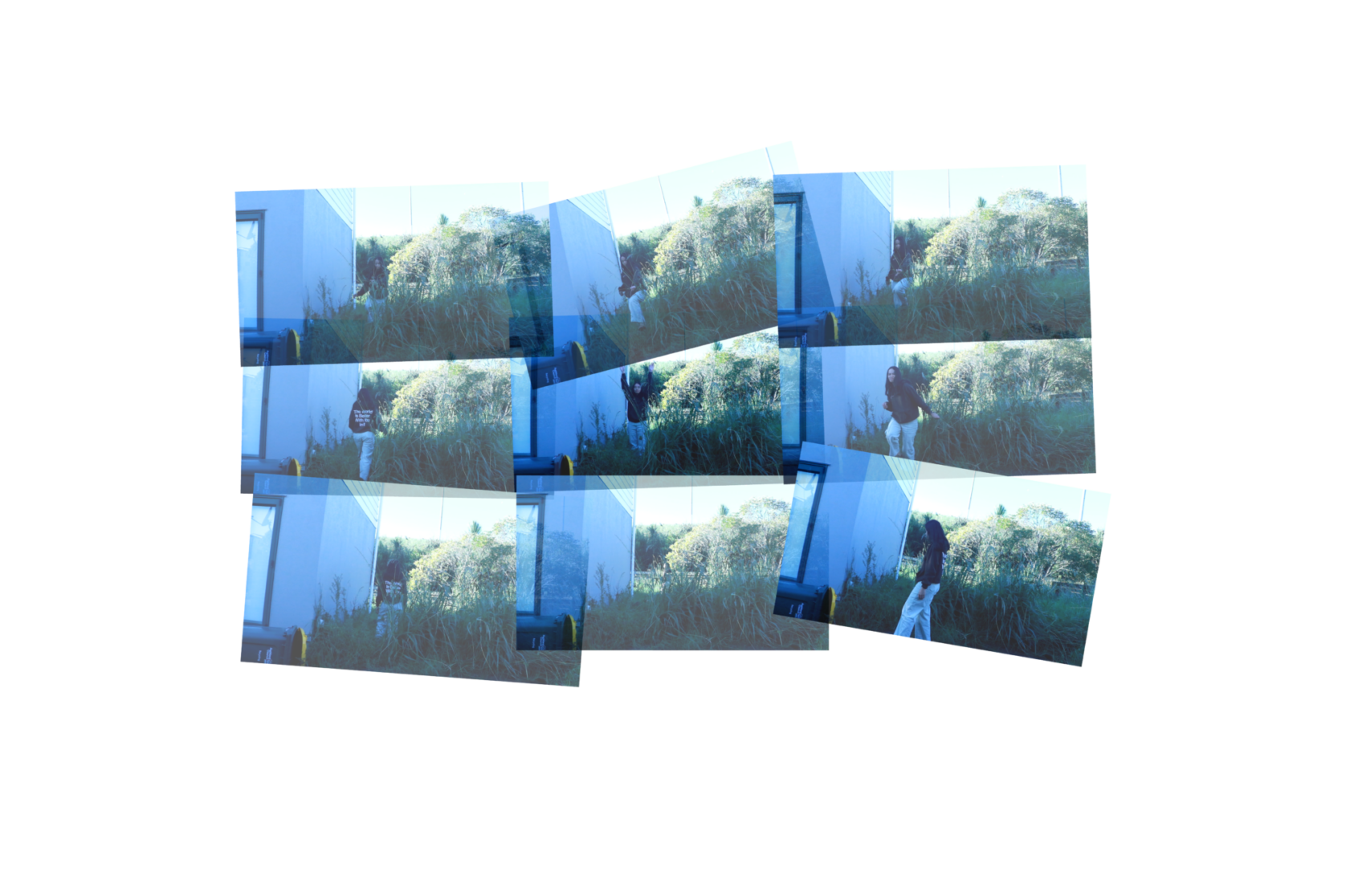
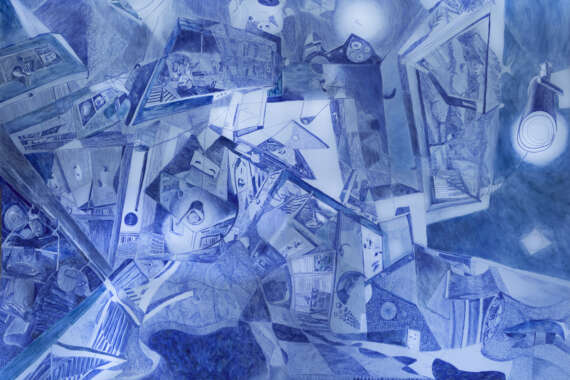
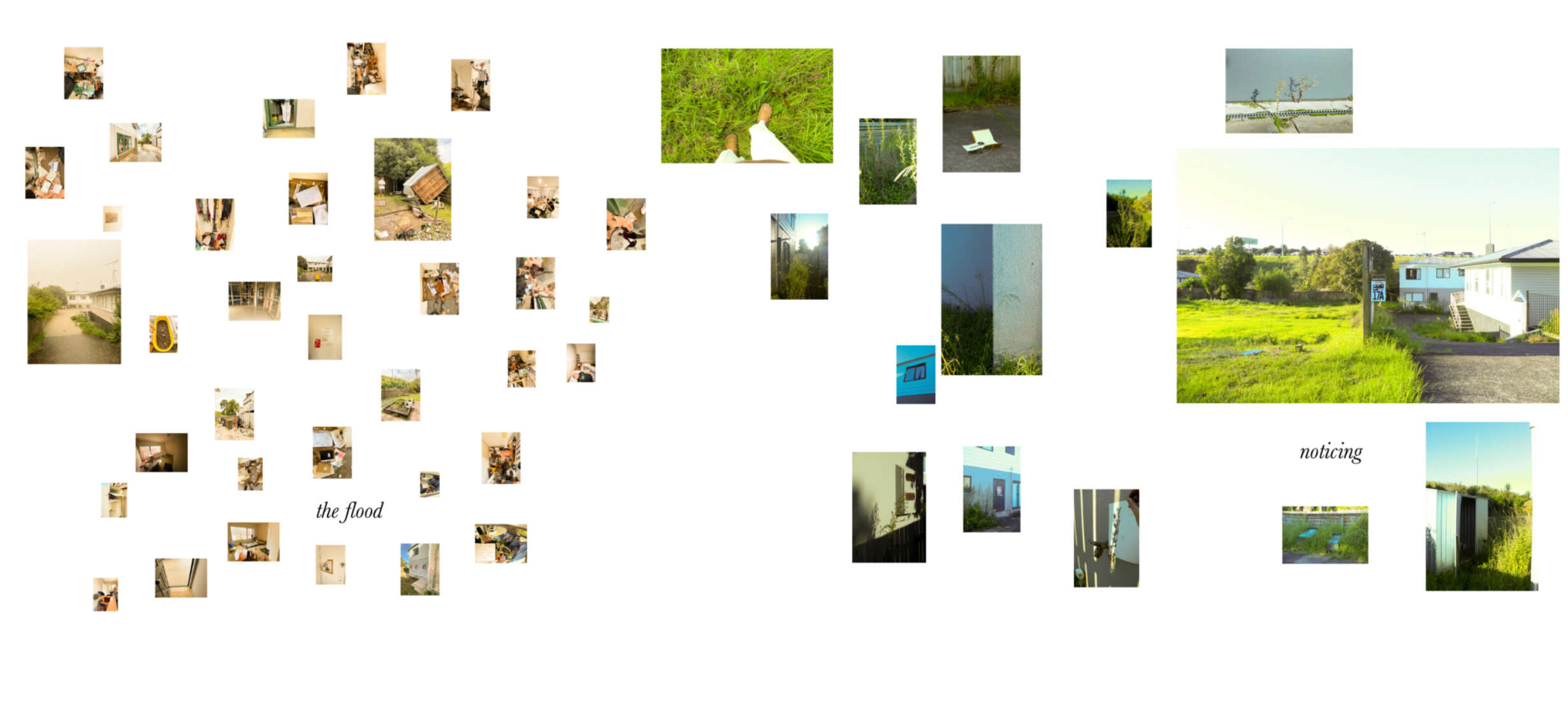
observing and documenting what was (and is) in front of me, before and after disruption (the flood)

Anxiety. Louis Kahn once said: "It is so anxious to be, that no grass can grow under its feet, so high is the spirit of wanting to be. When it is in service and finished, the building wants to say “Look, I want to tell you about the way I was made.” Nobody listens… But when the building is a ruin and free of servitude, the spirit emerges telling of the marvel that a building was made." 


Image Artboard 2
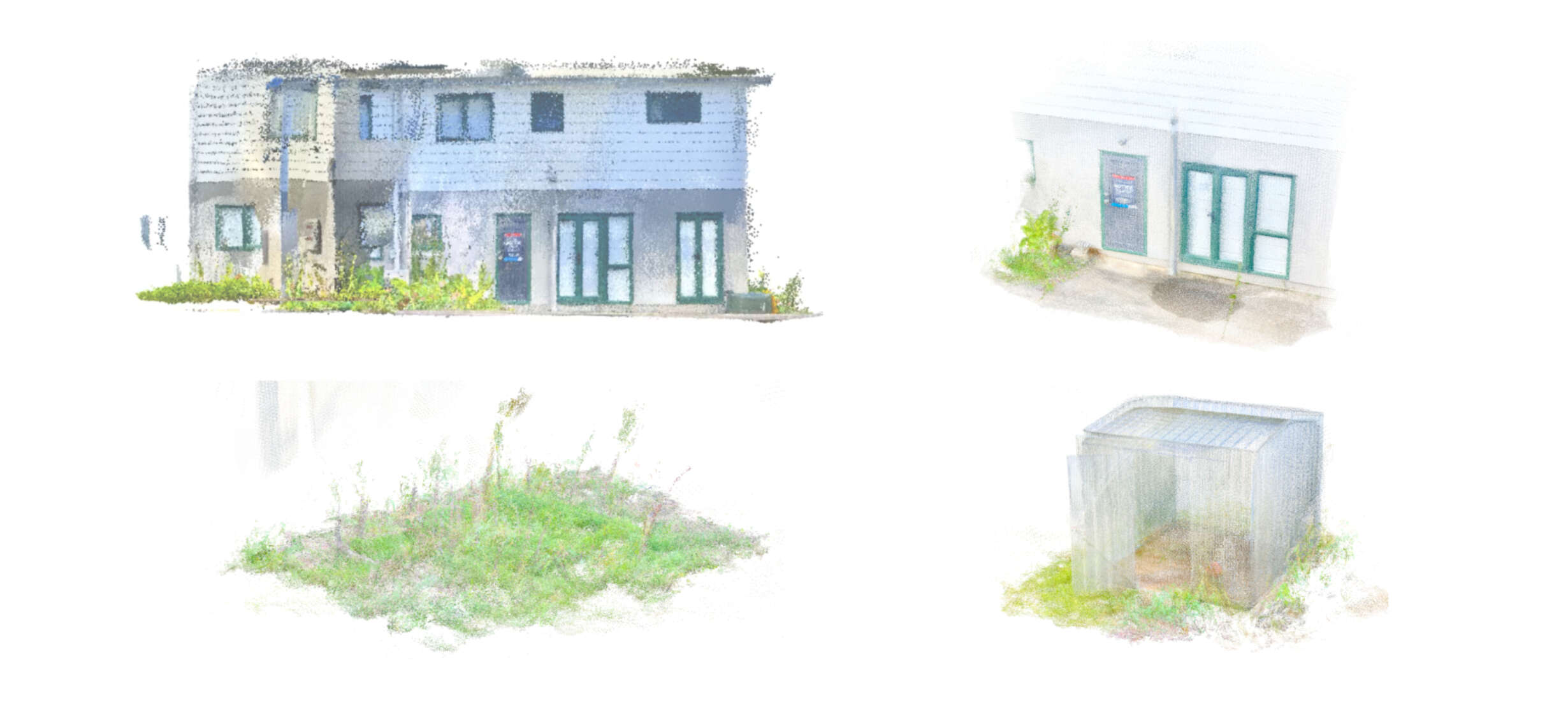
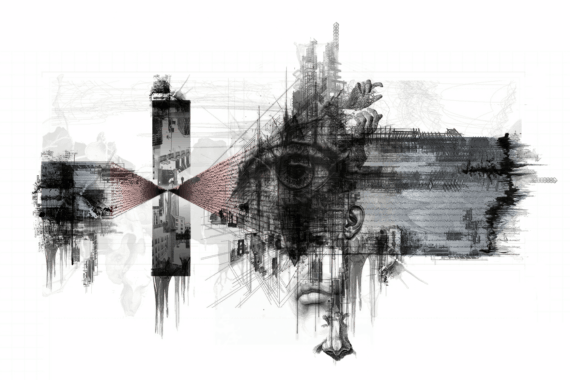
observing and documenting through 3D scans of 17A Totaravale Drive (our old home)

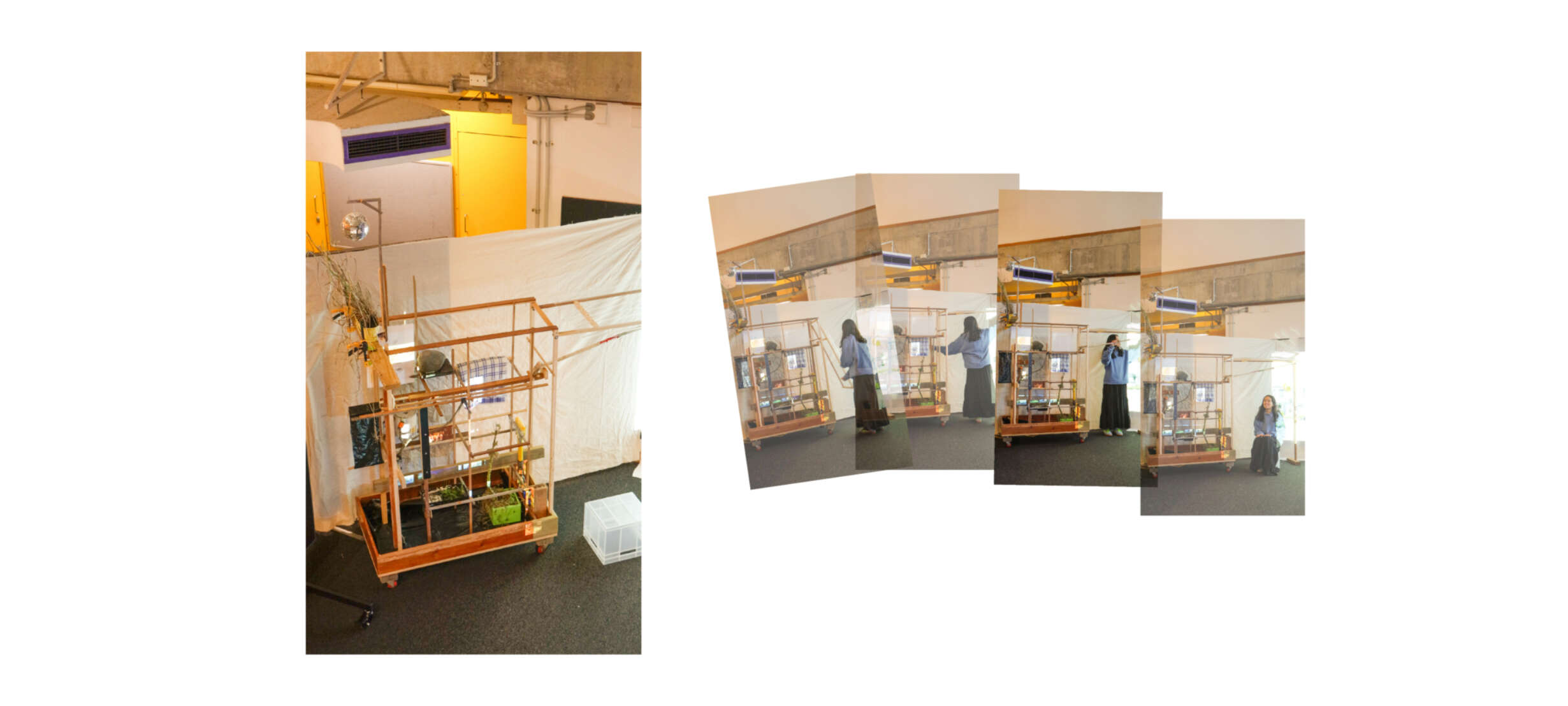
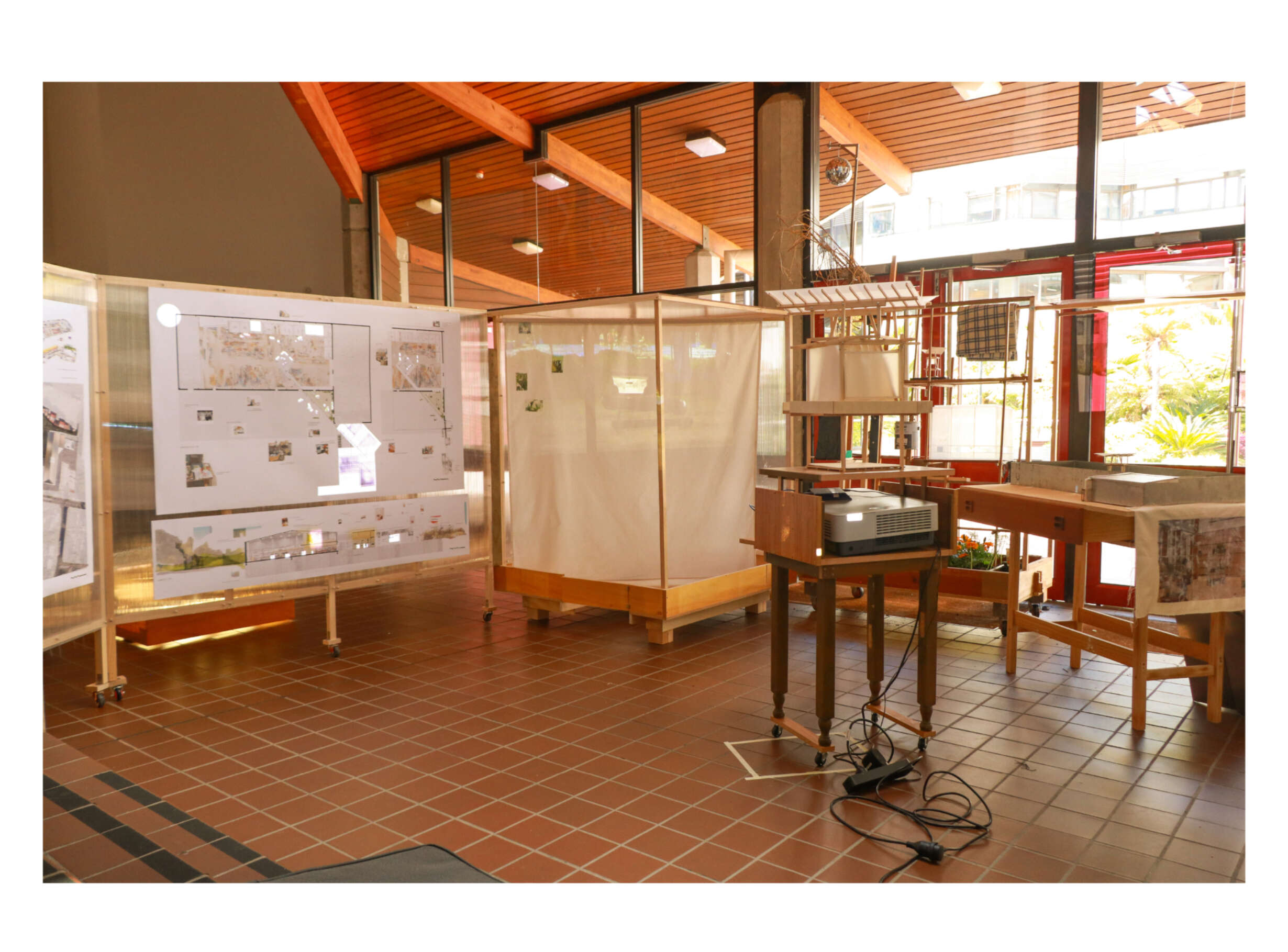
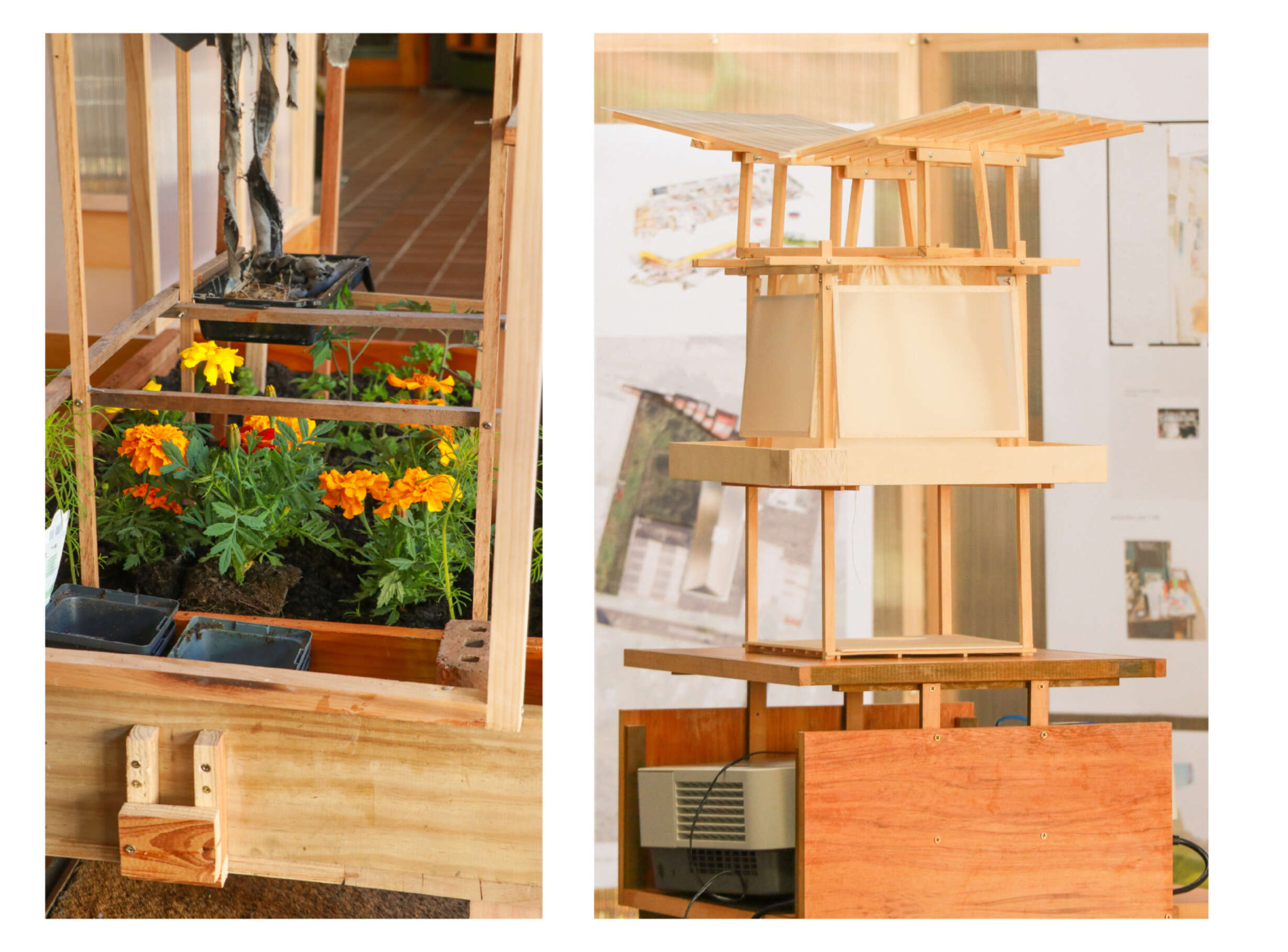
 To notice, dwell in, and document the everyday and to allow these findings to shape architecture creates a space that is rich with stories. It becomes a holder of memories and therefore a place of recovery, of hope. Attempting to let noticing and dwelling shape architecture- this mobile garden bed is an iteration of the author's old garden bed which was flooded. 
The structure combines different materials found from a recycling centre in Tamaki- without a plan, piece by piece it was put together to become a shelf that holds the author's memories of the flood, the paint bucket  used to repaint the kitchen window sill and the yellow planter stood as a symbol of hope for their family and the disco ball (which was also the height of the water line during the flood.)

 
Image 2 Artboard 2
a shelf holding remnants from the flood with memories projected onto it- a vessel that holds hope in the midst of disruption
Image 3 Artboard 26
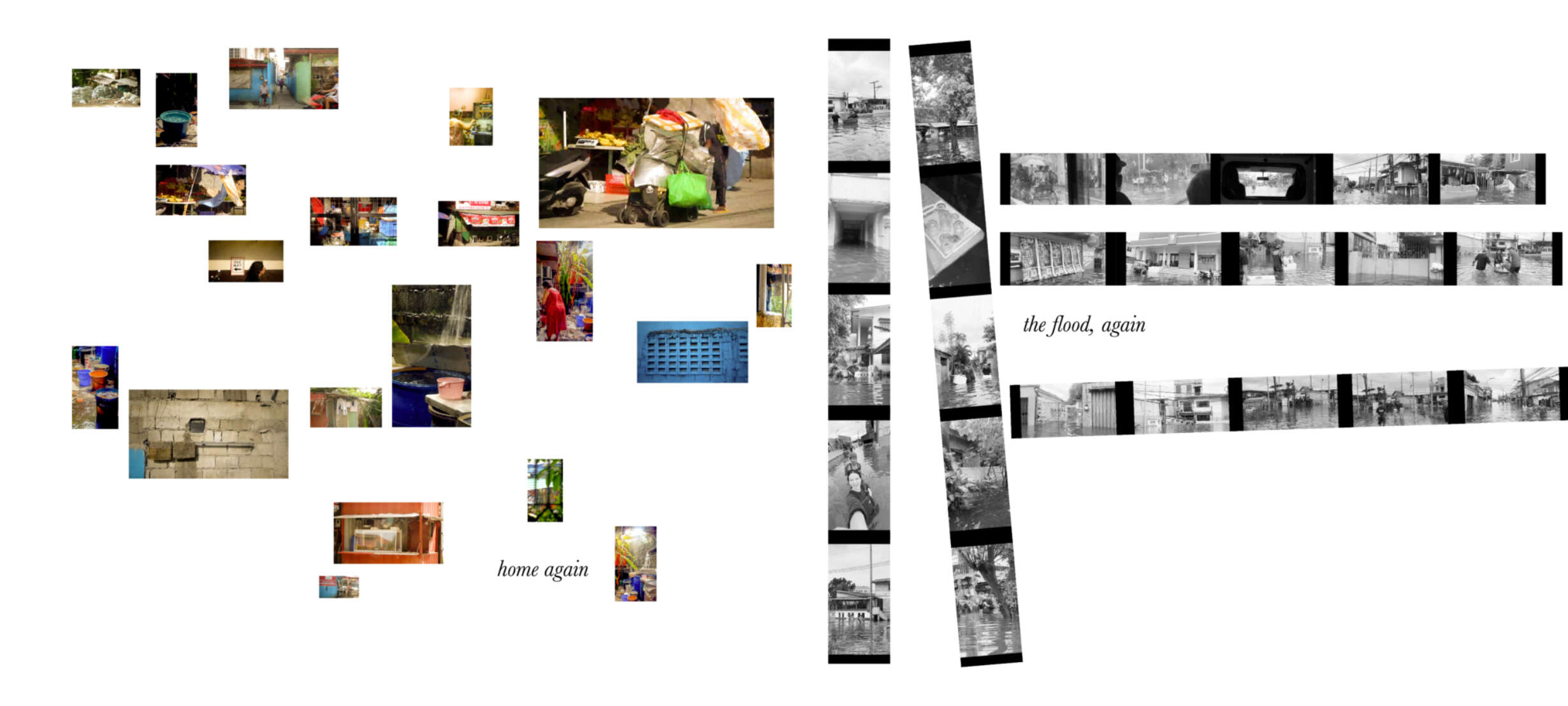
visiting another home (the Philippines) and experiencing another flood- except this time, from a different perspective

153 Pilkington Road — a place seemingly made of junk, yet full of stories. People come and go, picking up what they need and leaving what they don’t. Memories come and go here too. This place is rich, though often unnoticed. To make this richness become visible became the goal. 

 
Image 44 Artboard 1
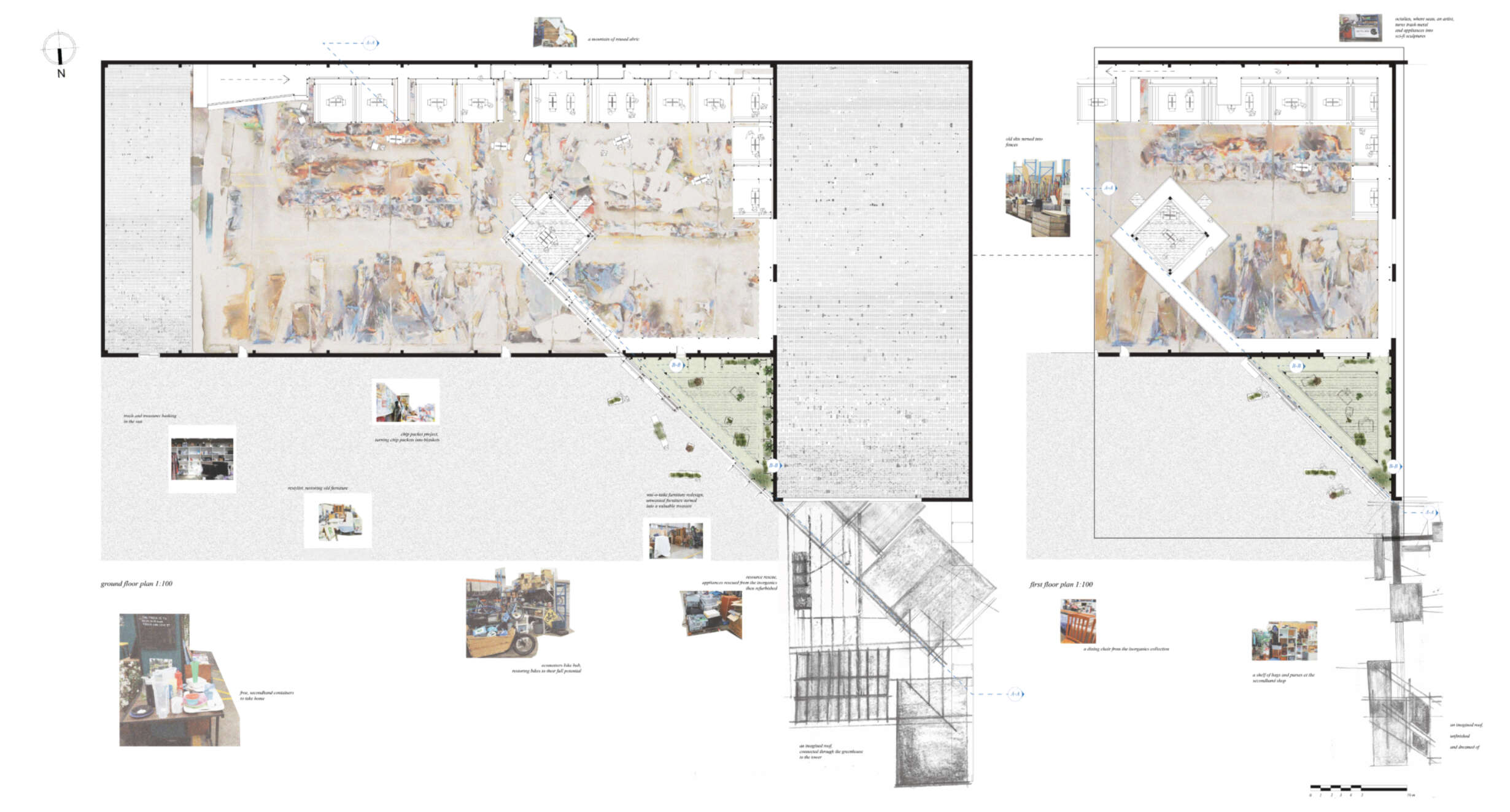
floor plan of existing recycling centre with interventions

Five elements emerged from this: the tower of memories- a projection room and gathering space. A ramp and a framework for the existing hubs within the recycling centre which act as temporary open rooms, encouraging collaboration. A long storage and display structure that disrupts the floor plan of the warehouse  providing a means of temporarily holding objects transitioning between houses. 

The garden room which similarly provides a temporary home for movable plants while also providing a venue of care and nourishment for those without immediate home. And finally, a canopy roof, itself taking the scale of architecture. Sheltering materials too big to store, but on occasion fosters other gatherings of people. It provides a sense of refuge for materials salvaged from old homes while they wait to be used. From homes that once were and homes yet to be. 

 
Image 5 Artboard 1
long section of the centre with interventions and memories, a poem

This project tells a story of recovery — encapsulating memories and moments of ‘home’ through drawing, mark-making, photographs, and experimental making to preserve what was and what is. It sees disruption as an invitation to find meaning in what seems meaningless. Our engagement with everyday objects and spaces makes a house a home, and as we evolve, so will the homes we make.

It is a story of hope amid disruption — to regain what was lost and notice beauty in the unfinished.

 
Image 6 Artboard 1
Image 8 Artboard 1
garden and tower
Image 9 Artboard 1
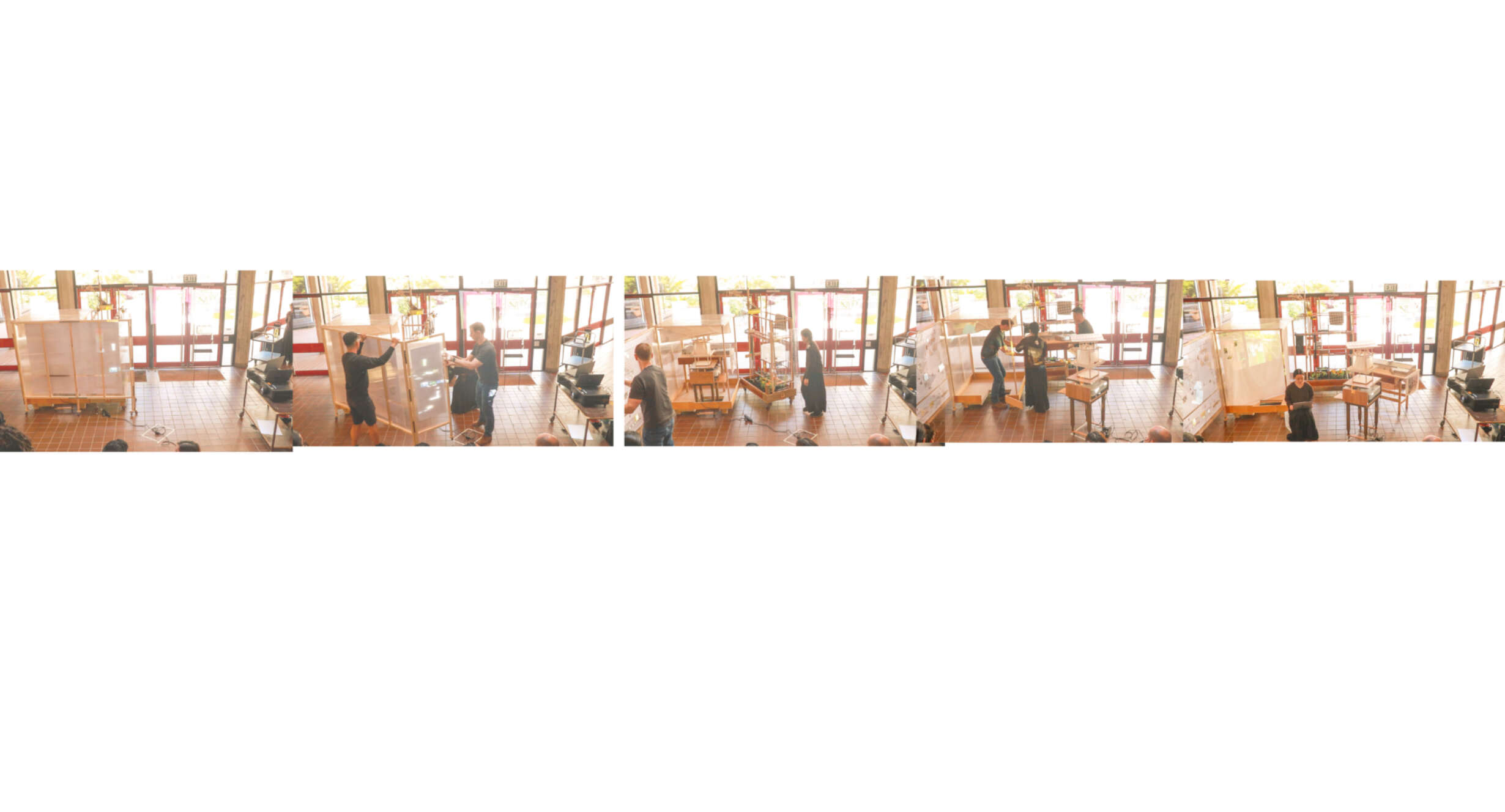
the final crit, the unfolding