Paper Hutts: Dreamt-of Pasts, Presents, and Futures in Te Awa Kairangi ki Tai
Antony MODOS Frontimage
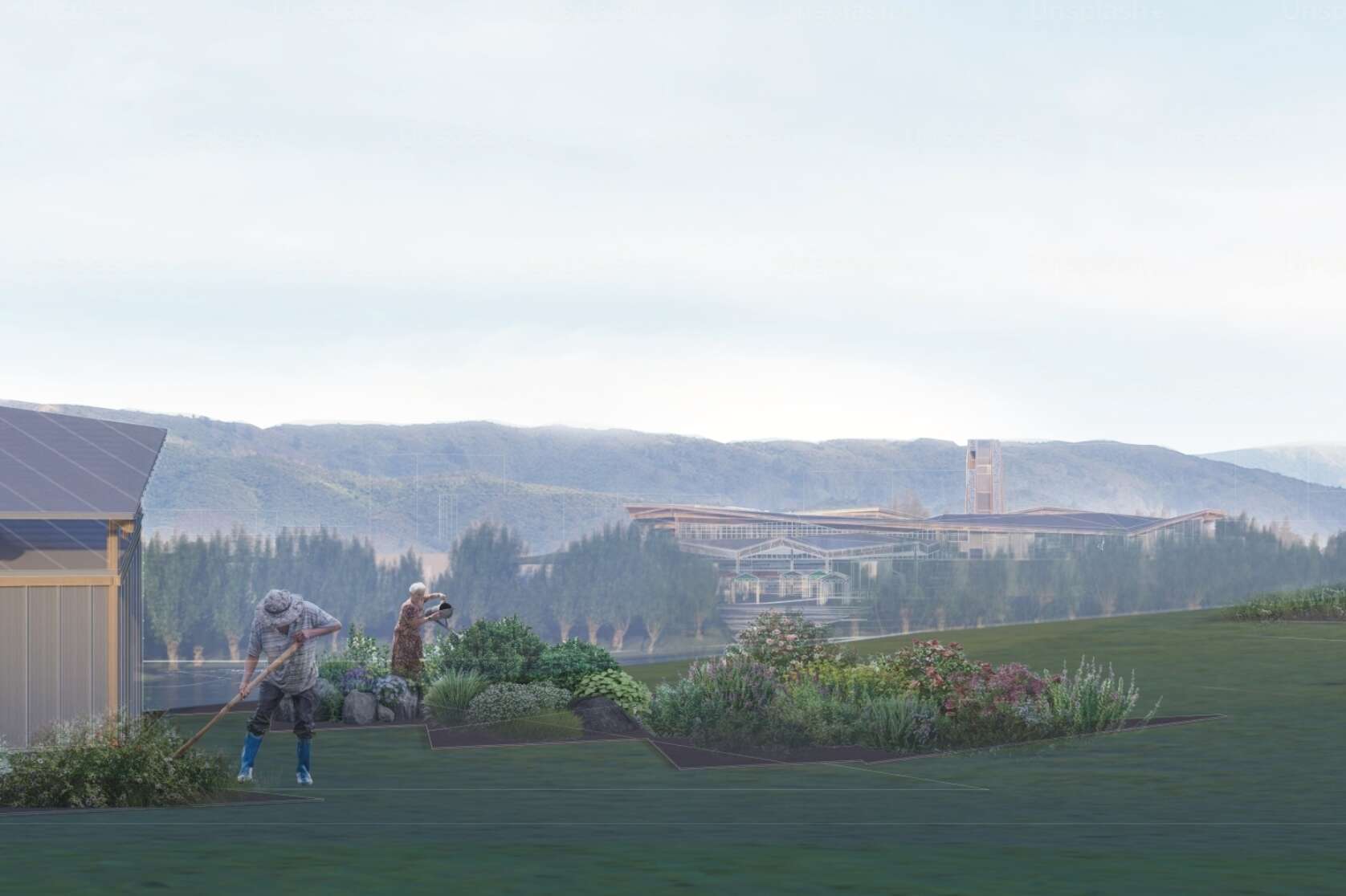
View from the Caretaker's Shed towards the Tower

This thesis is a love letter to the city that raised me and my family.

The history of the Hutt can be thought of as an anticipation of dreams, of dreams enacted, enforced, or obscured from view. For Māori, who bestowed the name Te Awakairangi, the River of Greatest Value, the once wide waterway provided them with transport for waka and plentiful kai. Early Pakeha settlement along the shores of the Hutt imagined a town called Britannia, a marketing enterprise enacted by the New Zealand Company, a dreamt-of antipodean double of London, with Te Awakairangi as a southern Thames. Across Eurocentric grid layouts imposed on stolen land, Chinese market gardeners tilled the fertile river soil, growing produce for fledgling Wellington while enduring rampant Sinophobia. Under the bureaucratic auspice of Modernism, much of this complex history remains forgotten, if not far from visible. 

Thus, this project attends to the question, how can architecture respond to the historical and natural legacies found in Te Awa Kairangi ki Tai Lower Hutt? 
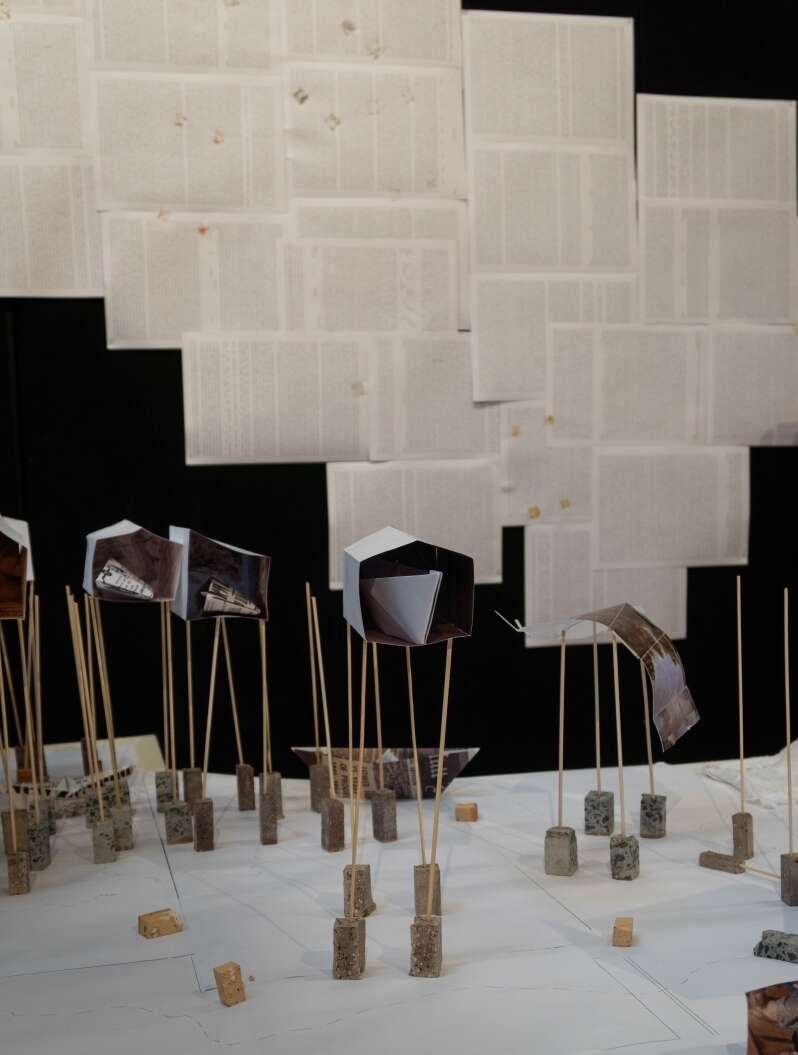
 

Behind the historiography of Lower Hutt is a flow of paper that parallels Te Awakairangi’s inherent meandering nature. This commenced with Wakefield’s “Letter to Sydney”, which describes the systematic colonisation of Australia and Aotearoa, is seen here in early making on the floor. Britannia was to be the working example: a sea of maps, plans, certificates of title, making up the textual contours of colonial cartography and a paper history that shaped the Hutt.

1 Paper Boats
The history of the Hutt, in paper, with Wakefield's 'Letter to Sydney' in the background

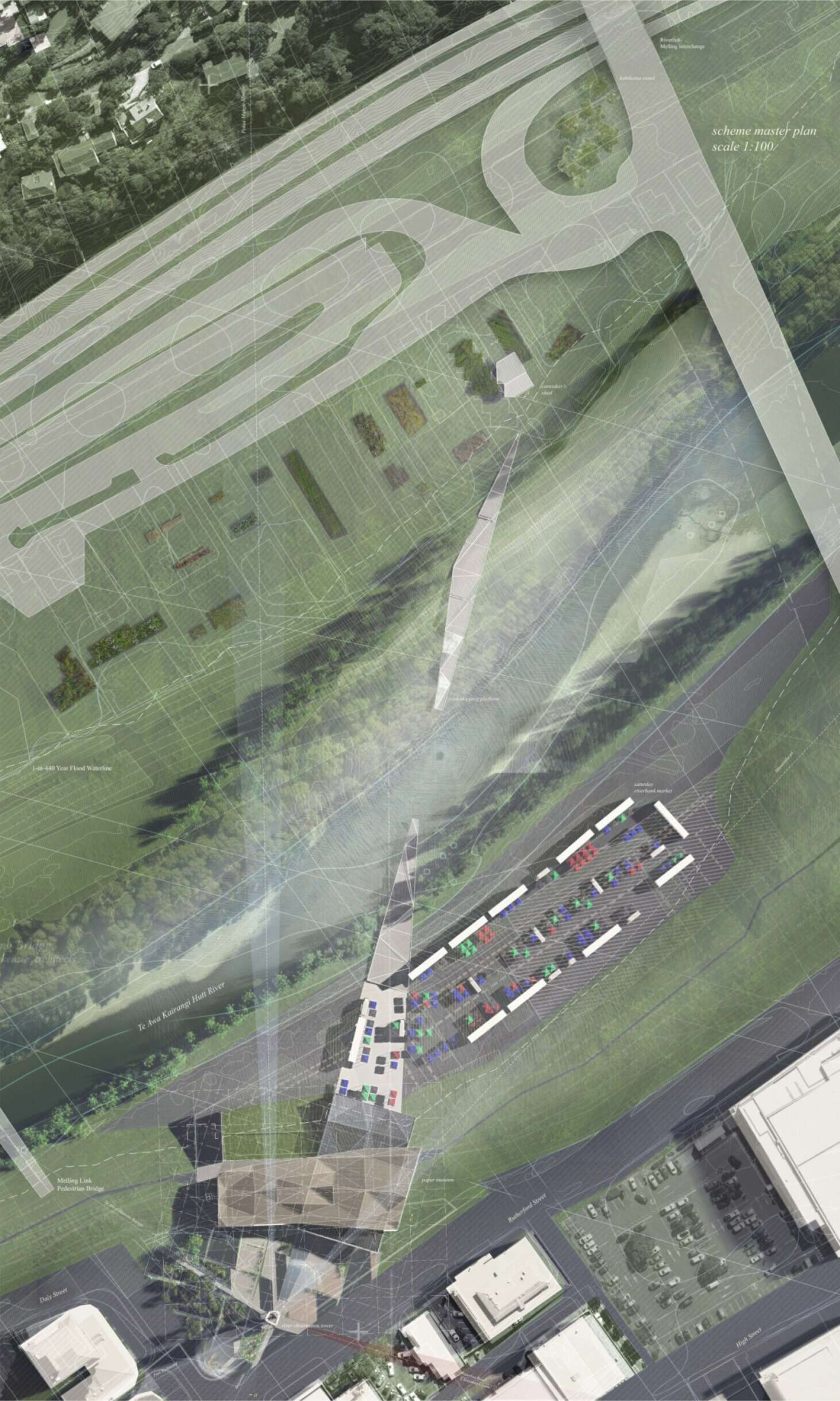
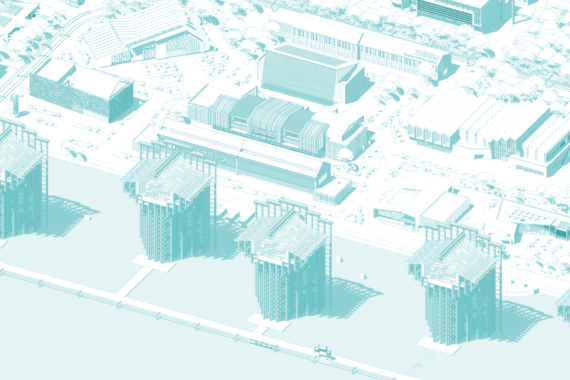
Thus, this thesis is sited at the point of greatest contention, and potential to the Hutt’s future development and relationship with its awa- the stopbanks adjacent to the Lower Hutt Saturday Riverbank Market. This thesis examines the Hutt’s stopbanks as a spatial barrier to the river to the city through the framework of the transformative Riverlink project, which necessitated the heightening of stopbanks, alongside the demolition of 62 houses and temporary relocation of the Market. 

 
2 Site Plan
Site Plan

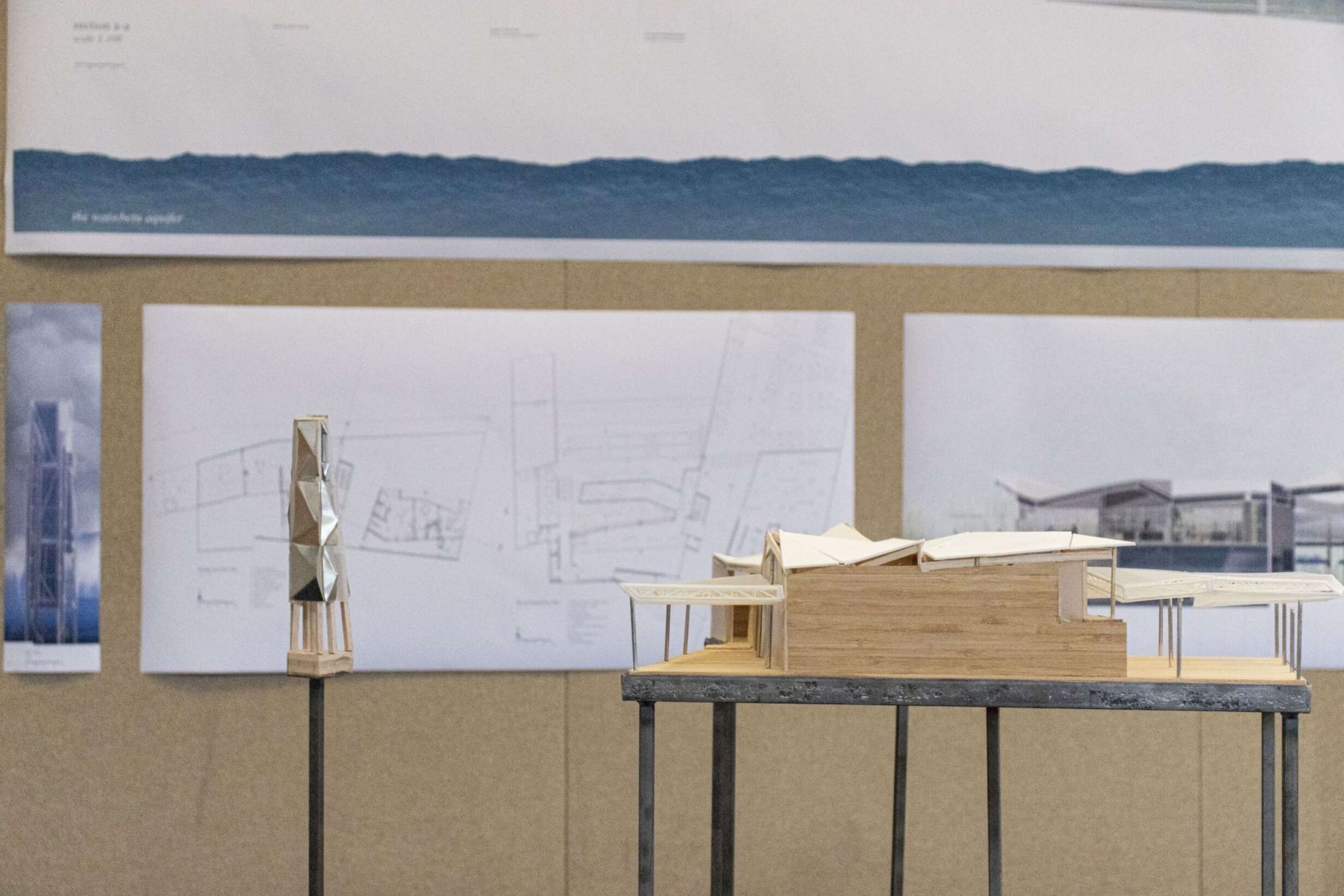
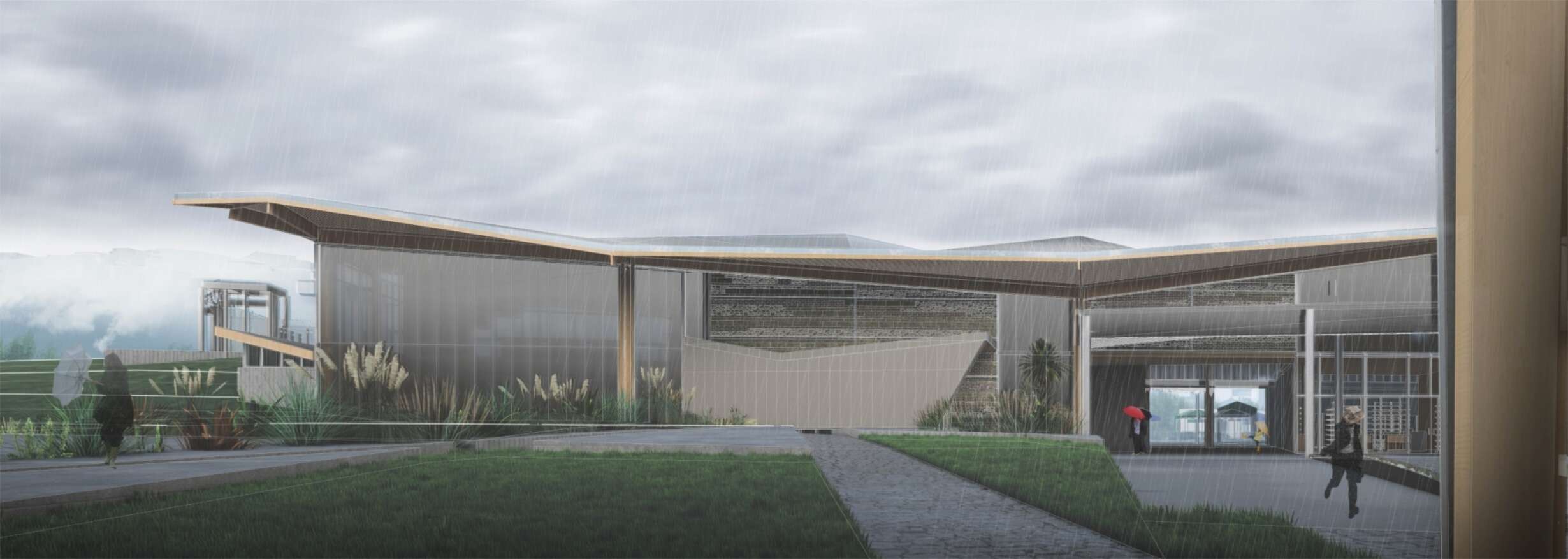
The project shown here attends to the research’s focus of uncovering the Hutt’s paper history through the six motifs of a watchtower, a paper museum, a bridge, a shed, a garden, and a forest. These proposed interventions reclaim through practice, craft, and cultivation as representations of memory.

 
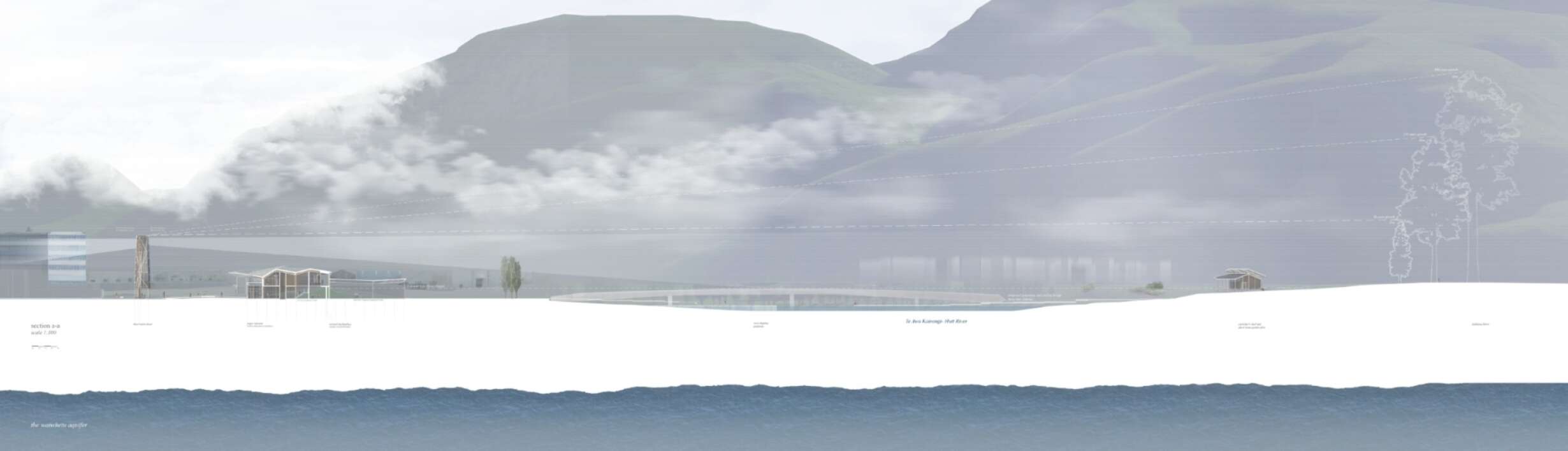
Section1
Section2

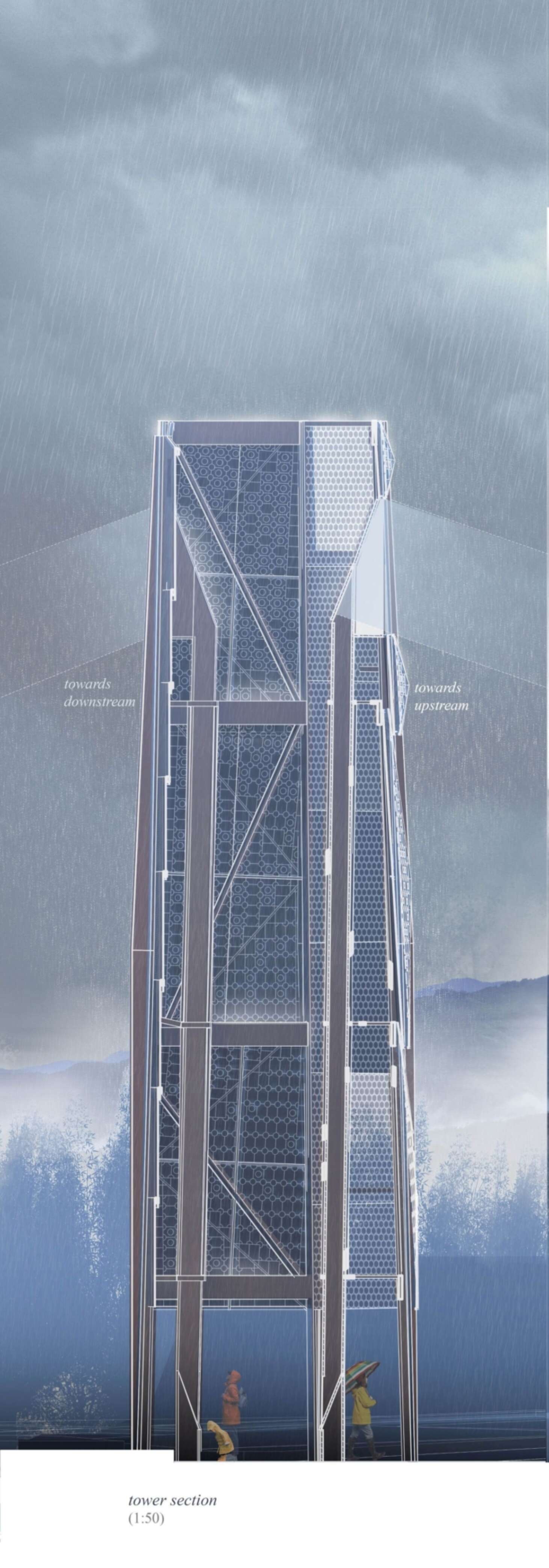
The proposal is anchored by a tower, and a kahikatea forest, are vertical devices gauging the meandering, horizontal confluence of histories and river flows, whose temporality dictates the function of the proposed spaces between.

 
03 Tower Section copy
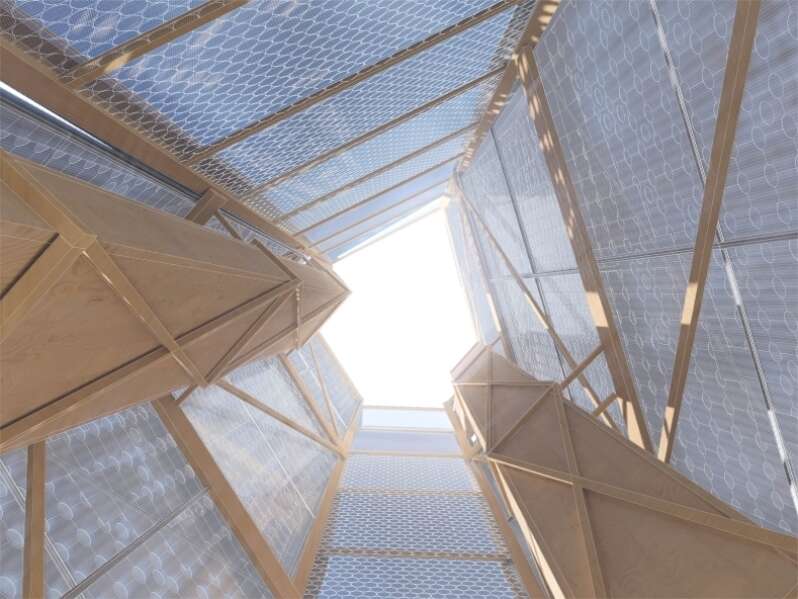
P ERSPECTIVE6 copy

Held by the architectural forms and landscapes conceived here is a capturing of significance for human occupancy of the Hutt. But ambitioned here too is an historical nurturing that seeks to retell the deep time of Te Awakairangi, for which a paper history is but a peremptory surface contouring the play of human ambition, hubris, and dreams. From tower, to museum, to market, to river, to garden, to forest.

 
IMG 6492
Perspective1 copy