Grainform

James Corles

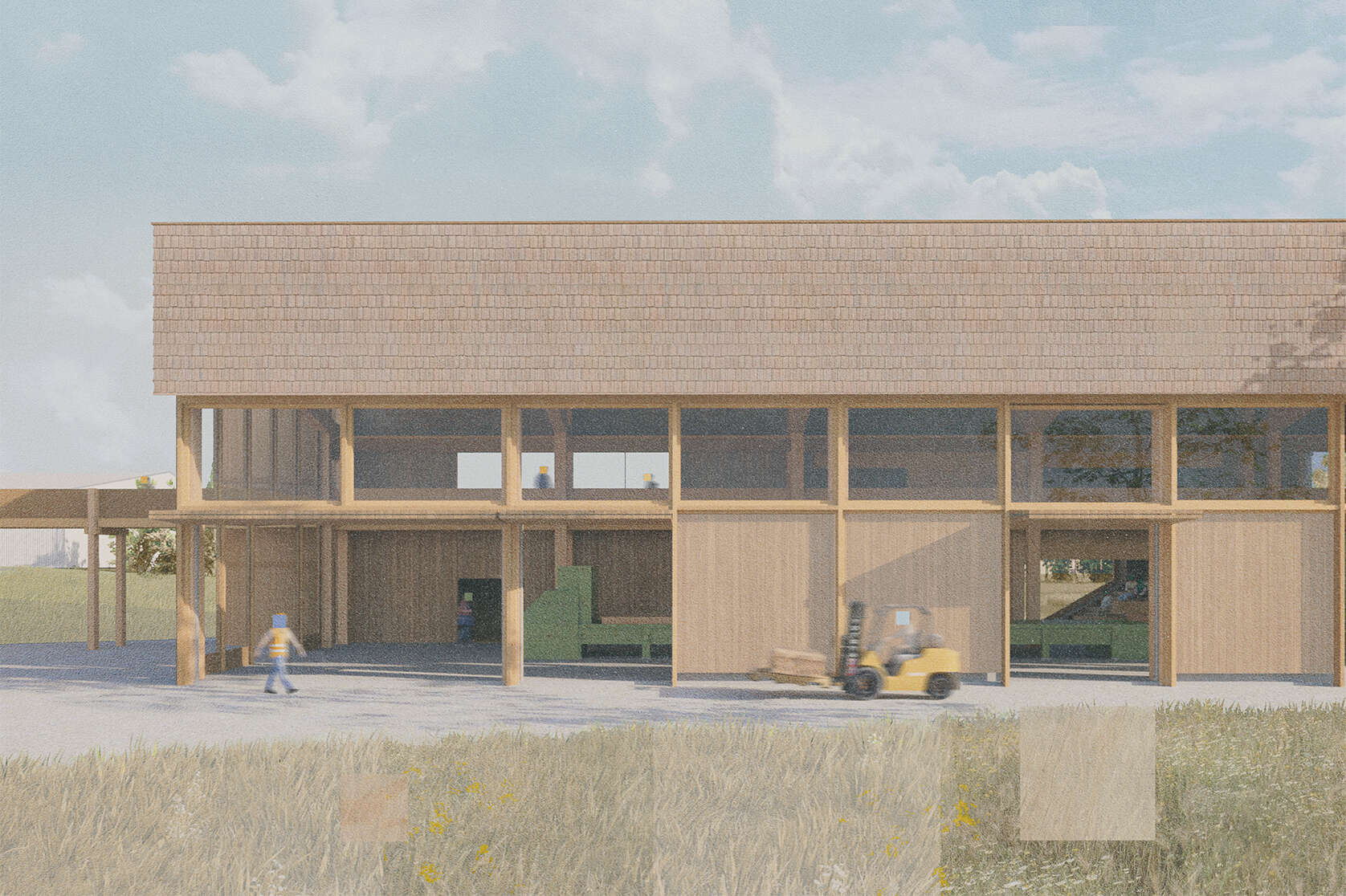
Intro Image Factory Render
“The Press Hall”, an elevational view of the final factory of the forest-to-dwelling line.

Re-laminating New Zealand's Housing Chain

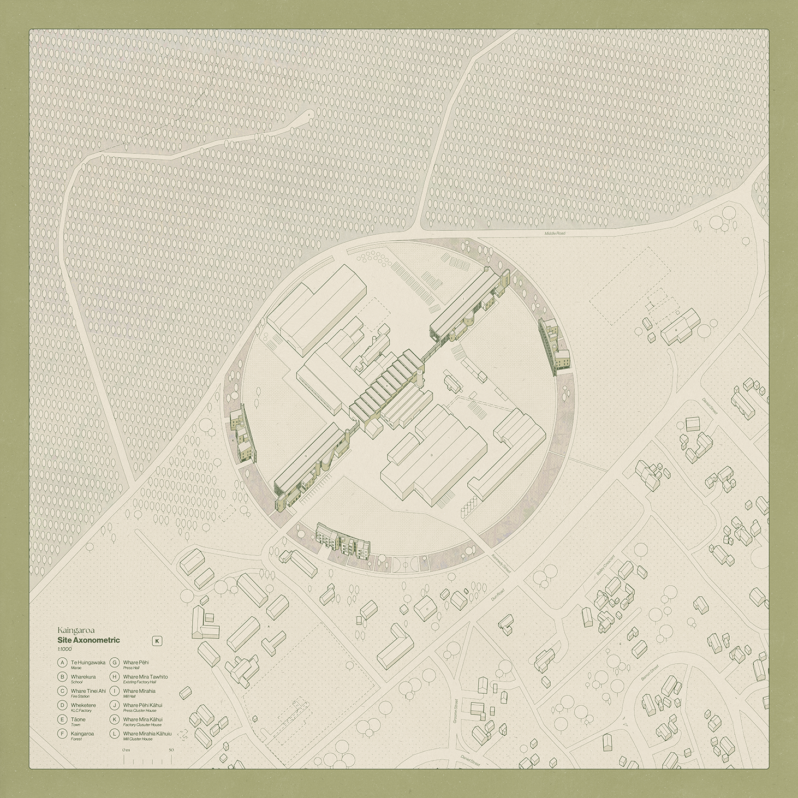
Grainform aims to revive Aotearoa’s historic capability to grow, manufacture, and use its own timber through a new mass timber housing scheme that considers the process, from forest to dwelling. Represented symbolically by the circle and the line, the project comprises two components, a ring housing scheme and a linear factory, anchored around an existing factory. This project sits at the intersection of forestry, industry and housing.

To frame this investigation, a metaphor of grain is drawn forth. Grain suggests order and continuity, but when met with disruption, it reveals complexity, tension and possibility. These knots in the “linear” housing chain become moments of architectural opportunity to explore the intersection of systems. 

The research asks how understanding grain can inform the design and production of mass timber housing that reconnects forestry, manufacturing, and community in Aotearoa? This question is grounded in investigating New Zealand’s fragmented timber supply chain and overloaded housing system. The research is anchored around our largest forestry, Kaingaroa, and its small milling town within. A layered history of colonial forestry, Māori land relationships and industrial decline shapes this site. 

Kaingaroa embodies a national condition of abundant forestry resources, struggling local industry and a pressing need for quality affordable housing. As Aotearoa looks to mass timber as a sustainable material solution, there is an urgent need to reimagine how this resource can support integrated, community-driven development.

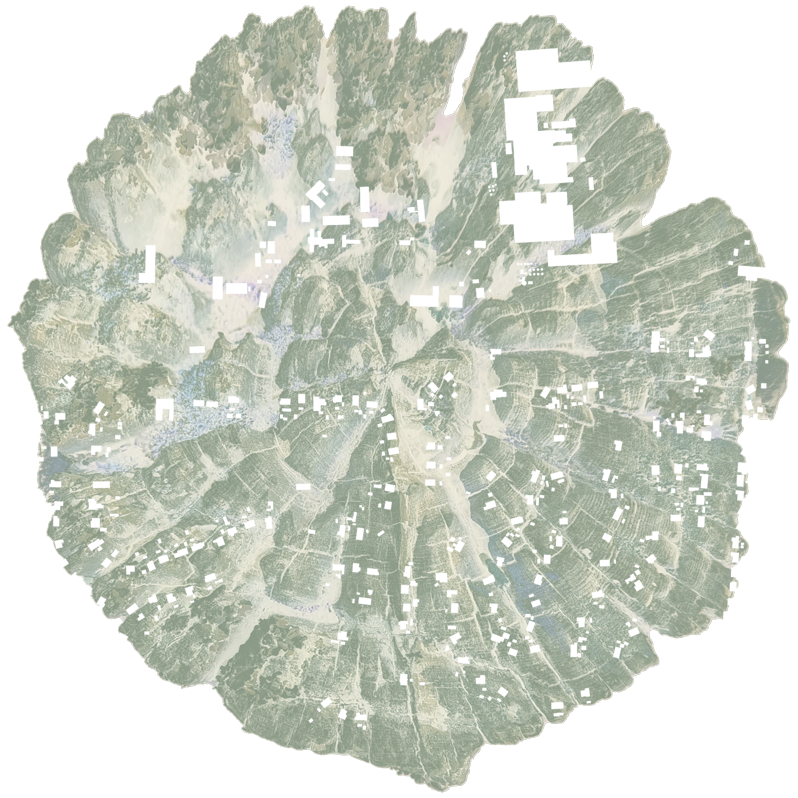
Corles Log Map

The Line | Forest-to-Dwelling CLT Factory

 
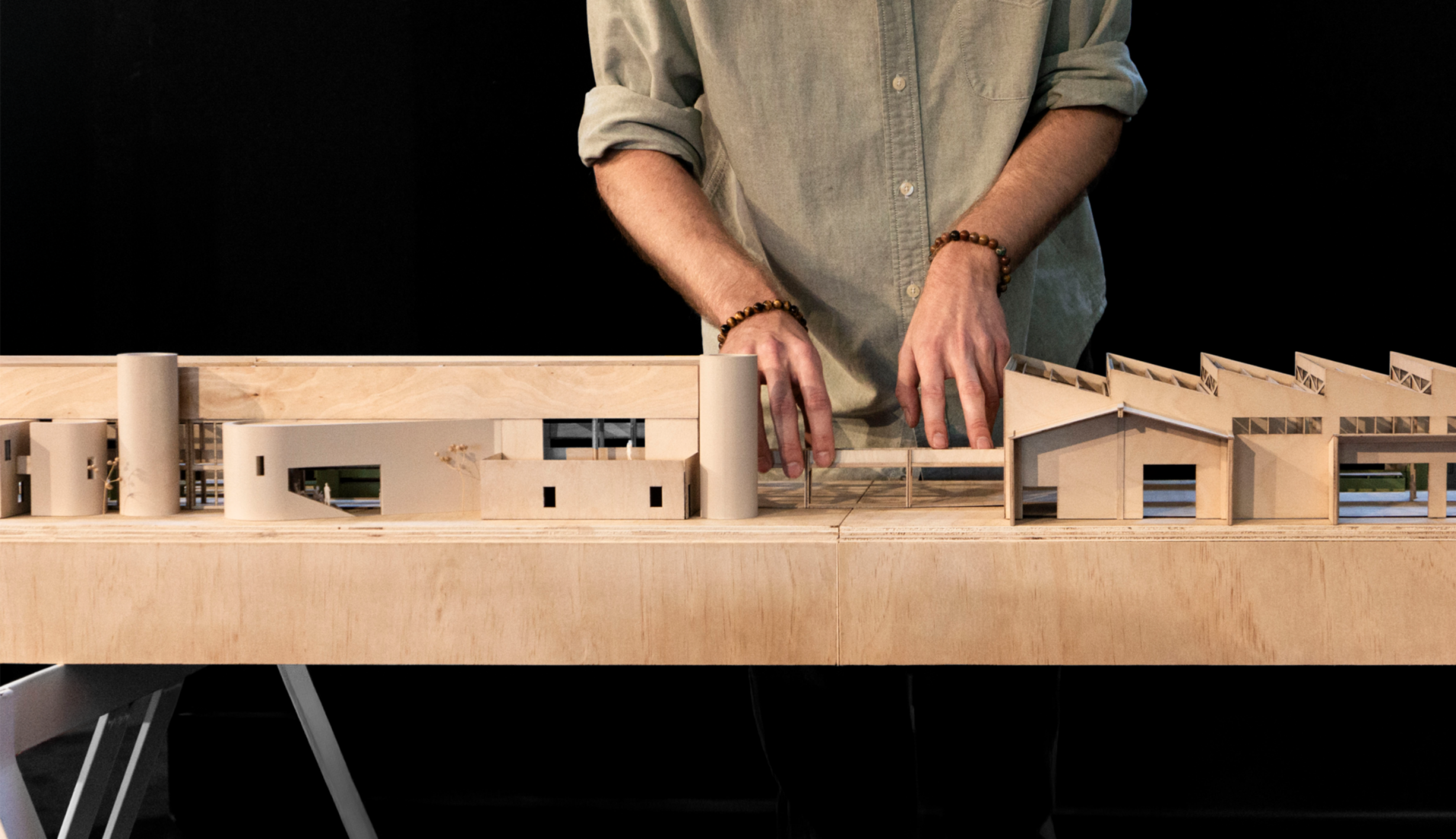
Corles Model Photo 1
"Factory Model," Forest-to-Dwelling Manufacturing Line.

"Upskilling a Factory and its Town"


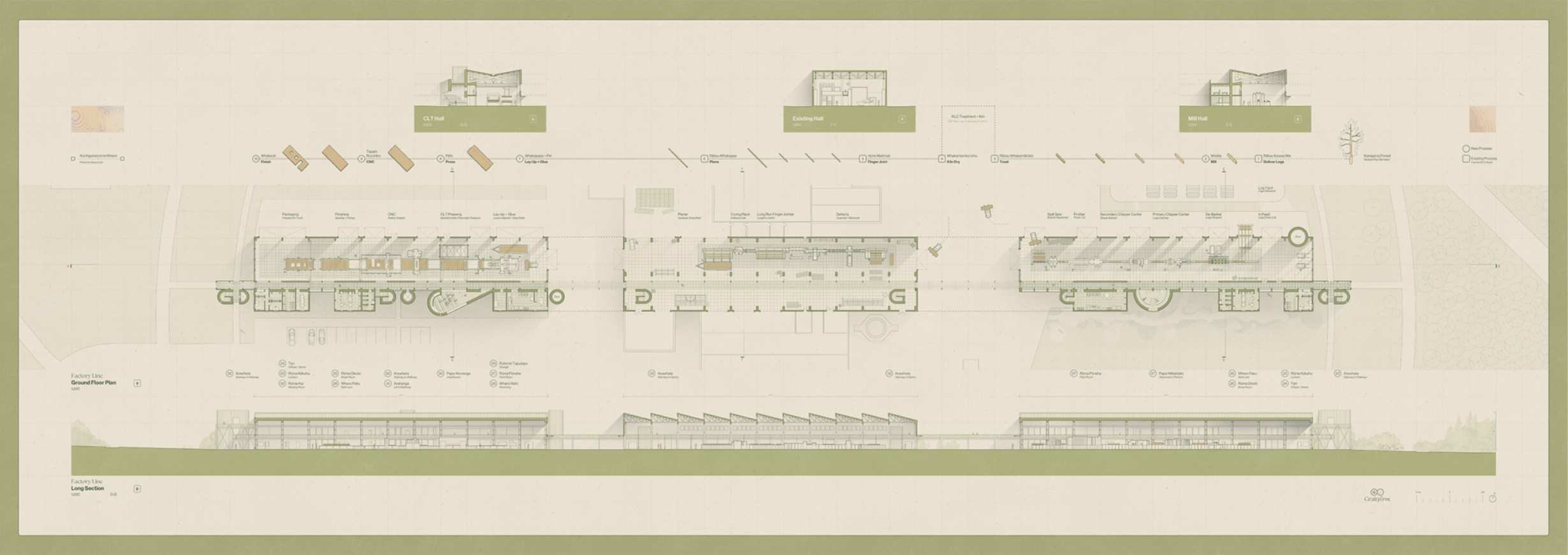
The line element of this project represents a new processing line to supplement the current factory. This new line enhances the existing manufacturing capabilities by incorporating the necessary machining to process logs and produce laminated products. The manufacturing line is organised into three consecutive halls of grouped processes, with the middle hall being a reuse of an existing warehouse.

Corles Model Photo 3
Corles Plan 1
"Factory Line," Plan + Section.

The Circle | Ring Housing Scheme

 
Corles View 1
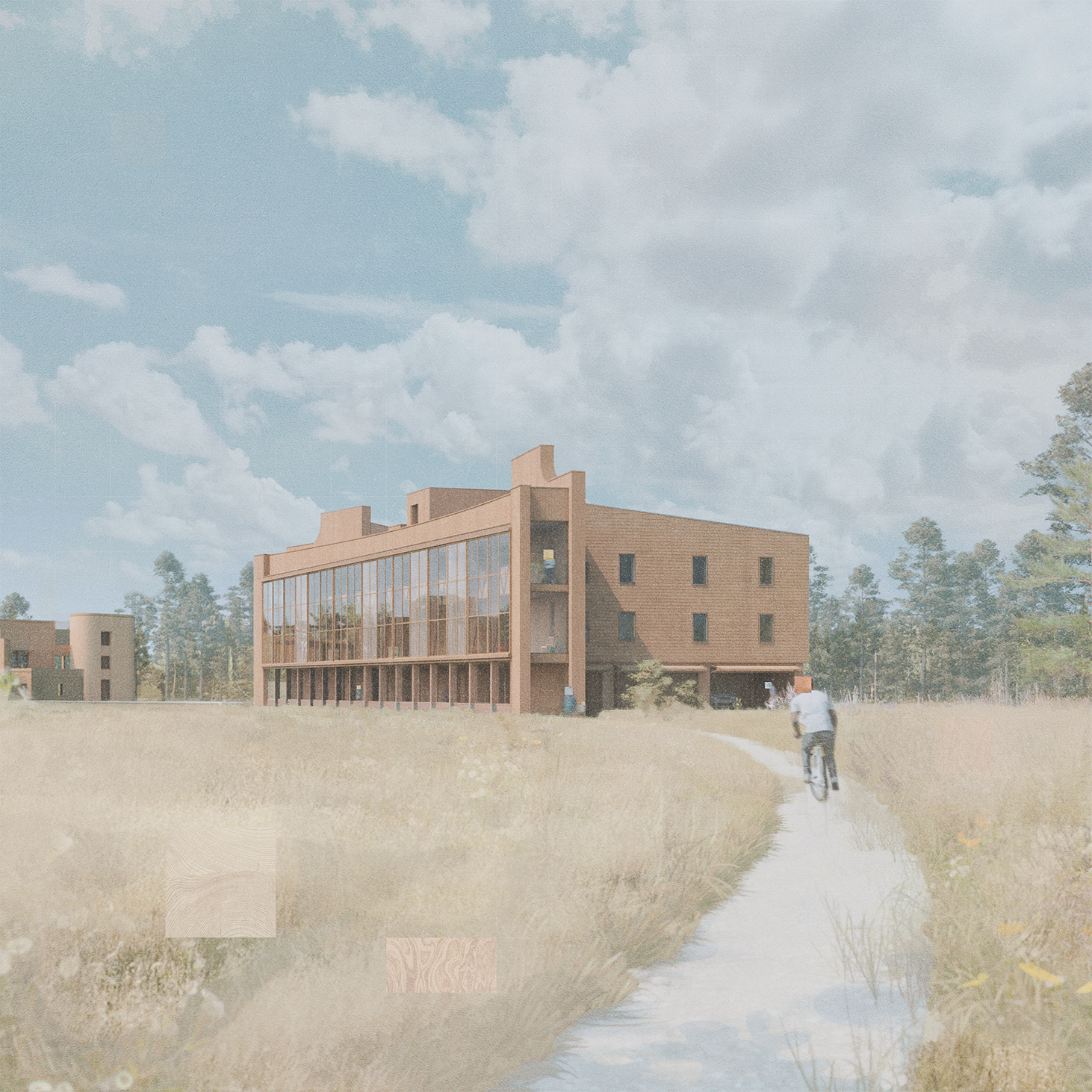
"The Wedge House," seen from the ring path.
Corles View 2
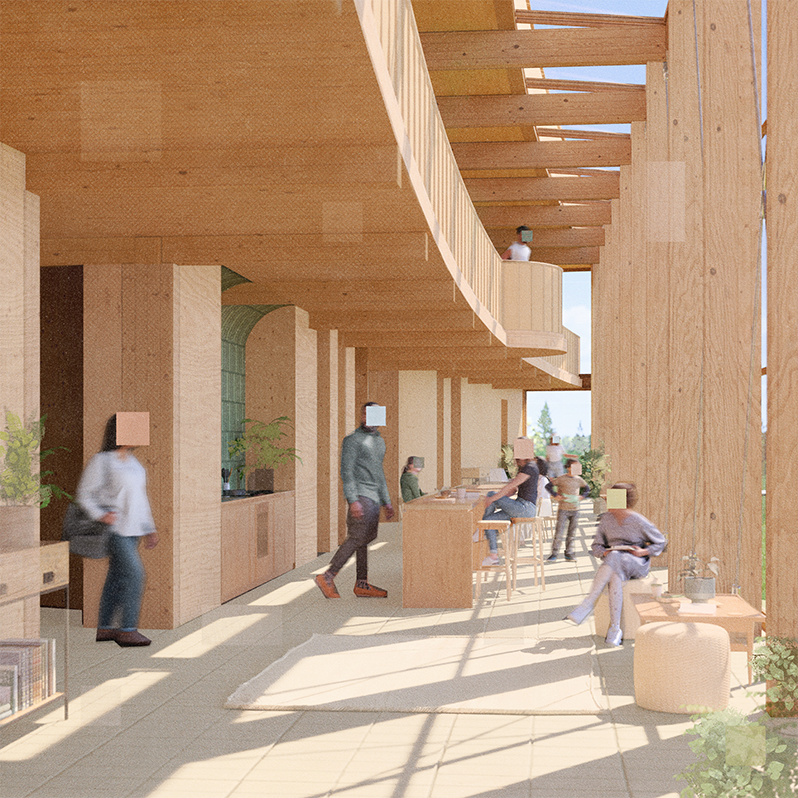
"The Wedge Atrium," communal space and shared corridor.

"Ring Remnant"


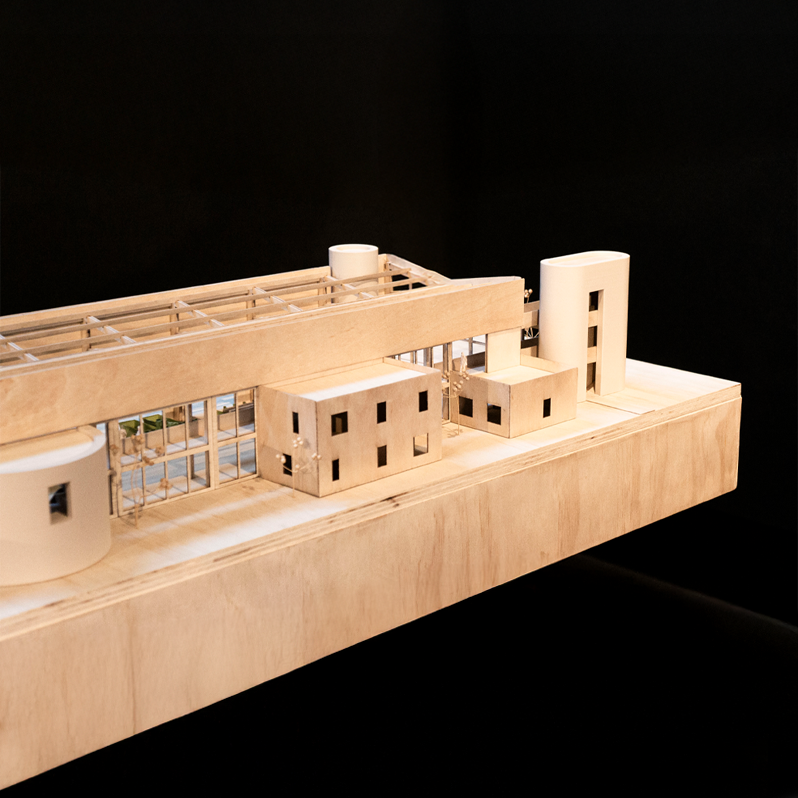
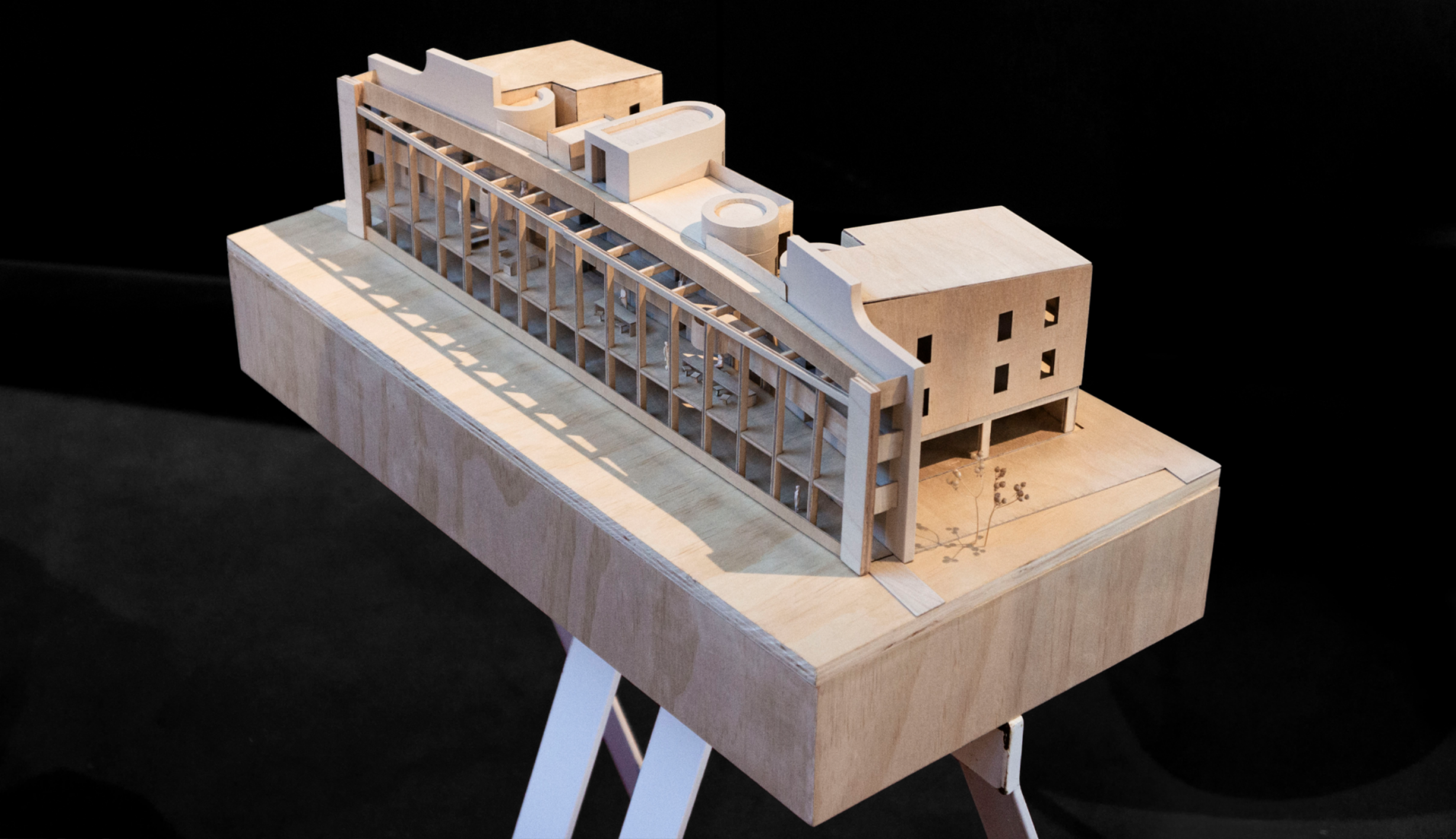
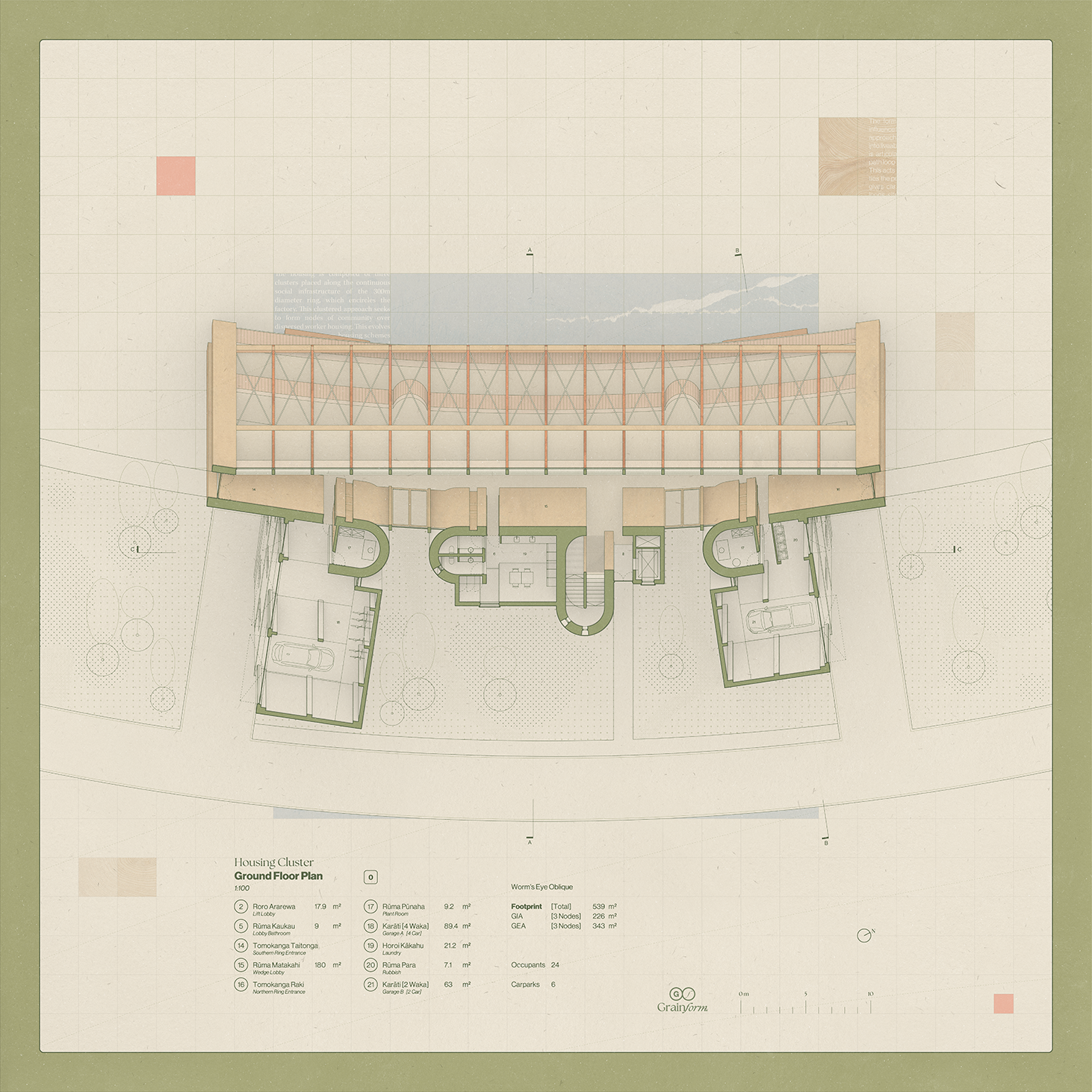
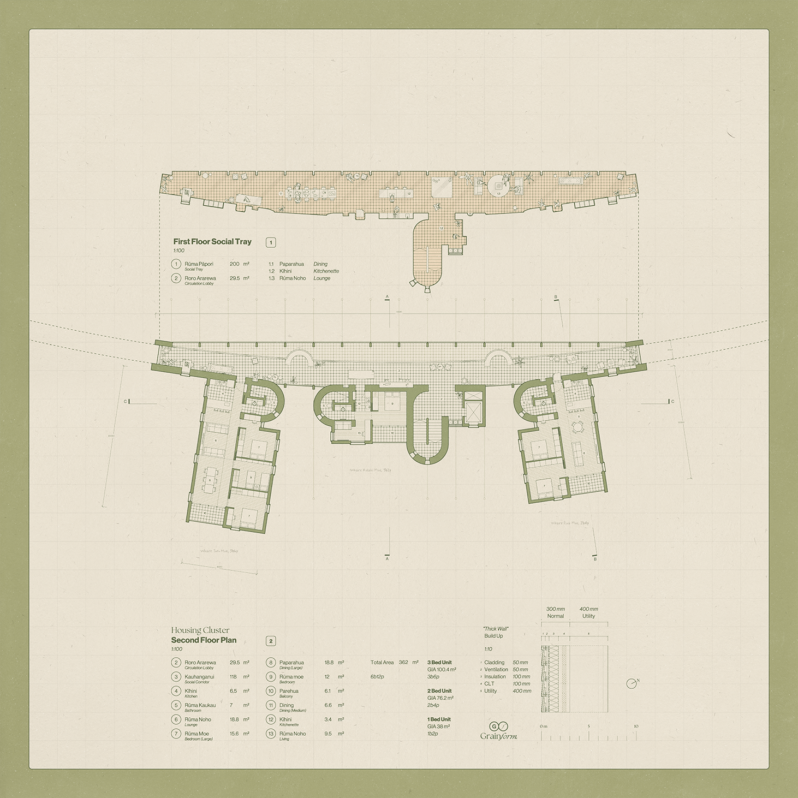
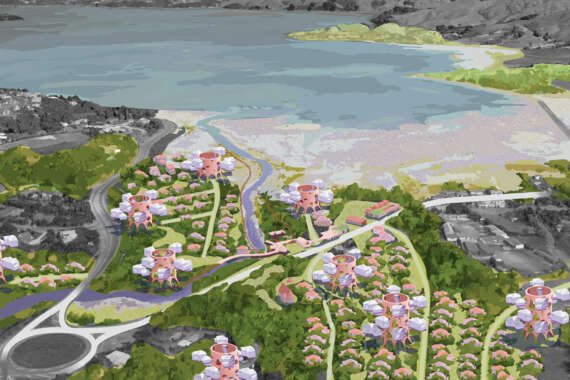
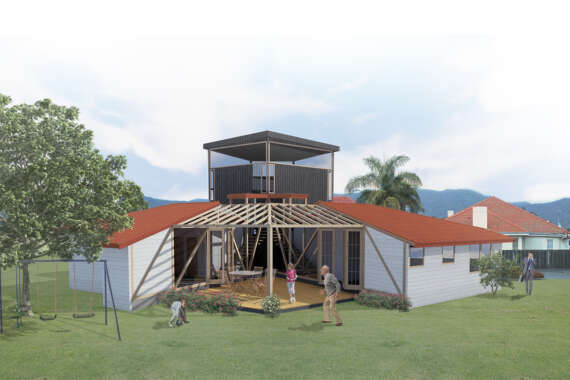
The circle represents a ring worker housing scheme that supports a continuous, sustainable social infrastructure. The ring housing is divided into three communal clusters, positioned along the ring. These clusters become the remnant of this ring scheme. The resultant wedge house has two components, the shared atrium and the dwellings that peel from it.

 
Corles Model Photo 2
"Housing Model," Communal Cluster House.
Corles Plan 3
"Wedge House Ground Floor," Wormseye.
Corles Plan 2
"Wedge House Floor Plans," Dwellings + Social Tray.

Grainform envisions a re-laminated relationship between forest, factory, and settlement, reimagining a dying milling town into a new timber epicentre. 

Corles Plan 4
"Site Axonometric," Factory + Housing + Forest.