An Archive Of Traces

Cassady Glasgow

[email protected]
Modosphoto min

In a world that has forgotten how to slow down, time has become an object to be measured and controlled. This perspective is reflected in the architect’s obsession with control, permanence and perfection in the pursuit of achieving timelessness, resulting in architecture that rejects time and change. Imperfections and impermanence are perceived as threats to control and stability, however, change is inevitable and constantly occurring everywhere, leaving subtle traces despite efforts made to control them. 

This thesis explores how speculative architecture could challenge this conditioned time blindness and reimagine the relationship between architecture and time, by embracing process, craft, and impermanence.
A2rewritecollagedonedone 2
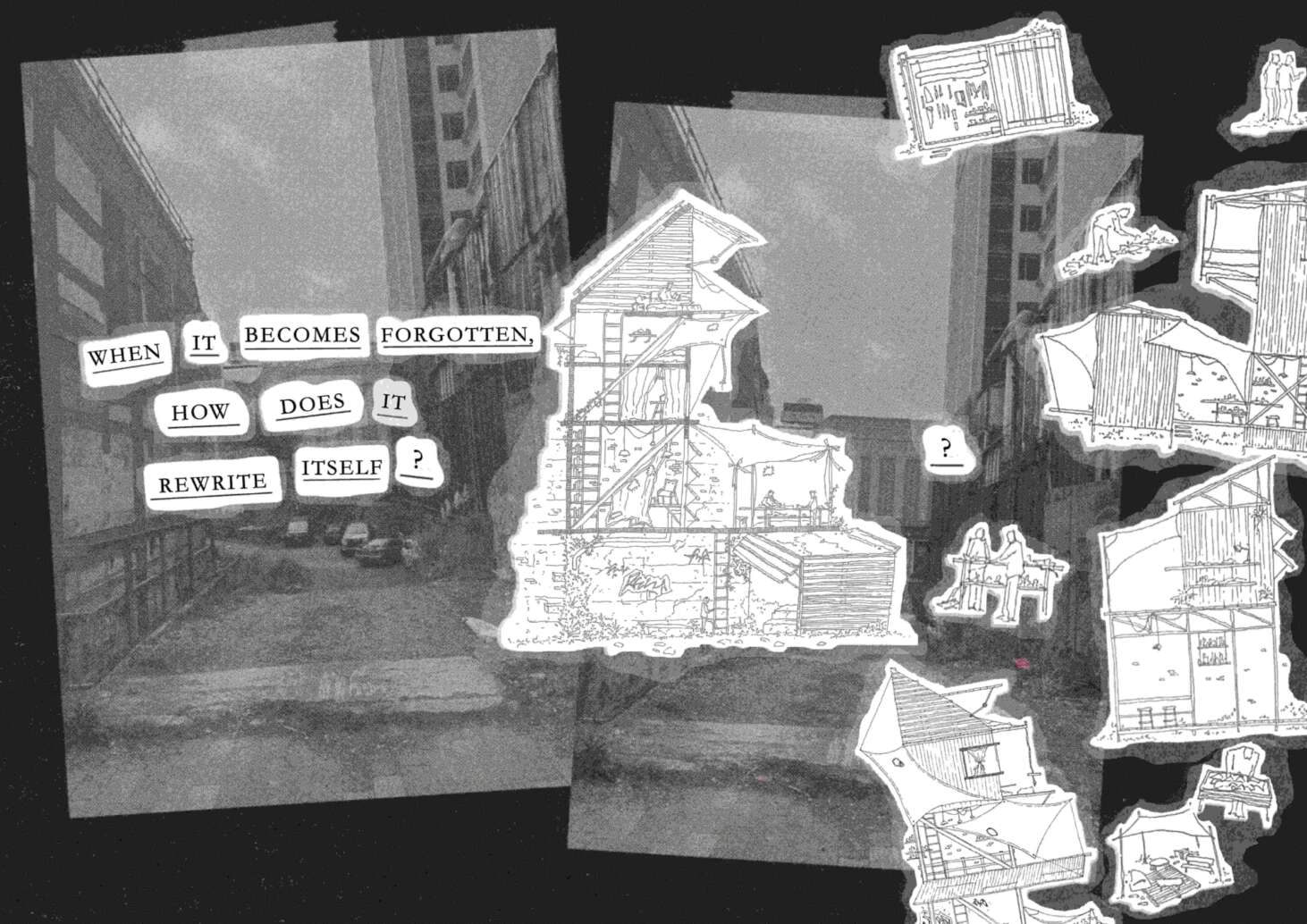
An early collage of the forgotten site layered with initial exaggerated narrative-driven concept sketches
Booksmdoos
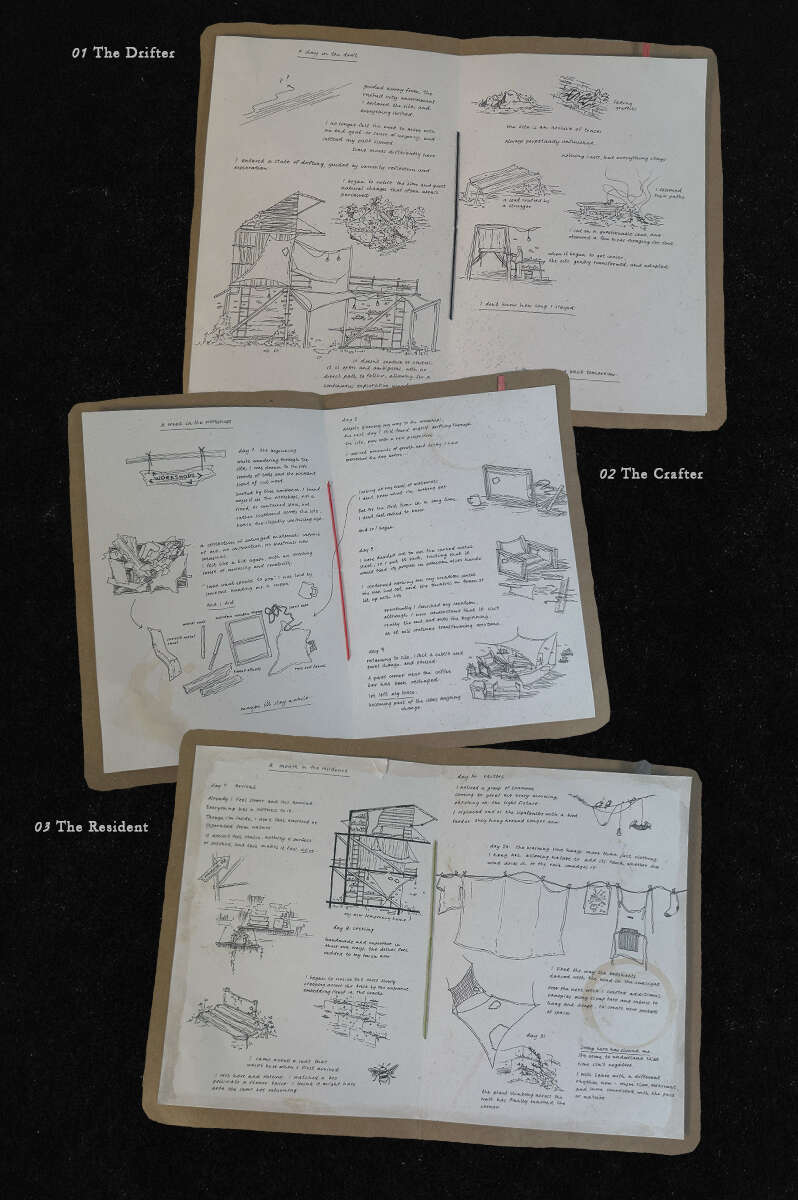
Initial 'character diaries' created to explore potential protagonists, documenting their experiences - One day in the drift, one week in the workshops, and one month in the residence

Using the 'void' adjacent to Auckland's St James Theatre as a case study, the site’s abandoned state and abundance of salvageable materials creates an opportunity to explore the potential of often overlooked void spaces. 

The speculative narrative unfolds through four fictional protagonists that become actors navigating the site across different temporalities, emerging through the first protagonist, The Architect. Emphasising that designing buildings is designing situations, the thesis repositions the architect as a mediator. The Architect proposes an incomplete and ambiguous ‘architectural skeleton’, composed of a few key elements: a material collection library, workshops, and small residences, creating conditions of spatial agency intended to gently guide potential inhabitation.

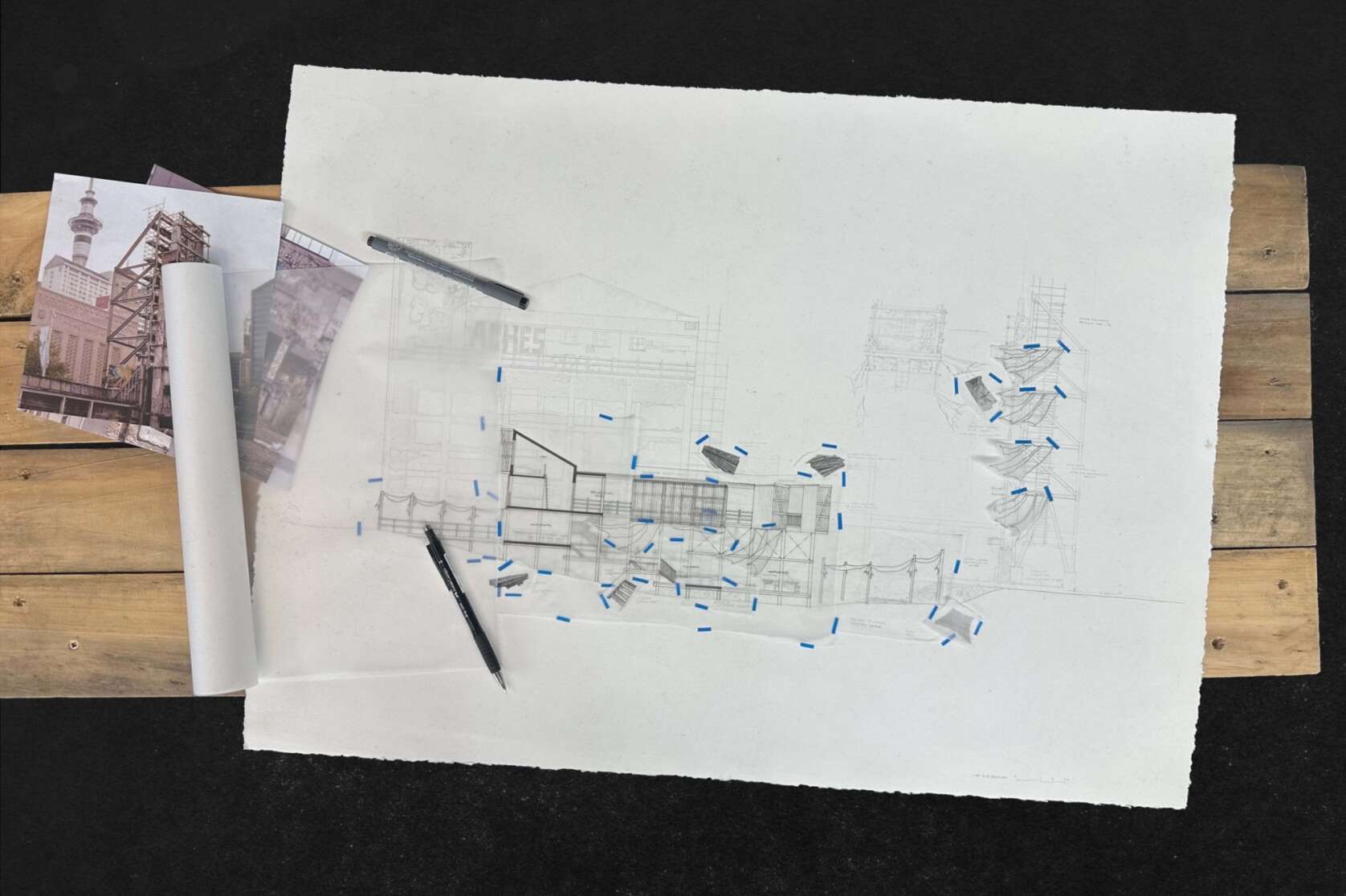
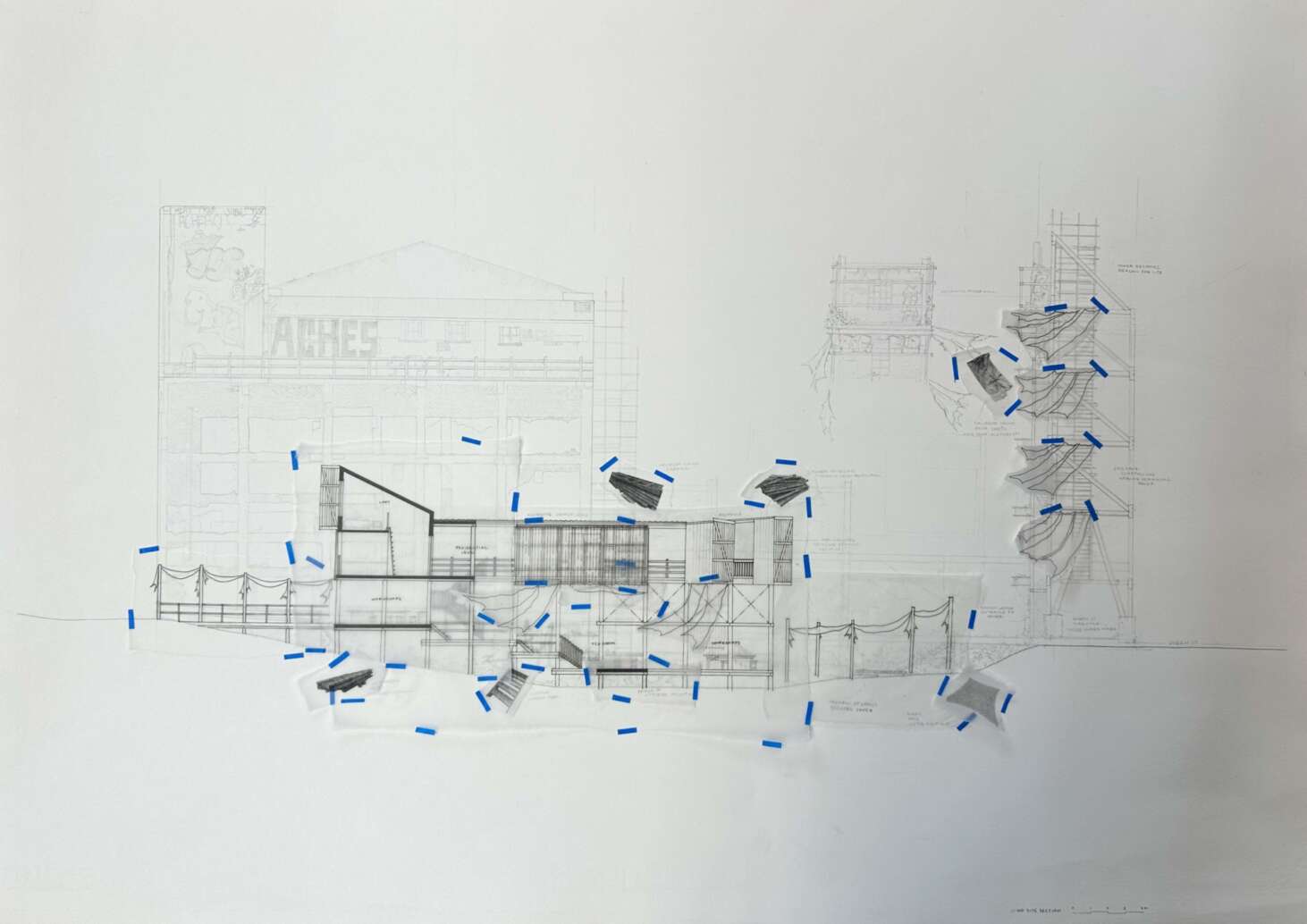
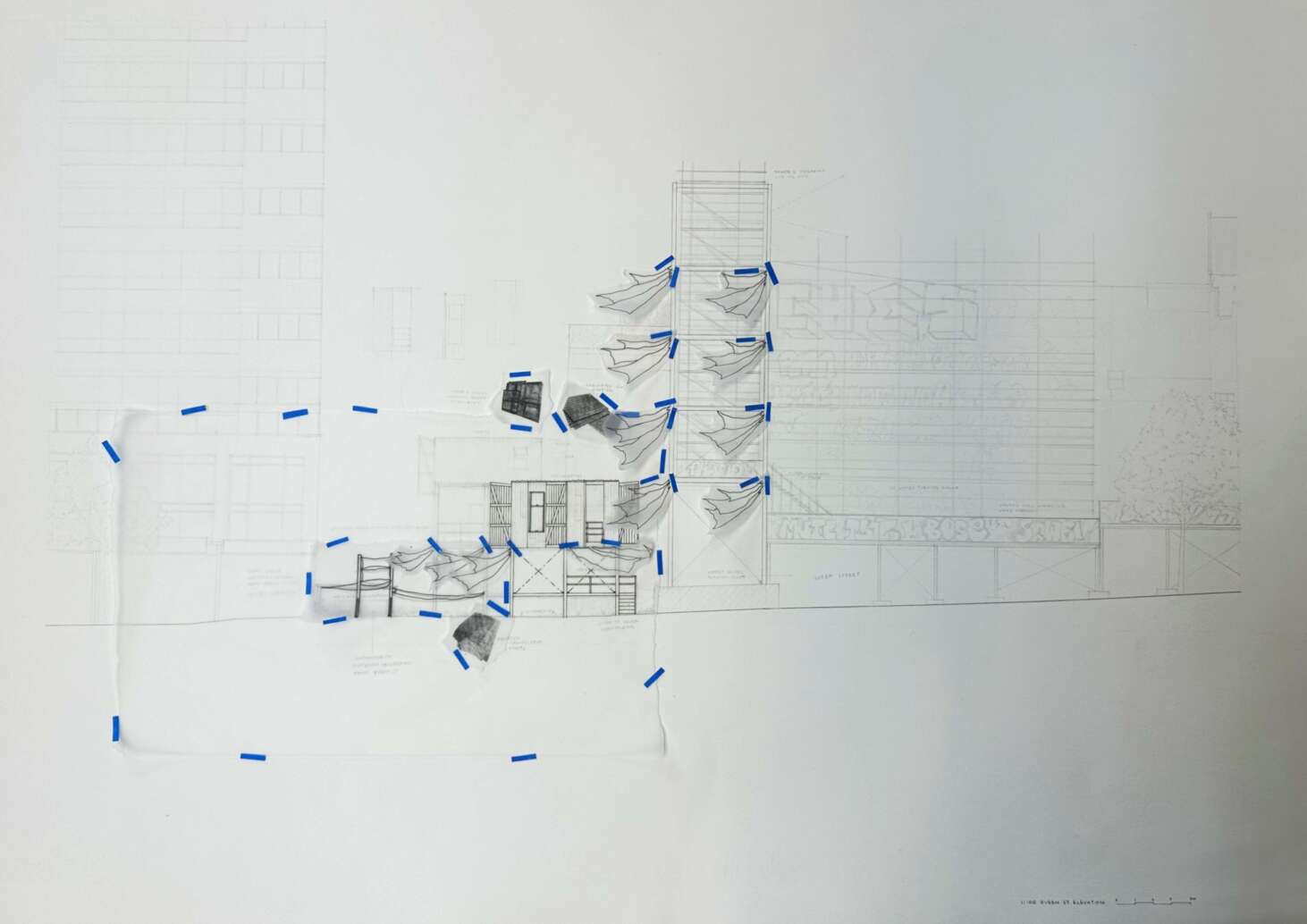
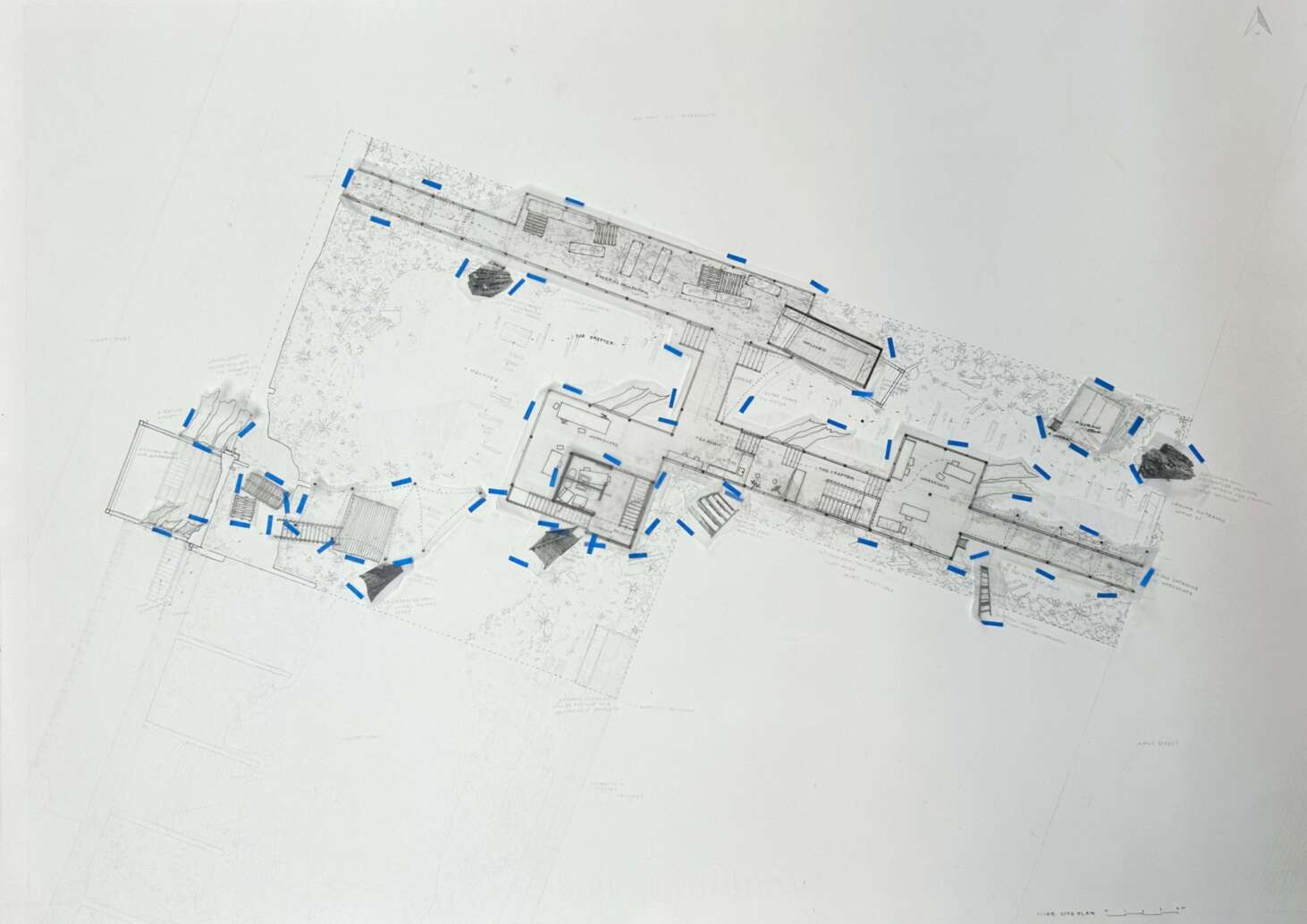
Through a slow and attentive process and engagement with time, the Architect works by hand, drawing and layering, using tracing paper to represent temporality, accumulation, and incompletion.

 
Sectionmodos min
The first of the Architect's drawings - A section of the architectural skeleton layered on tracing paper over the existing site, with the St James Theatre behind
Elevationmodos min
The second of the Architect's drawings - a Queen Street elevation of the architectural skeleton layered on tracing paper over the existing site
Planmodos min
The third of the Architect's drawings - A site plan of the architectural skeleton layered on tracing paper over the existing site
Untitled 1 3
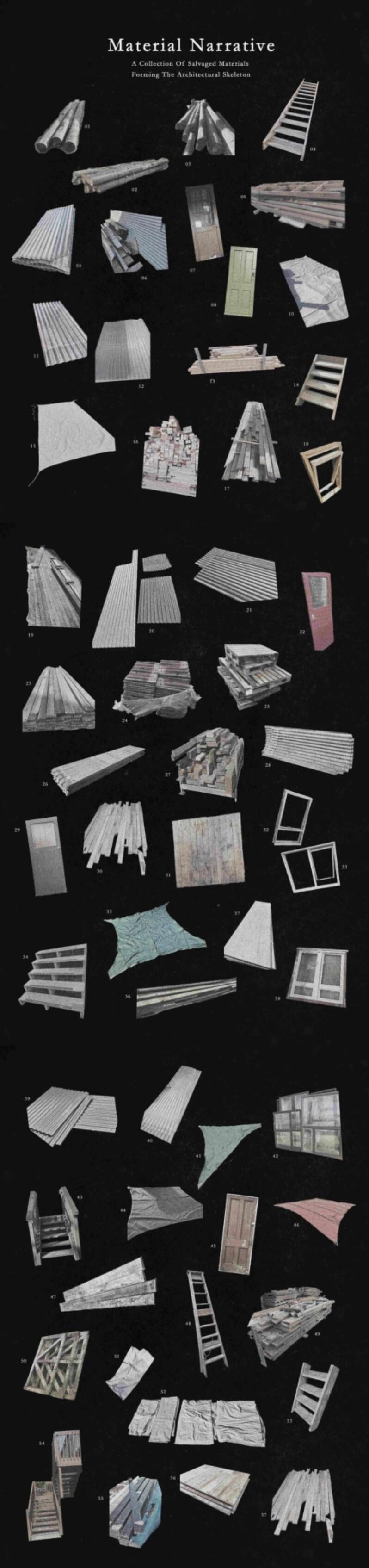
The Material Narrative - A documentation of salvaged materials forming the architectural skeleton

The architectural skeleton emerges from the material narrative, a documentation of salvaged materials collected from Trademe and Marketplace. Unlike modern architecture's pursuit of permanence and immateriality, the architectural skeleton becomes an explorative process that emerges from what already exists, acknowledging each materials unique narratives and temporalities. 

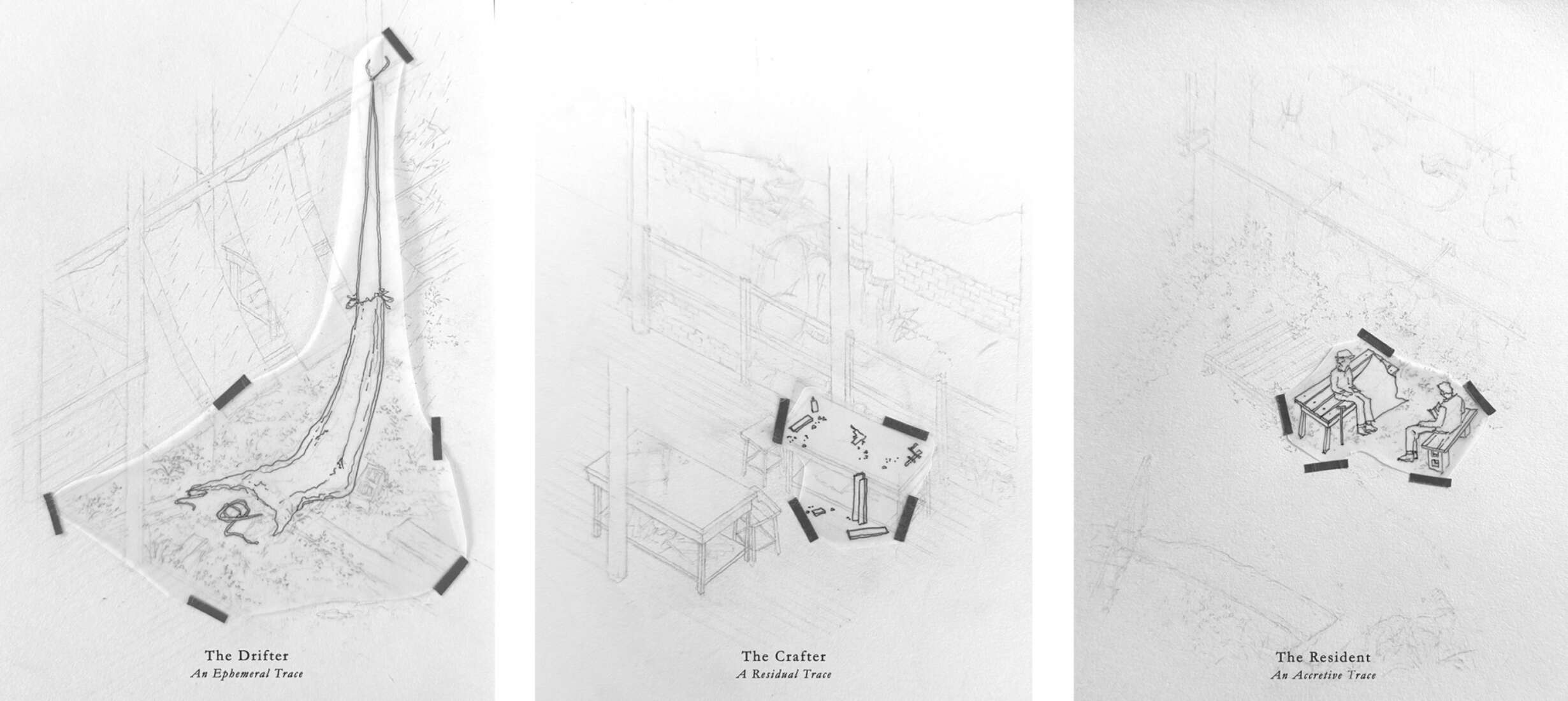
The narrative continues through the final three speculative protagonists – The Drifter, The Crafter, and The Resident. Engaging with salvaged materials found in the material collection library and workshops, through their slow making, craft and inhabitation, traces are left behind, accumulating overtime to form a continuously evolving archive of their experiences. 

Animation of the hand-sketched scenes - https://youtube.com/shorts/EMSfFNZ206o?si=YC_BXHGfcTfx33XO 

 
Animationpage
Hand-sketched scenes of the protagonists traces. 01. The Drifter - An Ephemeral Trace. 02. The Crafter - A Residual Trace. 03. The Resident - An Accretive Trace
IMG 7309 min
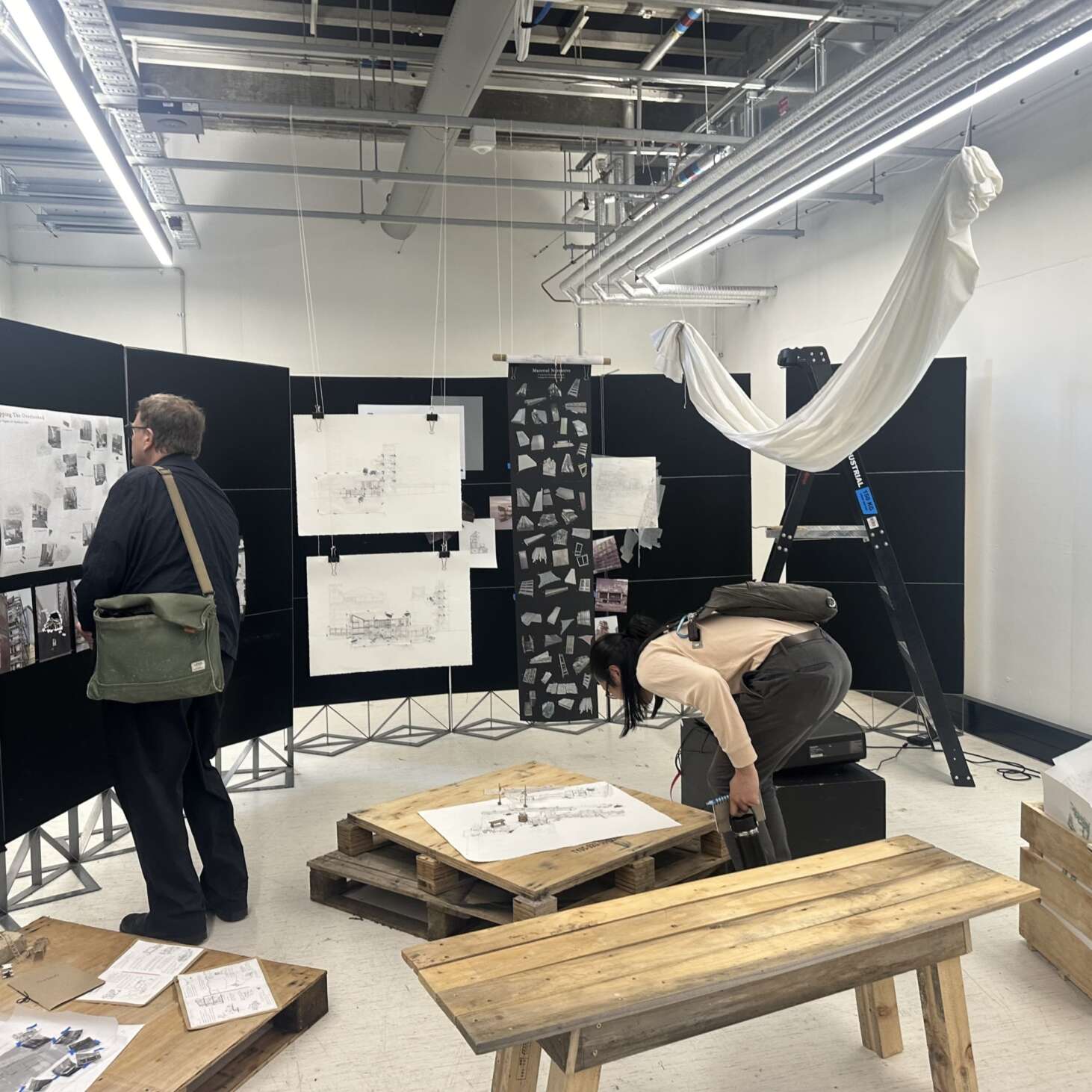
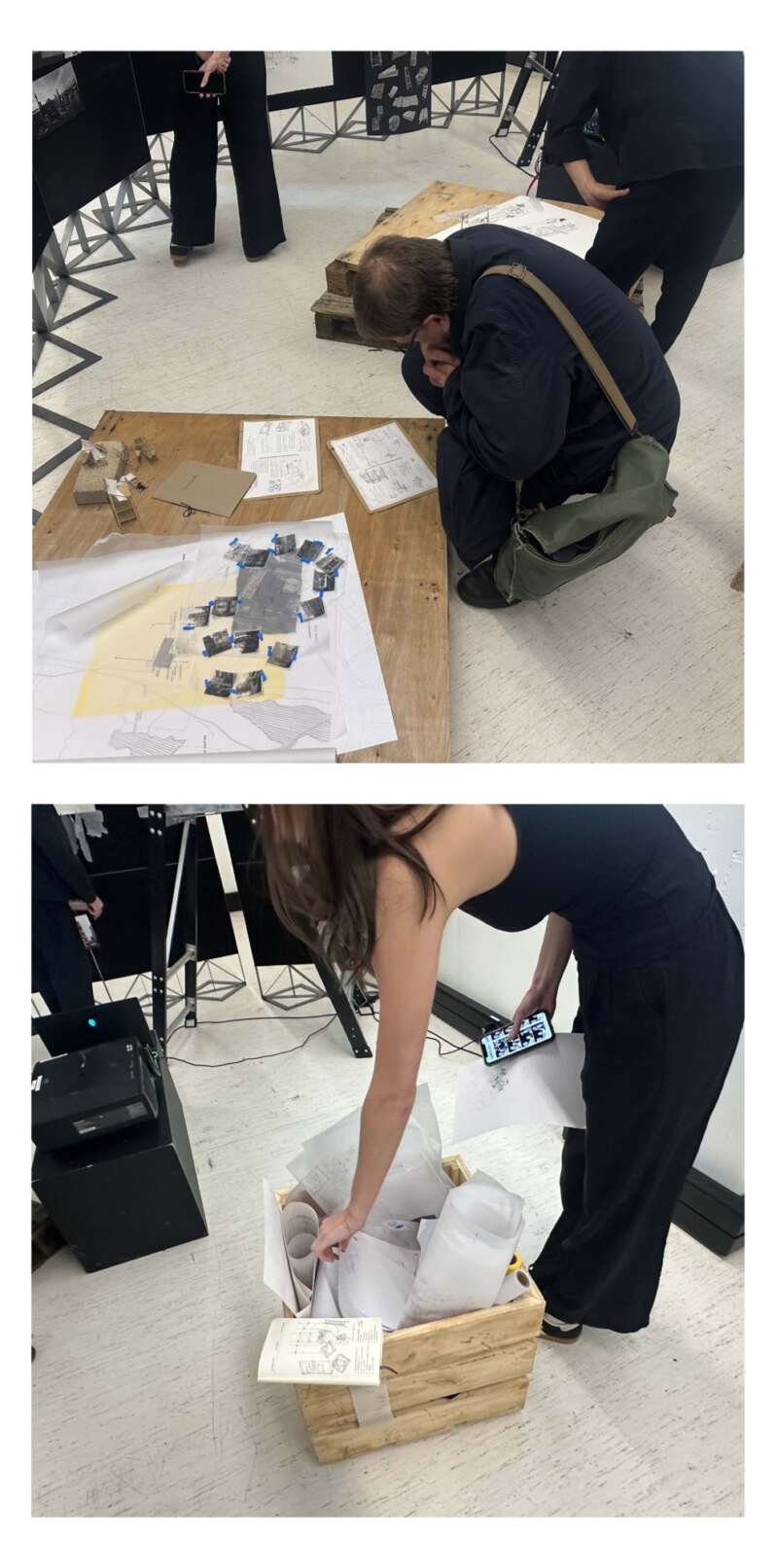
Final Crit - The audience are invited to also become drifters - to wander, explore and more intimately engage with the space and work
Critphptps
1:1 models of the crafters 'box' and residents 'bench', created from salvaged timber, storing process work

This thesis points towards the opportunity for an alternative slower process of architecture, that shifts from a pursuit of permanence and control to the creation of relationships that embrace the ongoing transformations formed by time, materials, and experiences - reframing architecture not as finished, but as continuously becoming.