Air of light
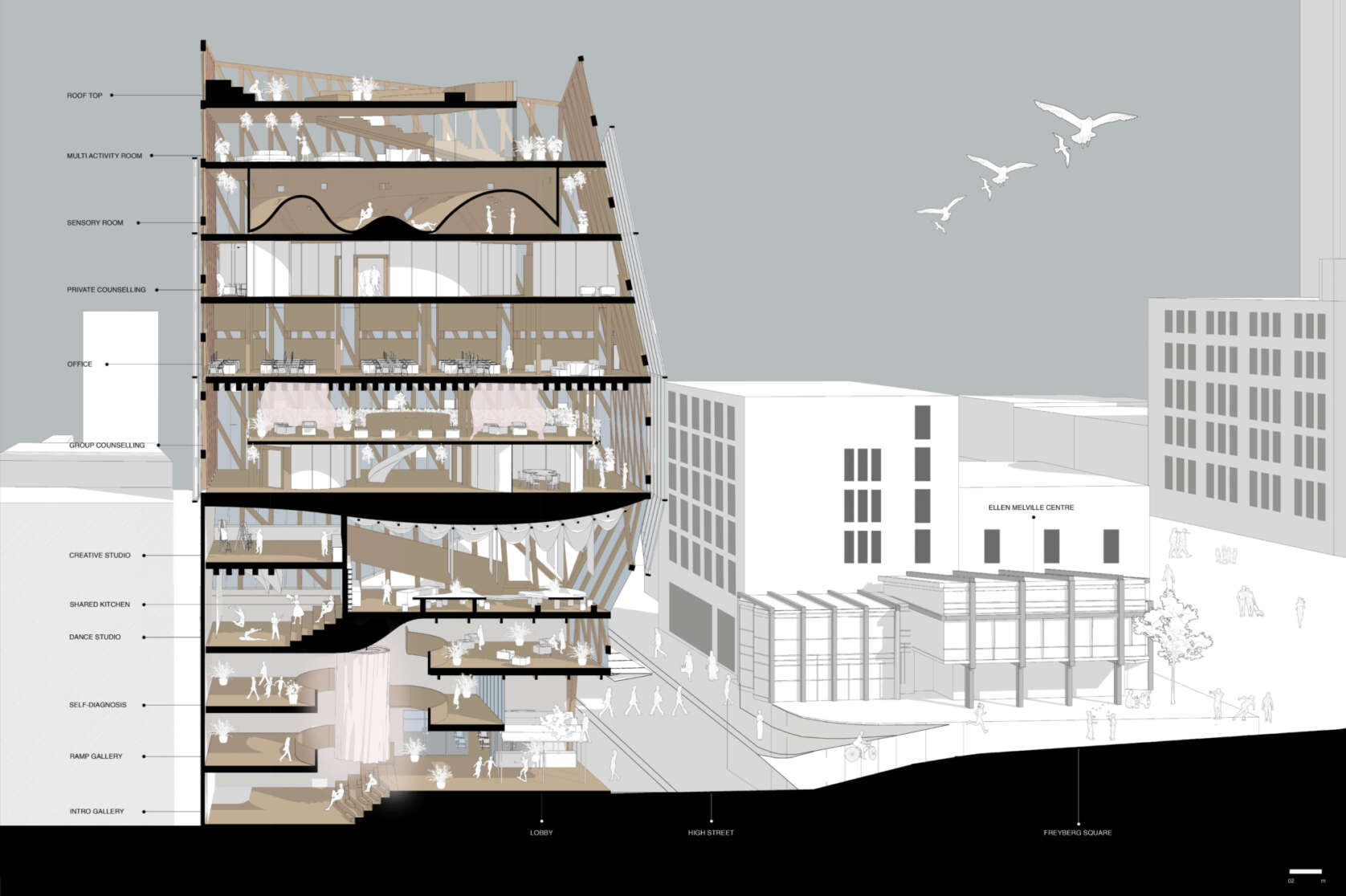
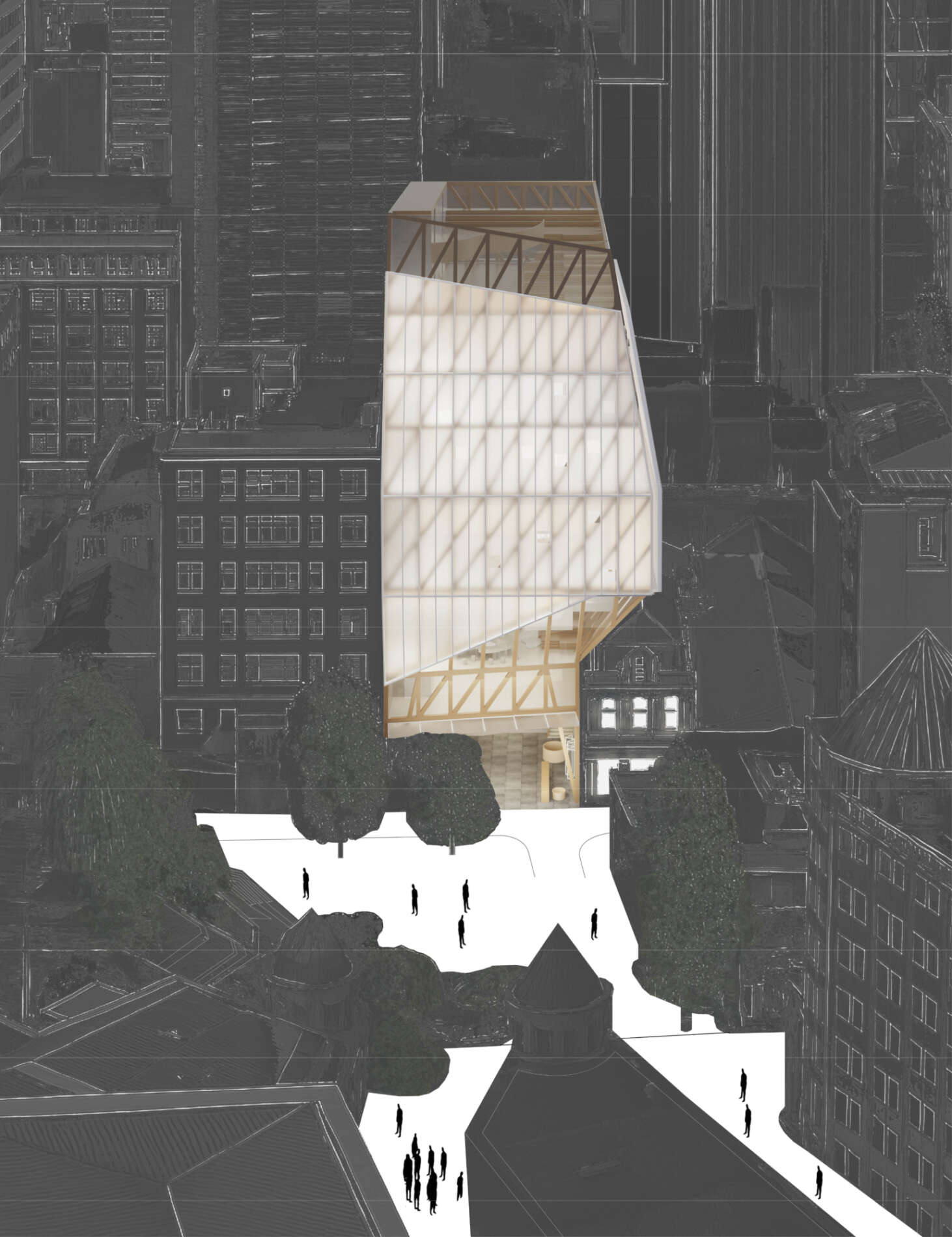
Youth mental health issues are often intensified by the lack of accessible, everyday support. This thesis examines how architecture can function as an early-intervention system by embedding moments of care, visibility, and reflection into the rhythm of urban life. Set within Auckland’s CBD, the project positions youth wellbeing not as a specialised facility but as a public-facing civic asset.
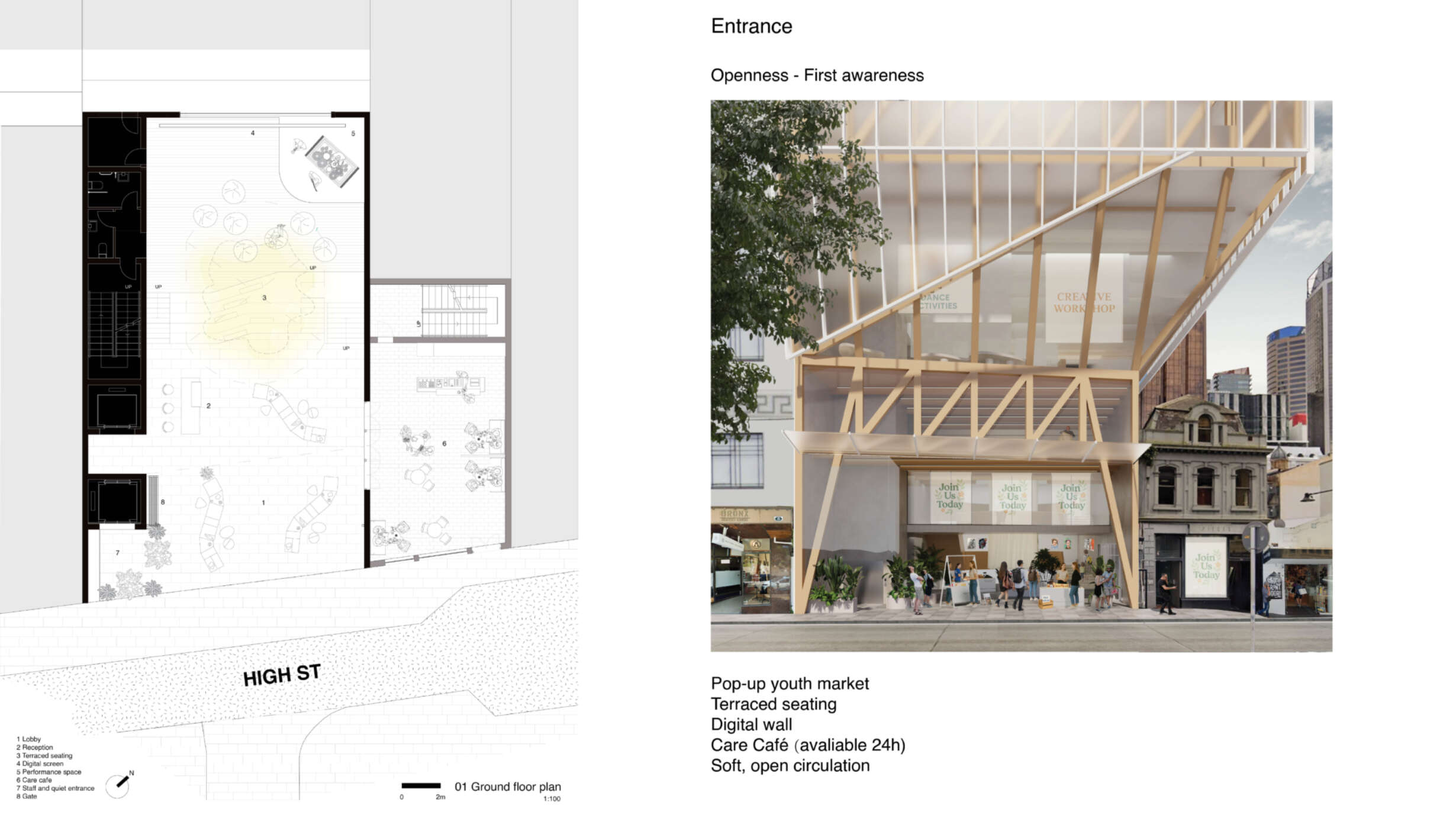
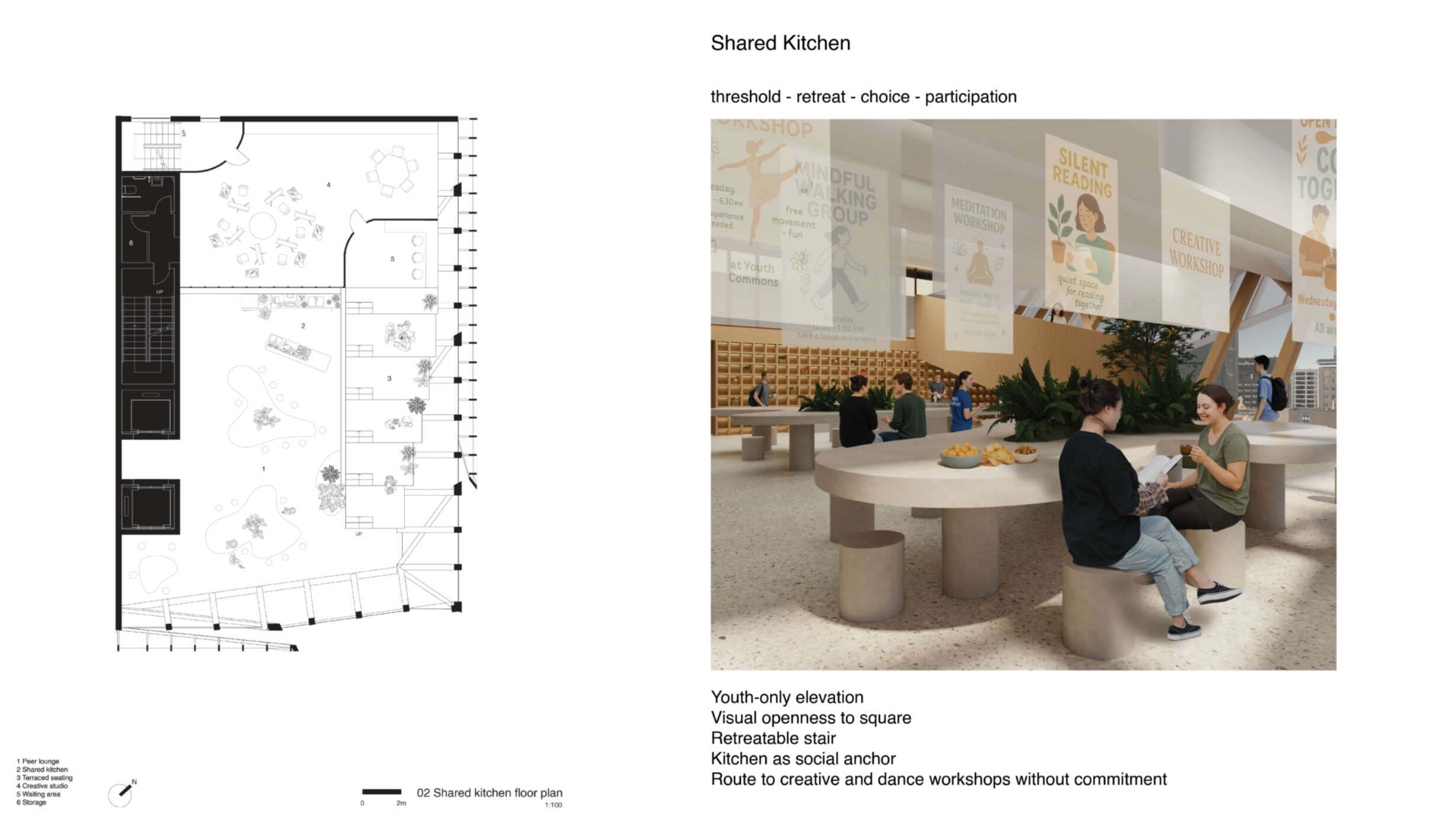
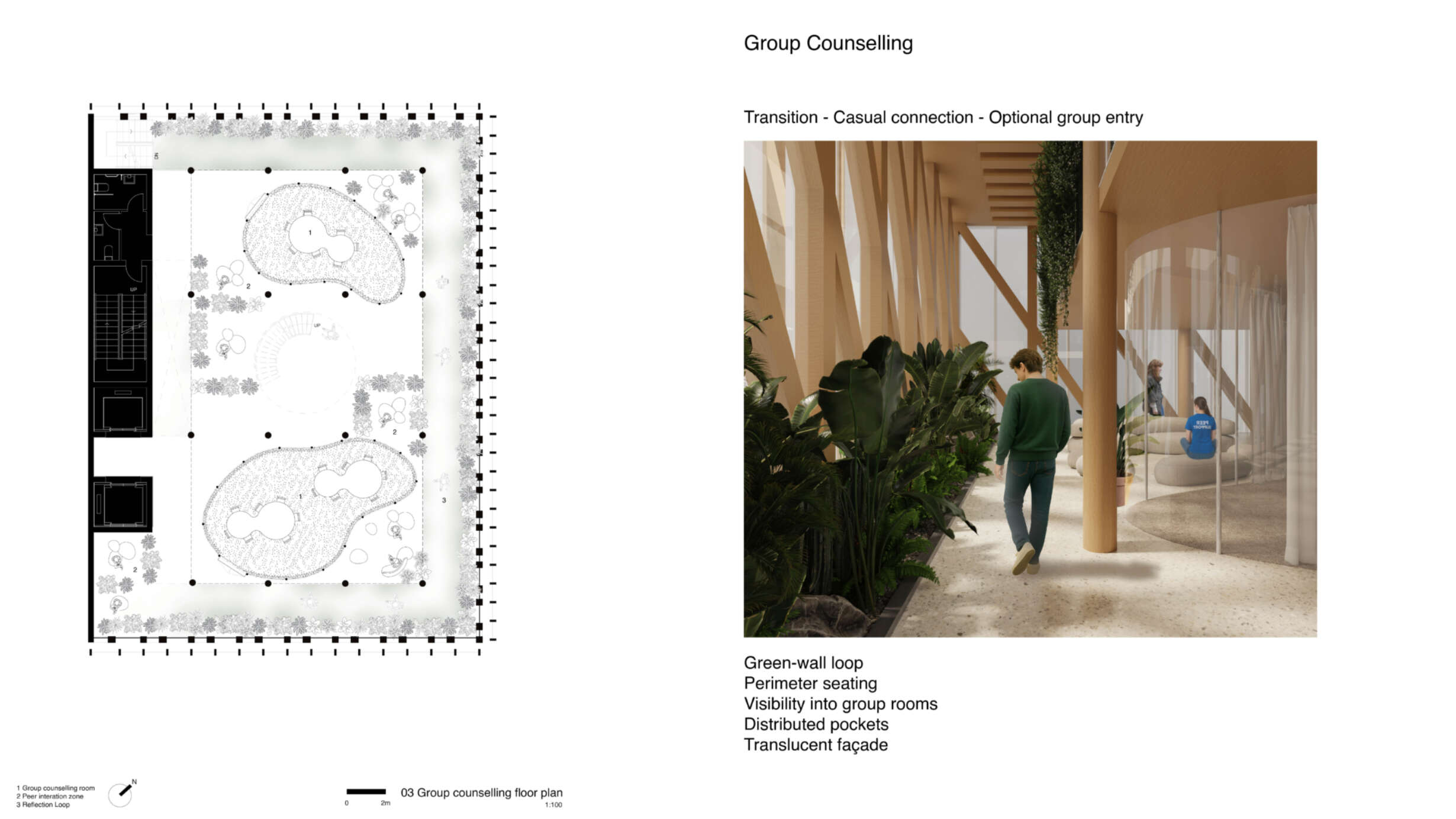
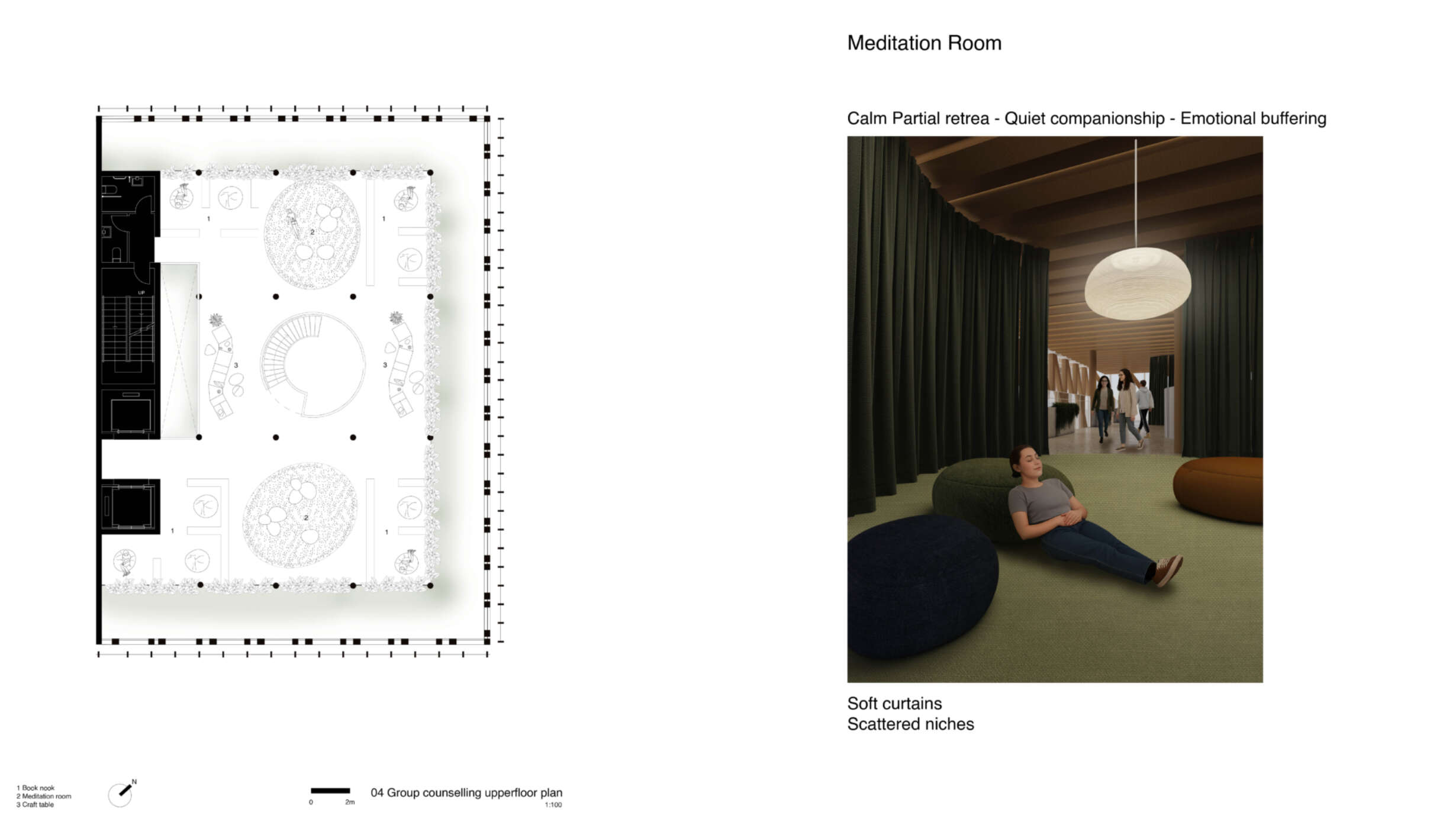
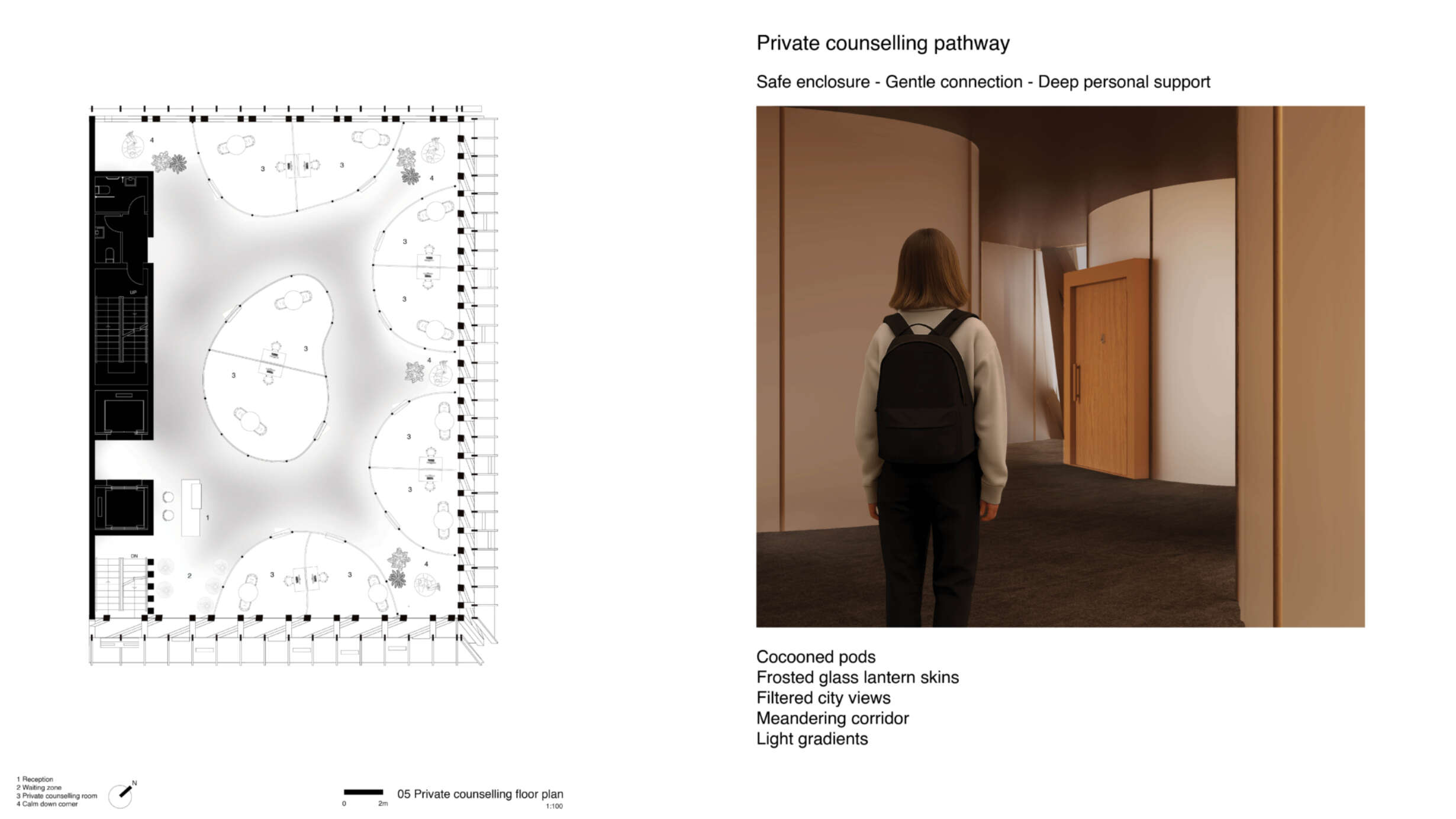
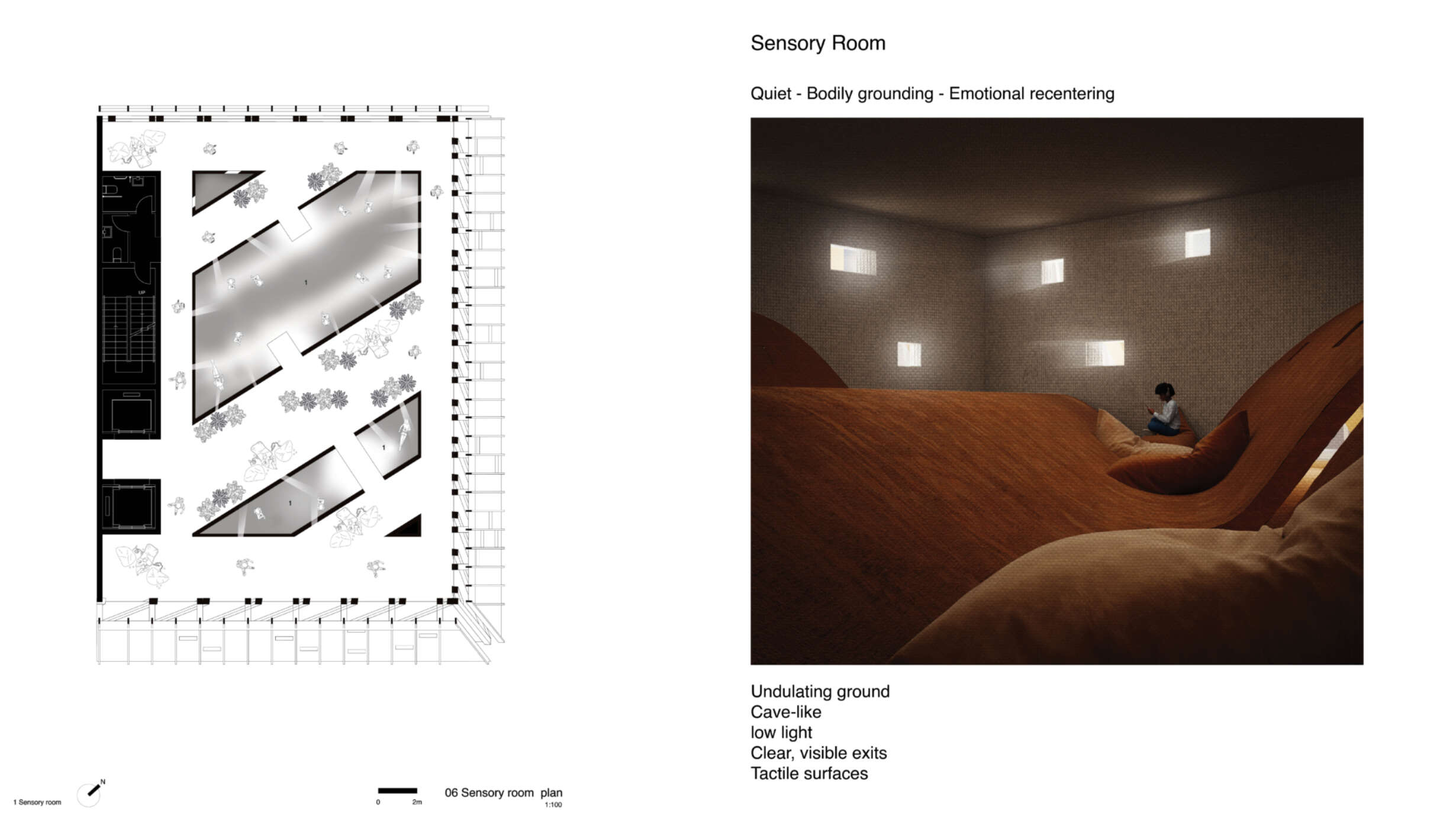
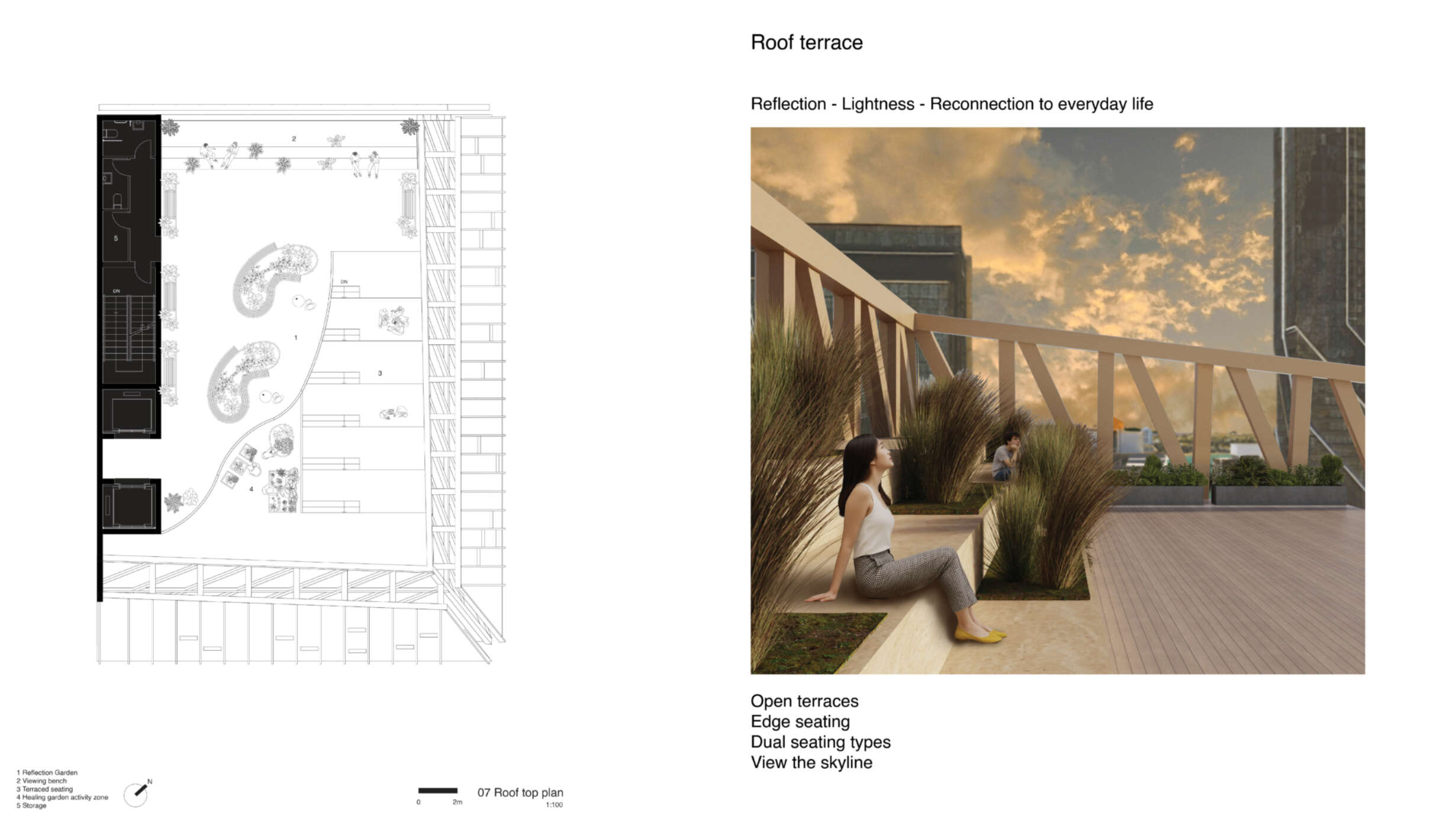
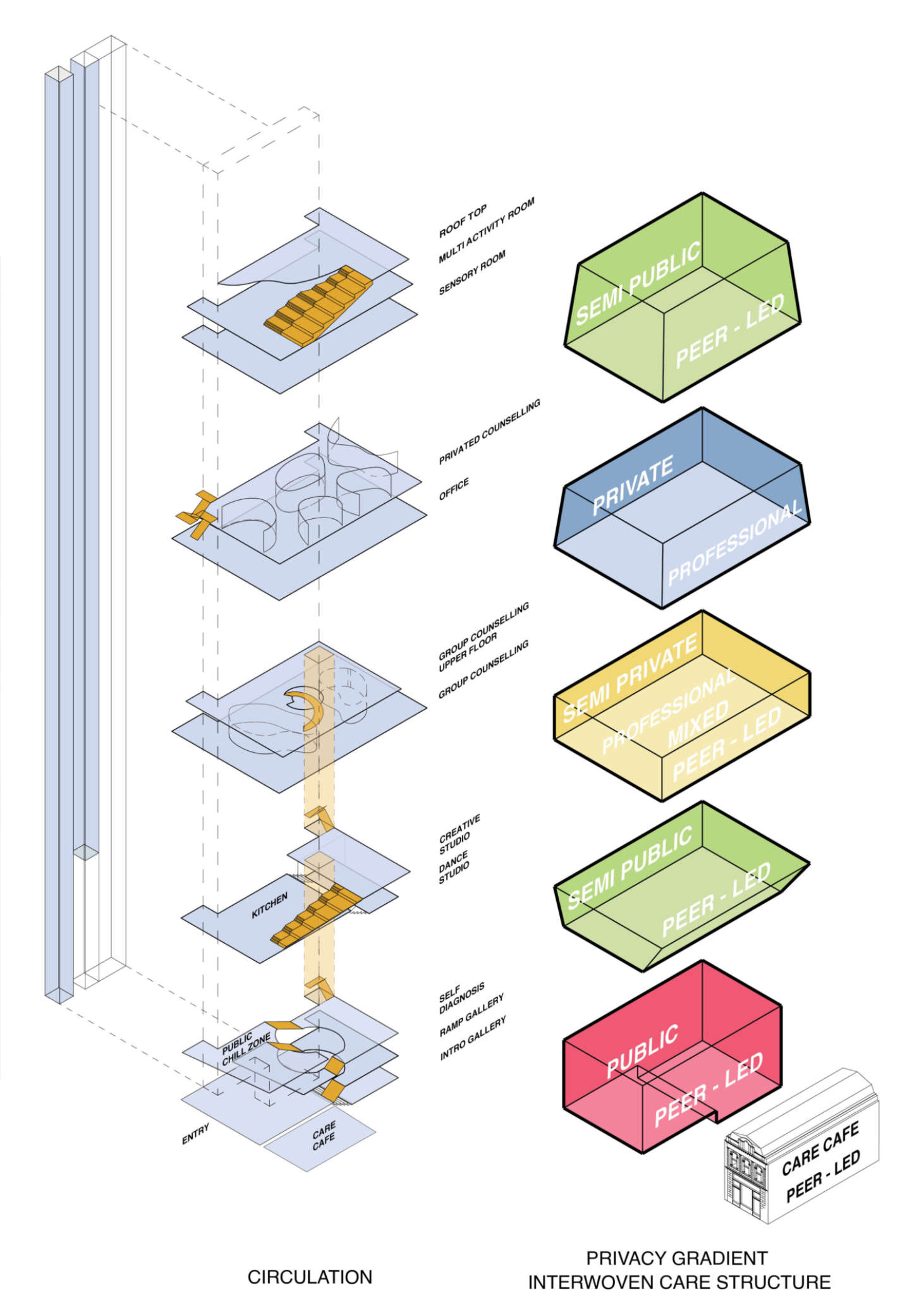
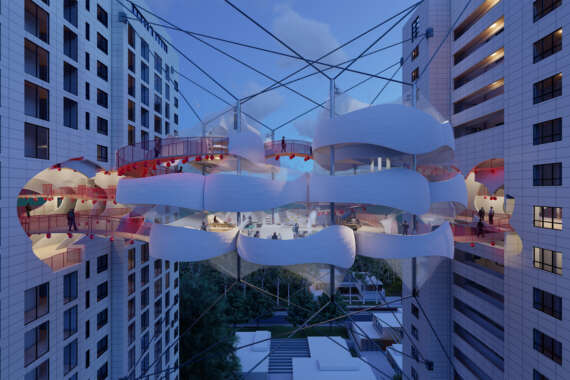
The design proposes a vertically organised “wellbeing hub” that layers public engagement spaces, transitional circulatory loops, and intimate therapeutic environments within a compact 15×24m site. Through calibrated openness, soft thresholds, and a translucent façade, the project establishes a spatial gradient that lowers the psychological barrier of seeking help. The outcome is a replicable architectural model for integrating mental wellbeing into dense urban contexts.