Shadowscape: existing in-between

微信图片 20251111180119 17 151
Lighthouse library

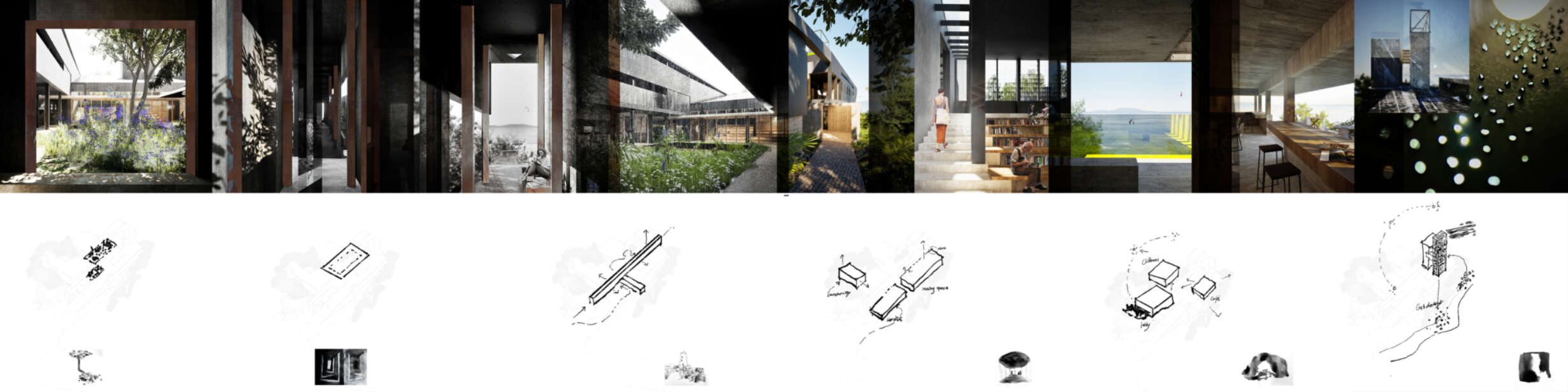
From the Māori worldview, the relationship with the land (Papatūānuku) and the sea (Tangaroa) fundamentally guides navigation, orientation, and survival. During voyaging, one must continually reaffirm their relationship with the environment; human–non-human entanglement is central, and the world is understood as alive, communicative, and requiring that we listen and speak back. This way of relating offers a parallel to how we relocate ourselves when dwelling in a place—through ongoing dialogue with the surroundings that hold and orient us. Architecture, in this sense, becomes an expression of its relationships—with the cliff, the ocean, the sky, and the people who inhabit the site. Instead of occupying the place, it participates in and amplifies these relationships, allowing the character of the place to come forward.
This thesis is grounded in the belief that the meaning of architecture lies in helping people dwell poetically in the world—to find orientation, identity, and a sense of belonging. Meaning arises through lived experience, where time and place intertwine, transforming abstract space into dwelling.

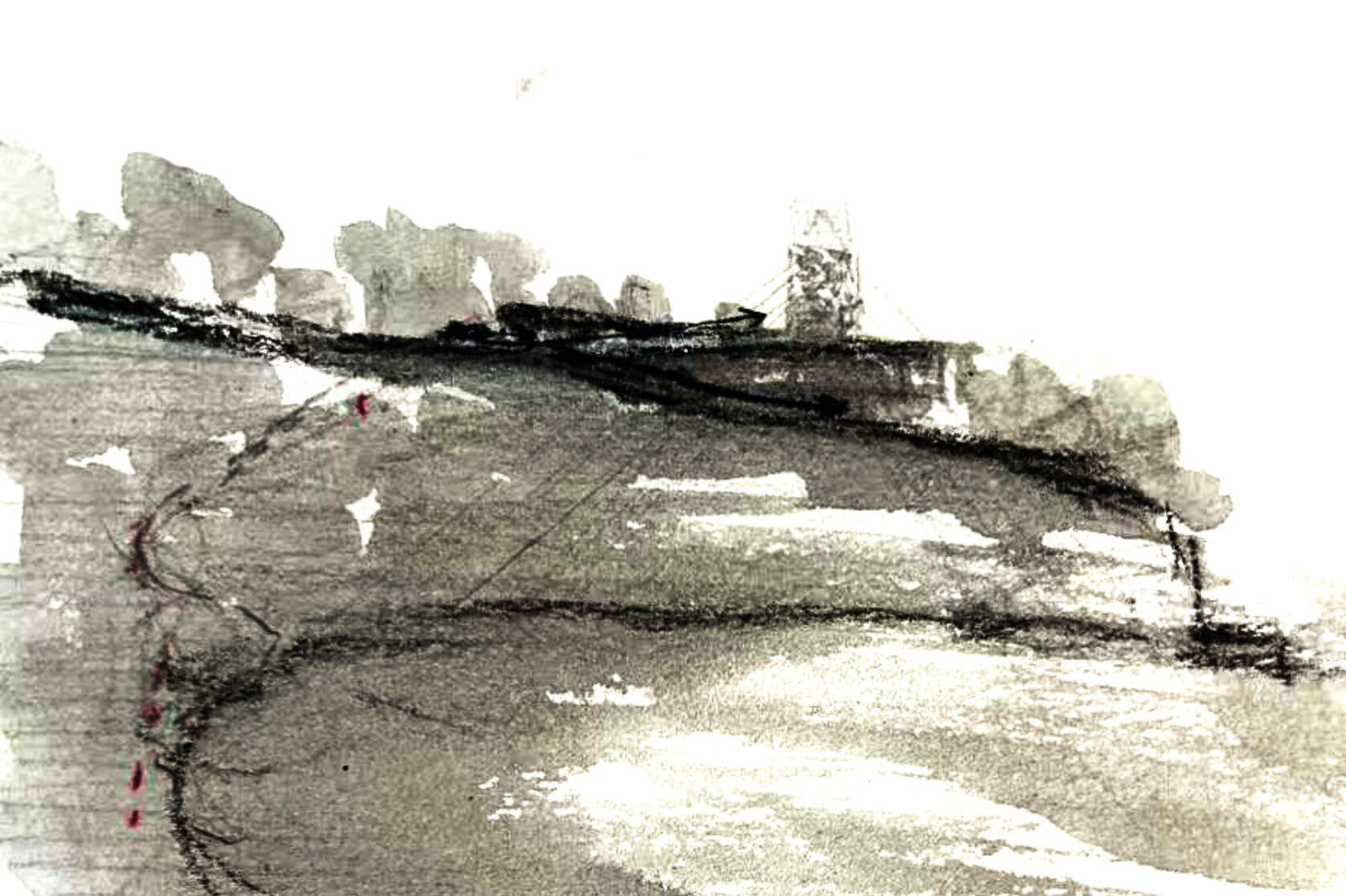
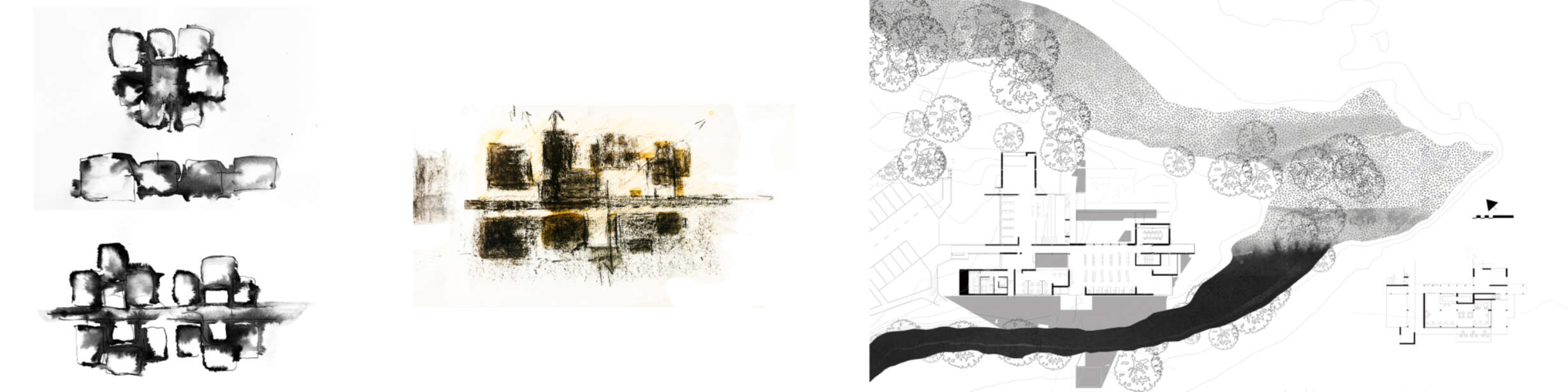
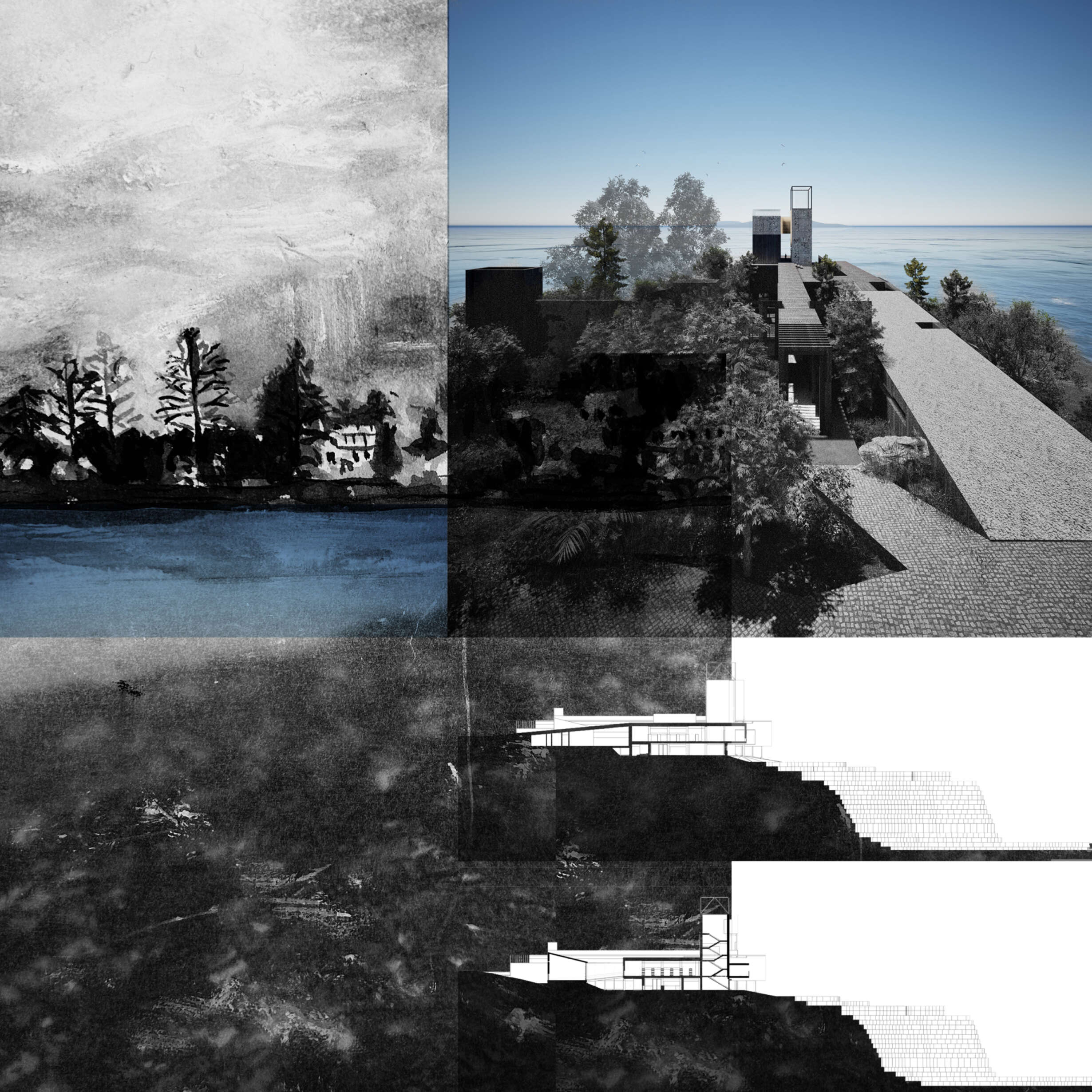
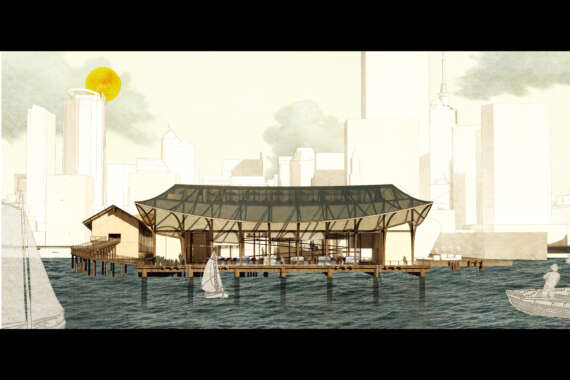
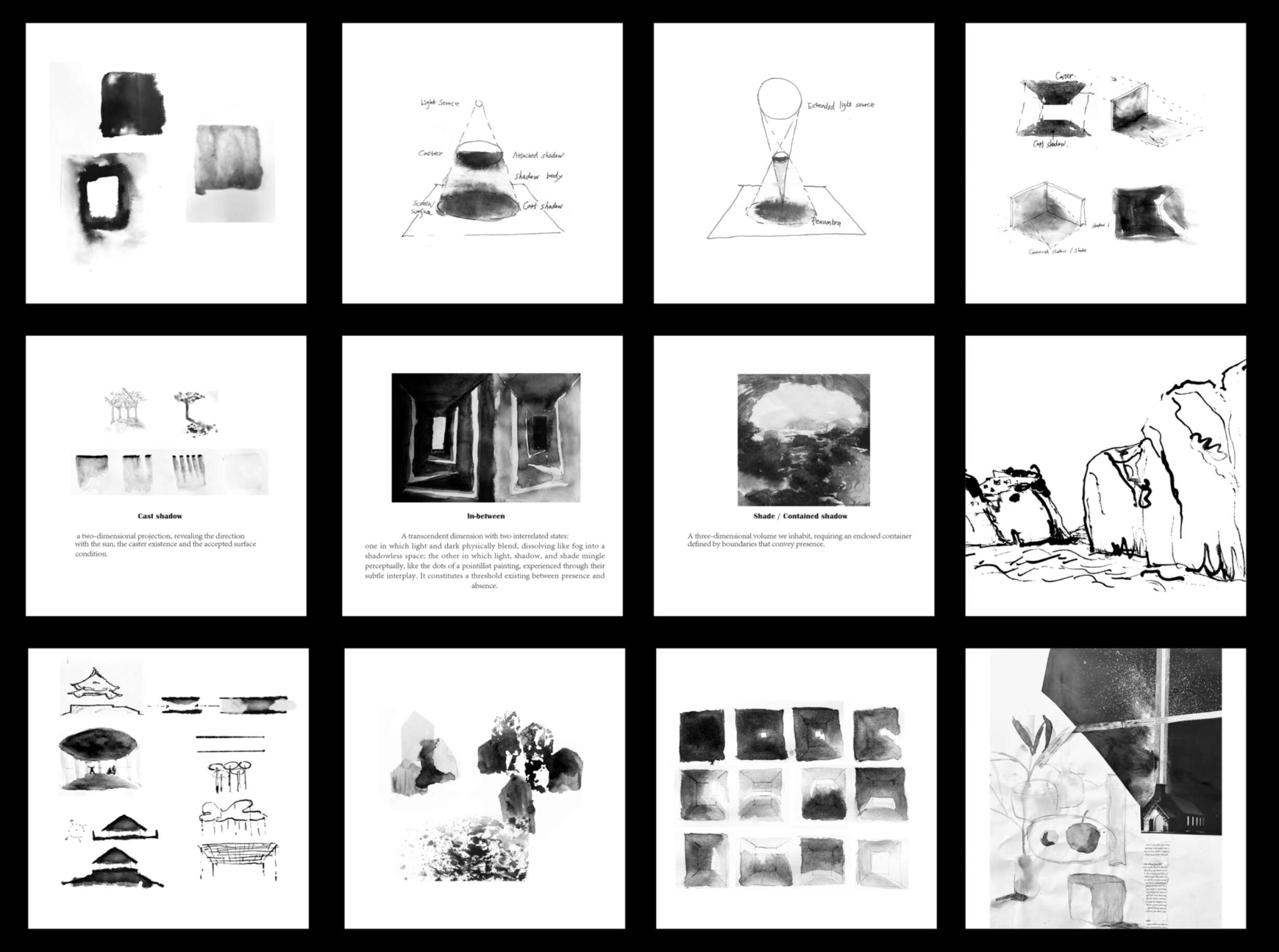
Within this framework, the research introduces the concept of the shadowscape, emphasizing both metaphorical and phenomenological perspectives. The shadowscape was explored as an in-between medium and researched in conjunction with a design project—a coastal library in Aotearoa New Zealand conceived as a “second dwelling,” thereby grounding the inquiry within a Pacific context. The project explores the central question: How can architecture cultivate a way of dwelling that evokes meaningful experiences of place and time through the in-between media and tool of shadowscape?

 
Methdology01
Shadow holds ambiguity and depth: at once a form-giver and a void. Is it a heavy mass, a dense presence anchoring space, or a hollow vessel enclosed by emptiness? Is absence shaped by presence, or presence by absence? Is shadow weight or void, real or imagined? Like existence, it is both — forever shifting between substance and illusion, grounding perception while inviting the mystery of the unknown behind. It's the dwelling for those longing for settlement but never stopping wandering, always in-between.
未标题 2
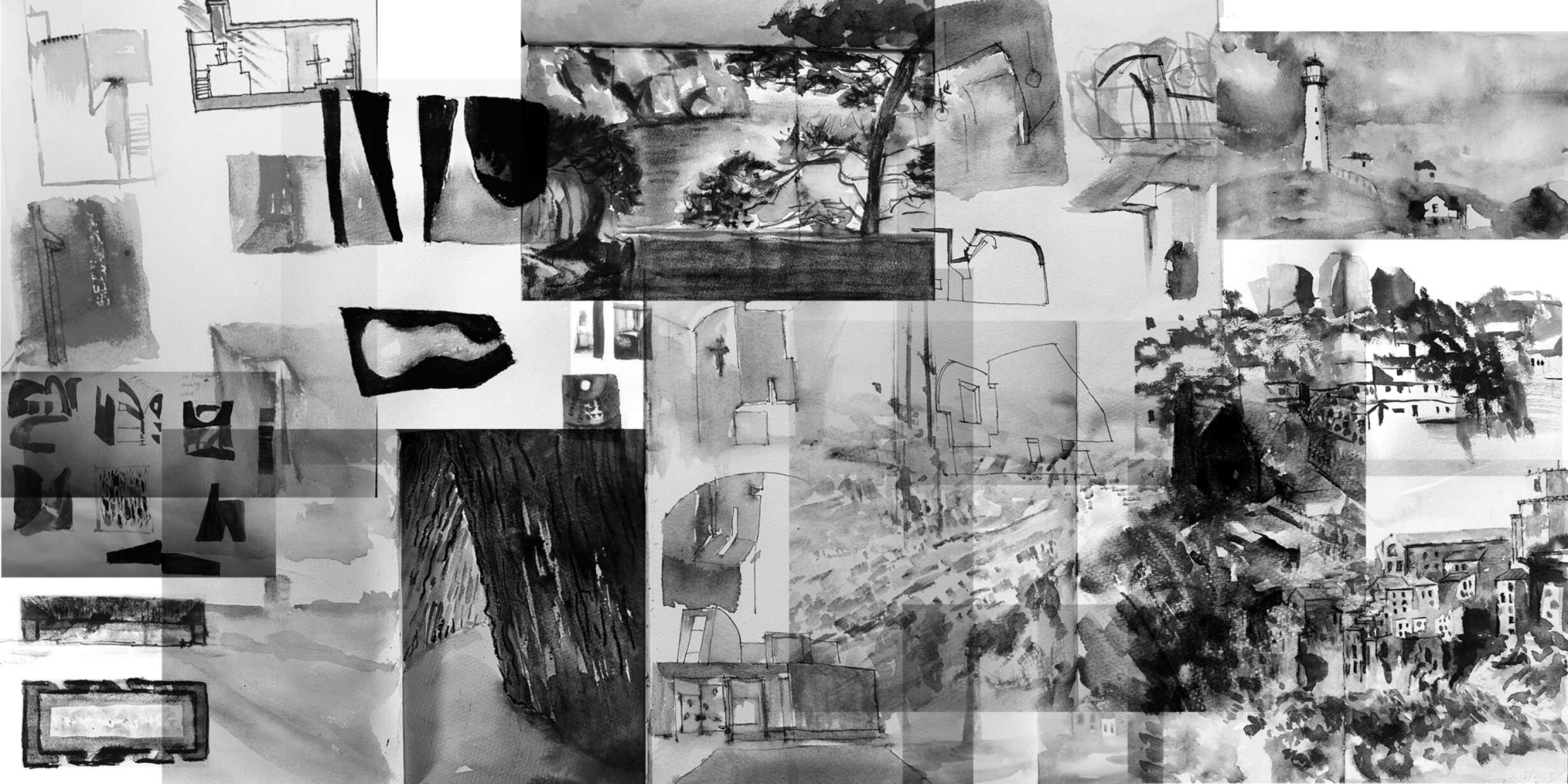
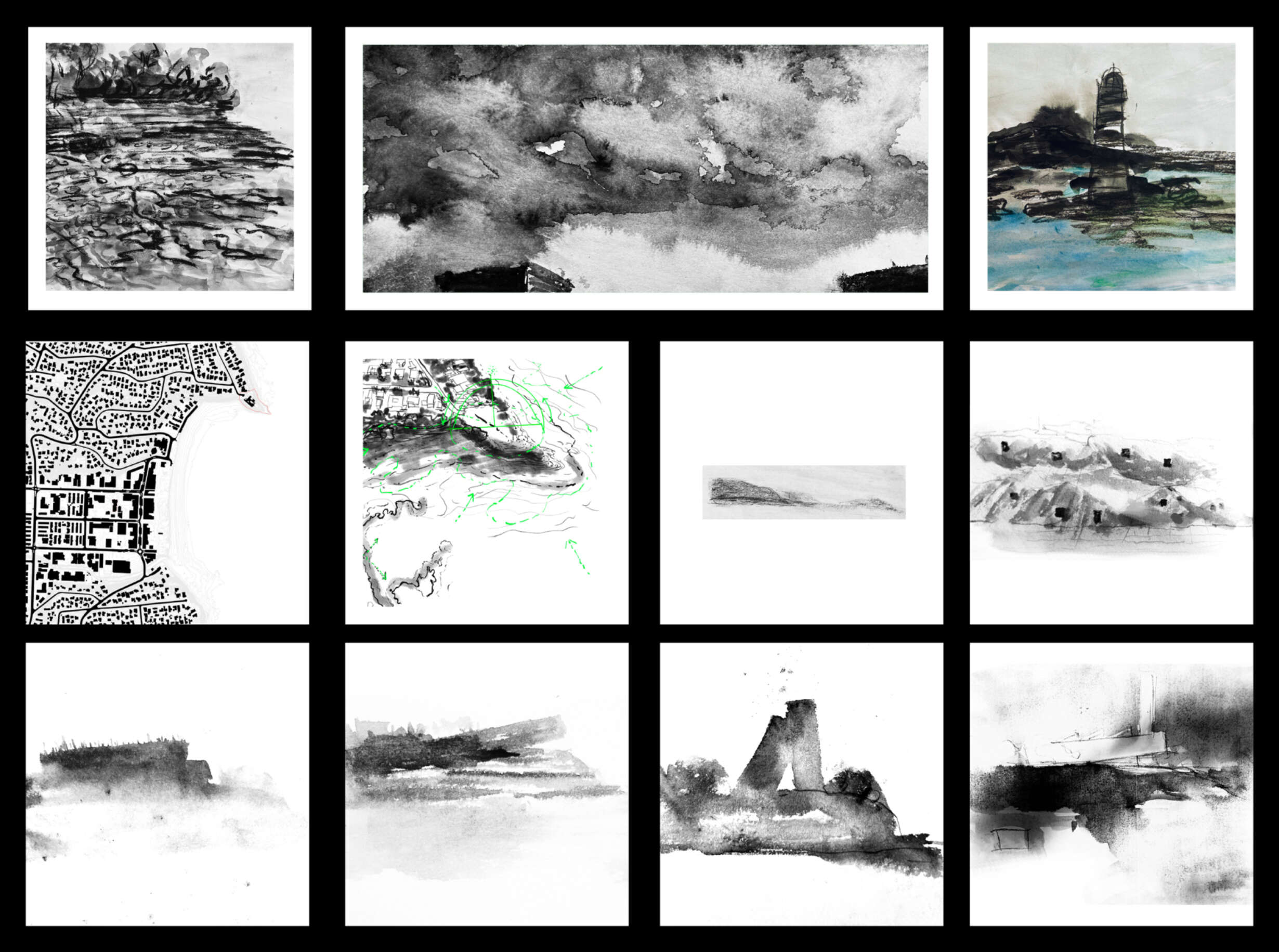
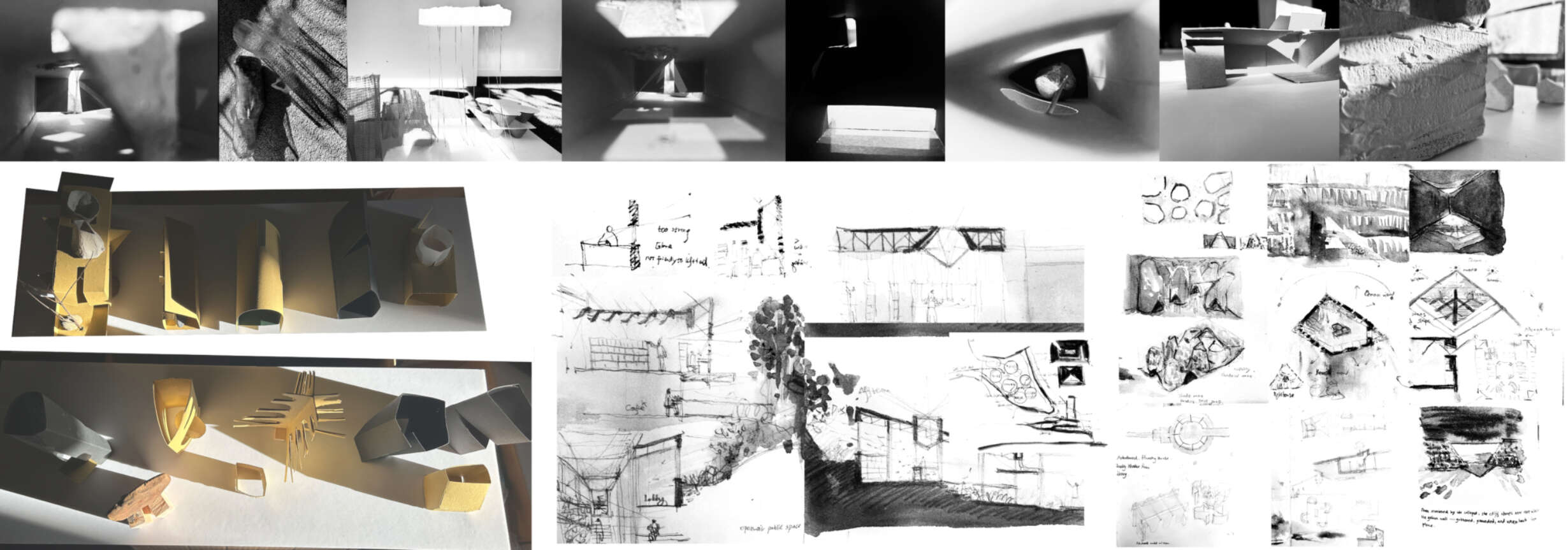
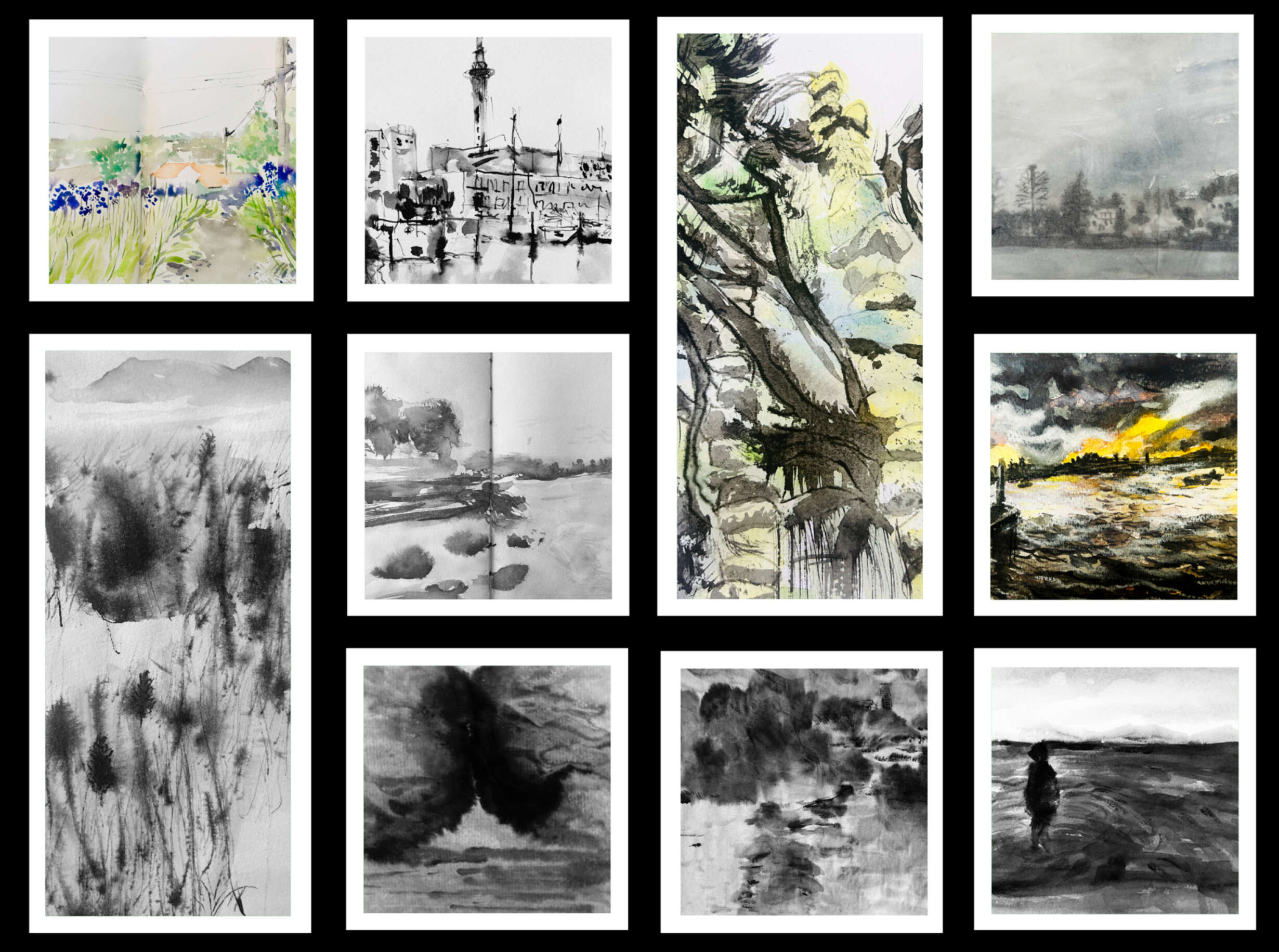
Experiencing the place through drawing roots the design in and from lived experience, rather than in preconceived values or projected assumptions. This practice allows the site to speak first, grounding the design process in direct observation, sensory awareness, and an openness to what the place reveals.
Process precedents
Precedents: an in-between study where drawing becomes both analysis and perception.
Process analysis drawing
Site context
Process plan2
Siteplan
Process making
Final 02