Pass the Pou to the Pāpahi and Beyond: Architecture as a vessel for Grounding Place Based Education in Mātauranga Māori at Tāwharanui Regional Park
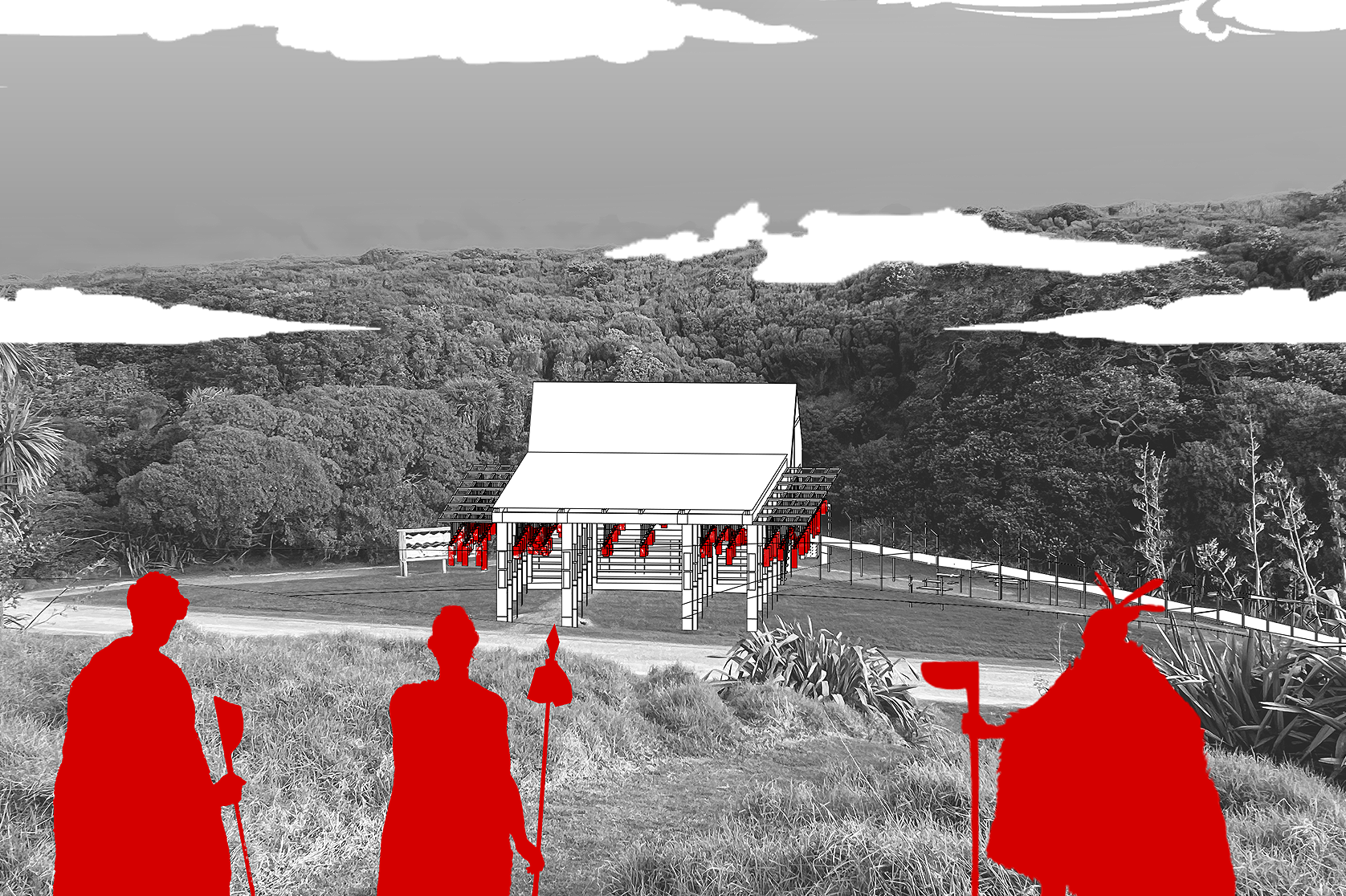
Cover image tomokanga
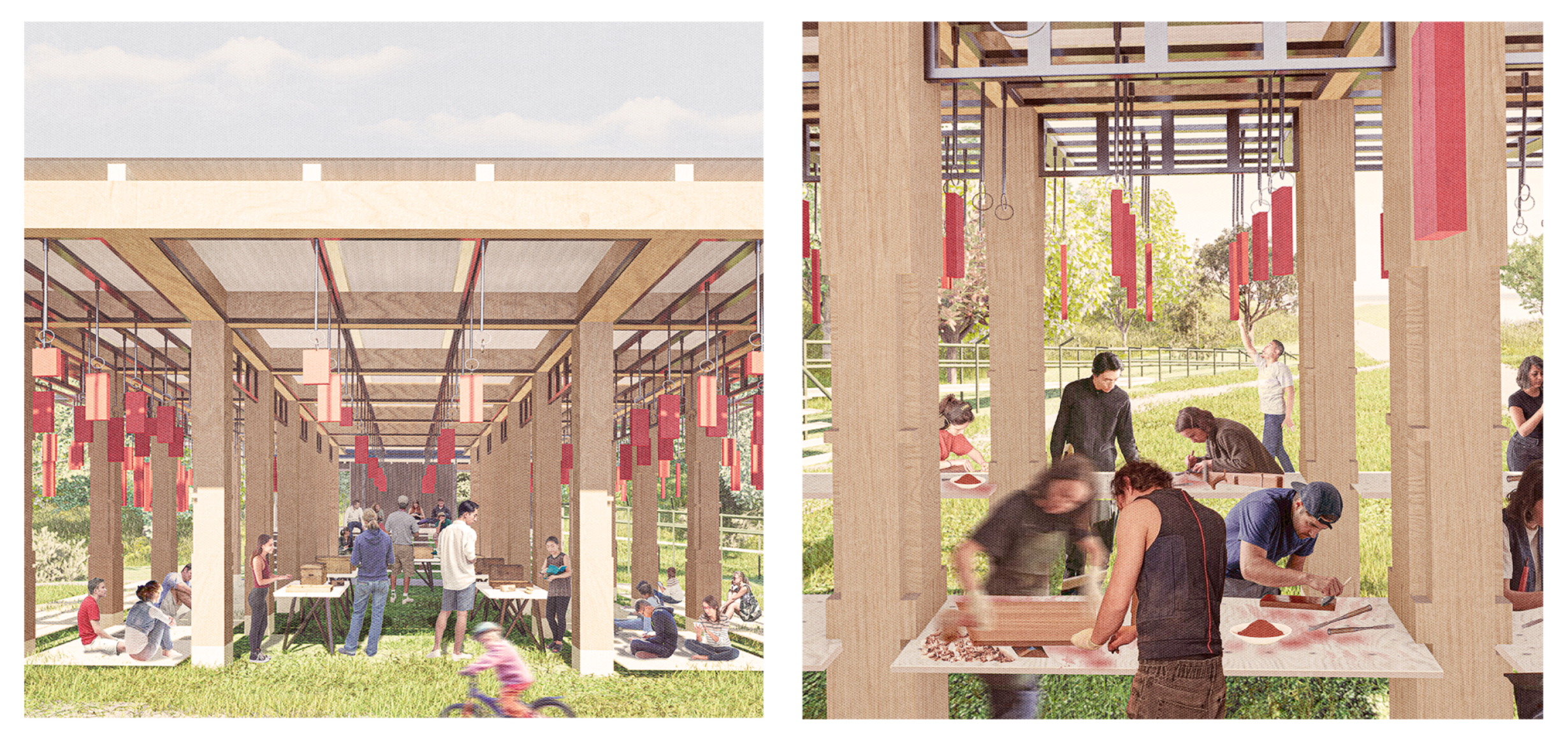
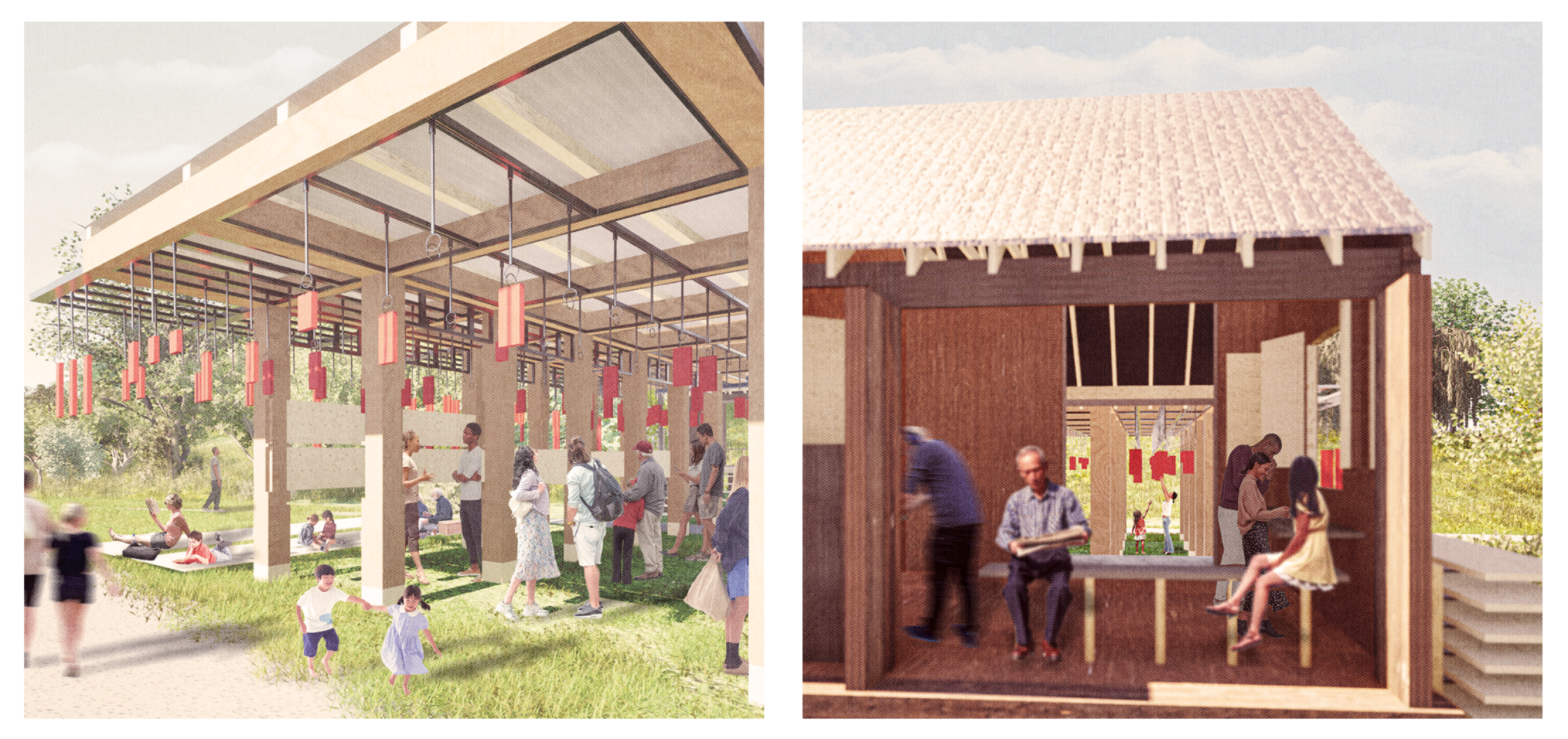
The wānanga-a waho as a symbolic Pou and Tomokanga.

In response to the growing need for better educational facilities at Tāwharanui Regional Park, this project uses architecture to champion the land and uphold the Mātauranga Māori of the Ngāti Manuhiri. Past the Pou to the Pāpahi and Beyond proposes low-impact, community-driven architecture that strengthens the relationship between people and land by grounding learning within cultural Mātauranga Māori practices. Conceived as a ‘vessel for ecological and cultural knowledge’, the scheme reimagines how visitors and school children engage with the park through hands-on wānanga workshops, communal structures, storytelling, and journeys through the landscape. Working in parallel with ongoing conservation efforts, the project ultimately aims to instil kaitiakitanga within park users, safeguarding Tāwharanui for future generations.
Grounded in the metaphor of the kiekie vine, which flourishes only when supported by a host, the research frames education as the vine, Māori land-use practices as the host, and architecture as the synergy that enables benefits to both. 

The thesis identifies a gap: while current place-based education fosters engagement with nature, it often lacks practical integration with local indigenous practices. To address this, the thesis positions Mātauranga Māori practices, Kaitiakitanga, and philosophies of temporary and flexible architecture as the structure through which educational design can wrap around and root itself. This intertwining creates a framework where architecture becomes a trifecta of vine, host, and catalyst, leading to an immersive outdoor learning experience.  

 
Long sketches V5
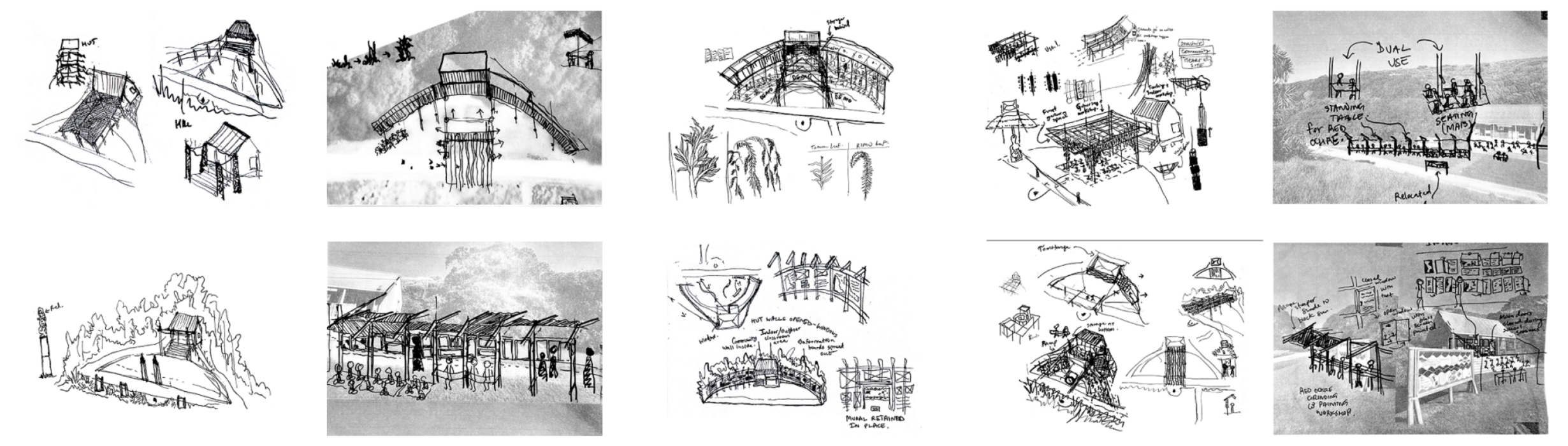
Initial sketches: Thinking through sketching.

The name Tāwharanui refers to “the abundant edible bracts of the kiekie vine”.

Tāwharanui Regional Park, 600-hectare in size, is New Zealand’s first integrated open sanctuary boasting some of Auckland region’s most beautiful white sand beaches, rolling pastures, shingled bays, native coastal forest and a 2.5km pest proof fence protecting the regional park’s natural resources.         

 
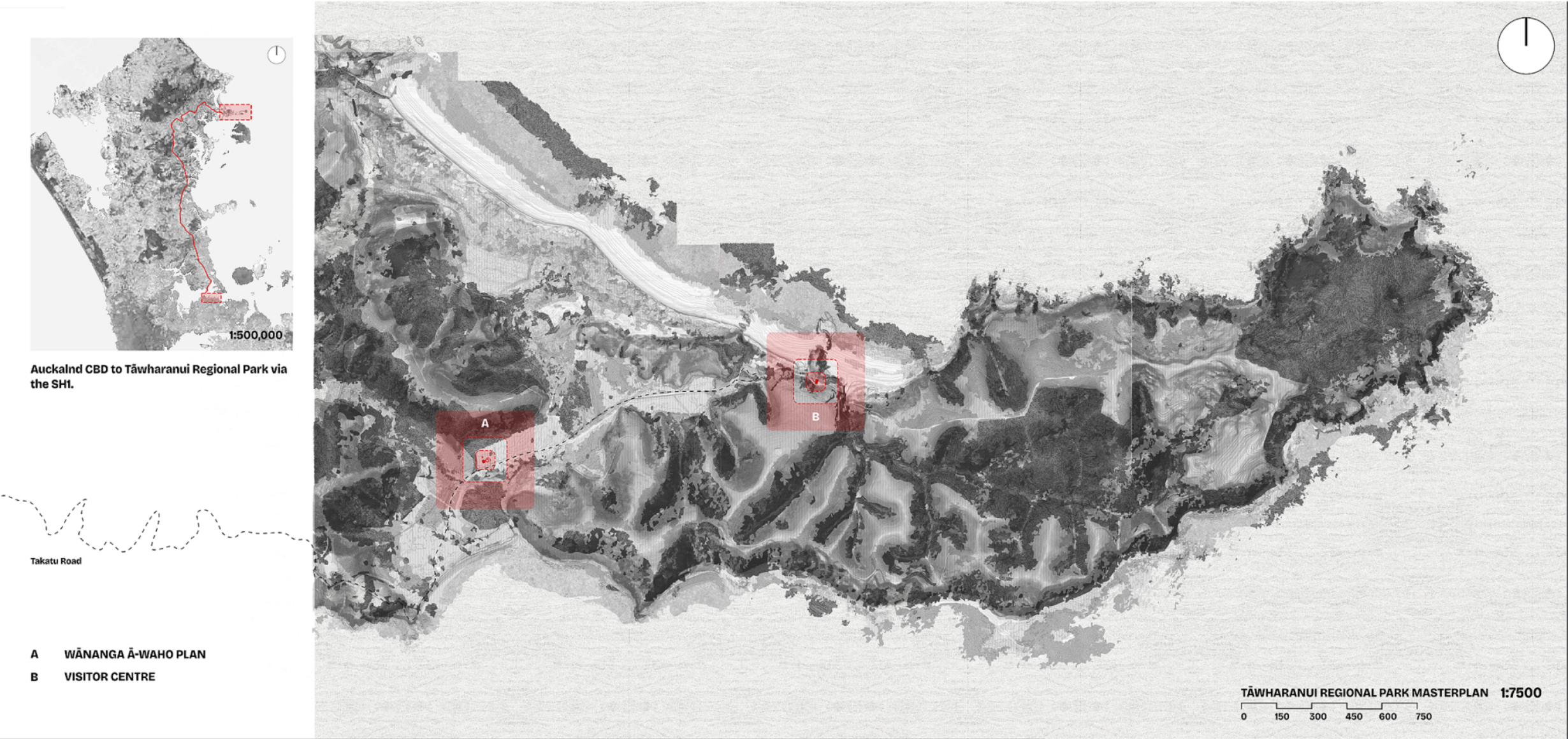
Smasterplan
VS site plan and plan NEW
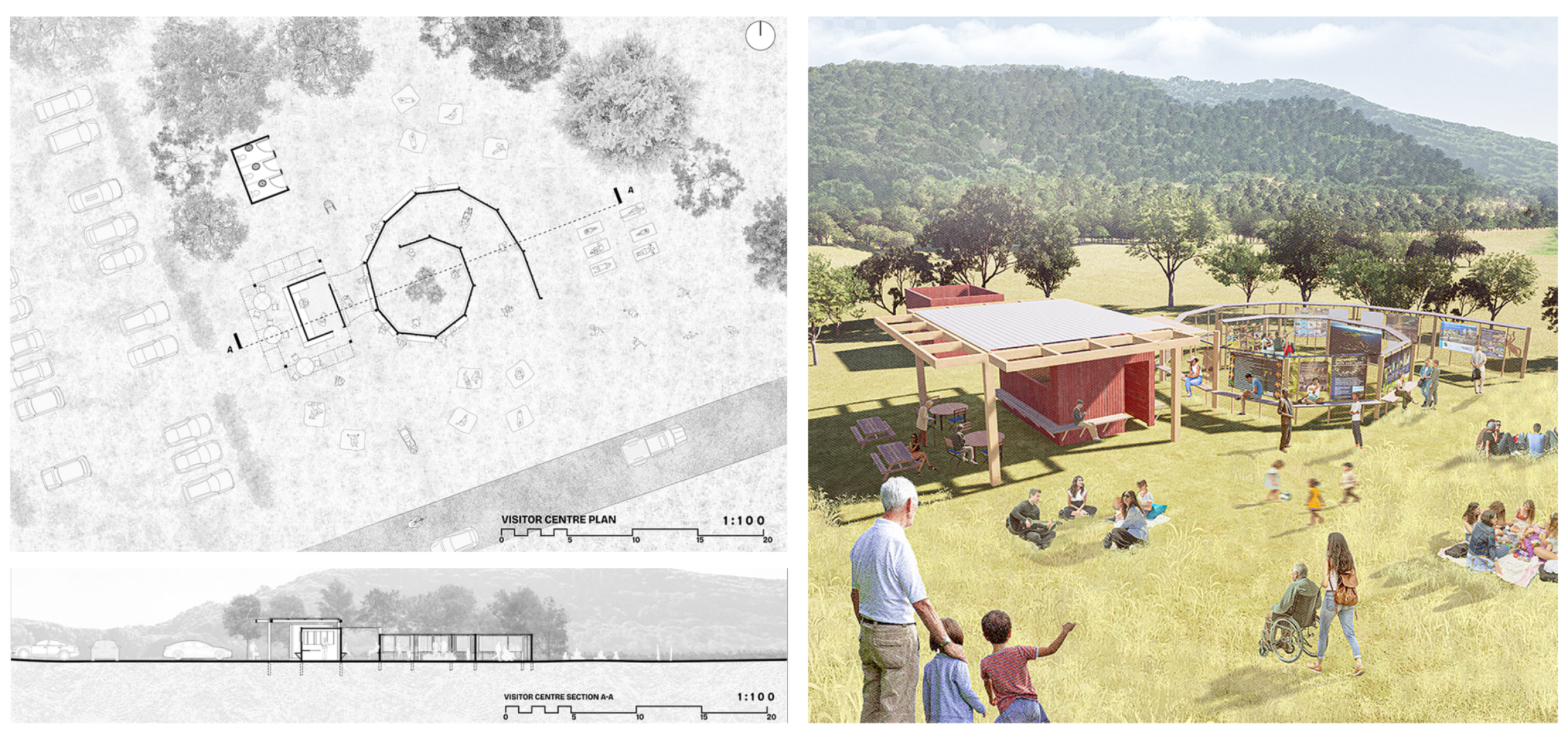
Pokapū Manuhiri (visitor centre)

The outcome unfolds through the journeys of the general visitor and the school children, where the architecture enables both passive and active learning. 

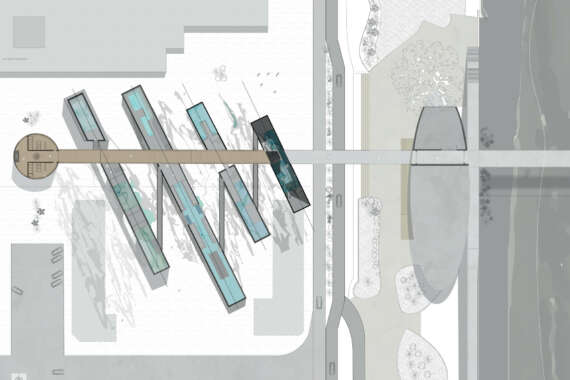
Passive learning occurs through the reimagined Pokapū Manuhiri (visitor centre), which relocates interpretive posters from the crowded information hut onto the spiral koru fence, bringing attention to the often-overlooked amenities such as the Māori Bay Walk, Pou, Pāhi Pā, bridge, bird hide, and lagoon-view seating areas.  

 
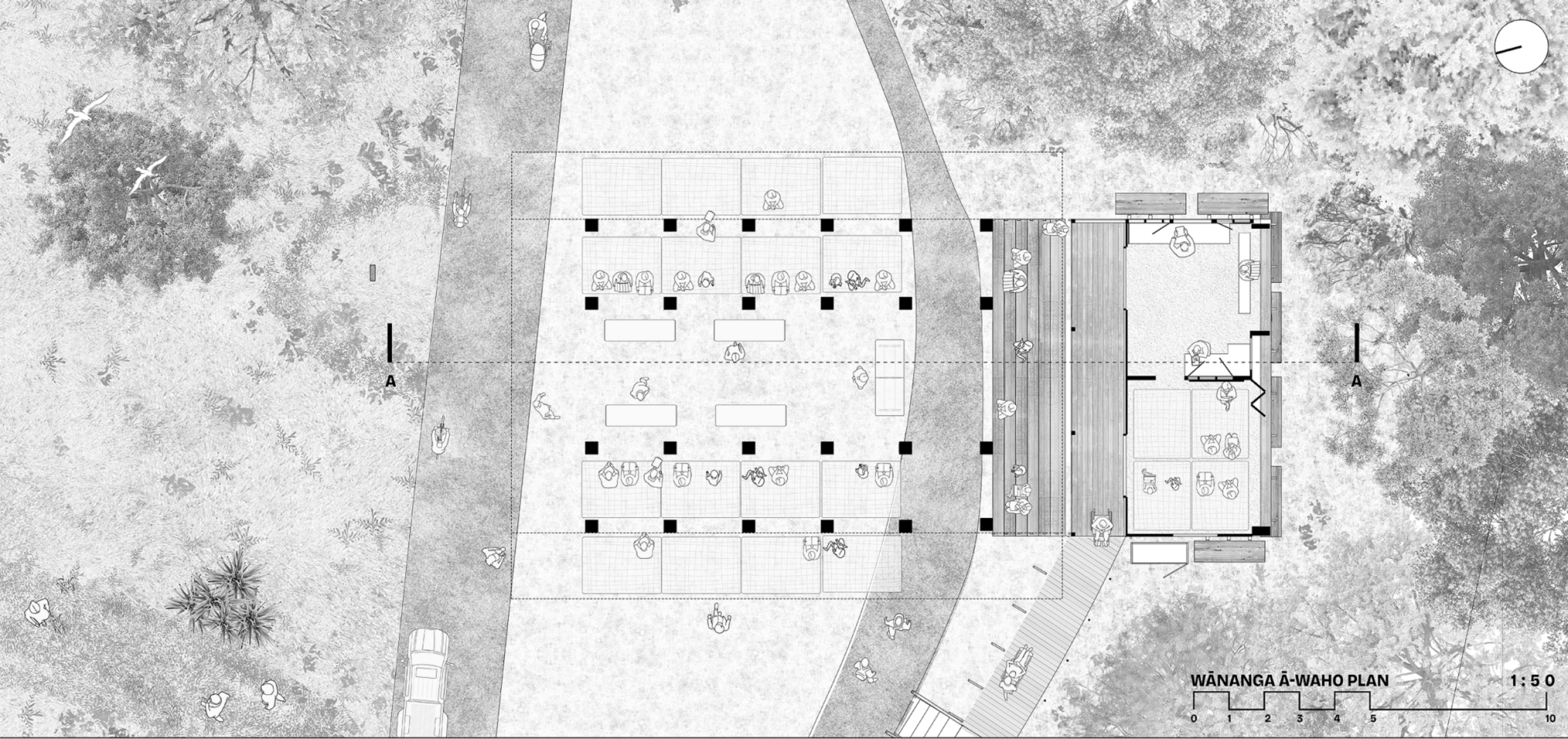
Wananga plan
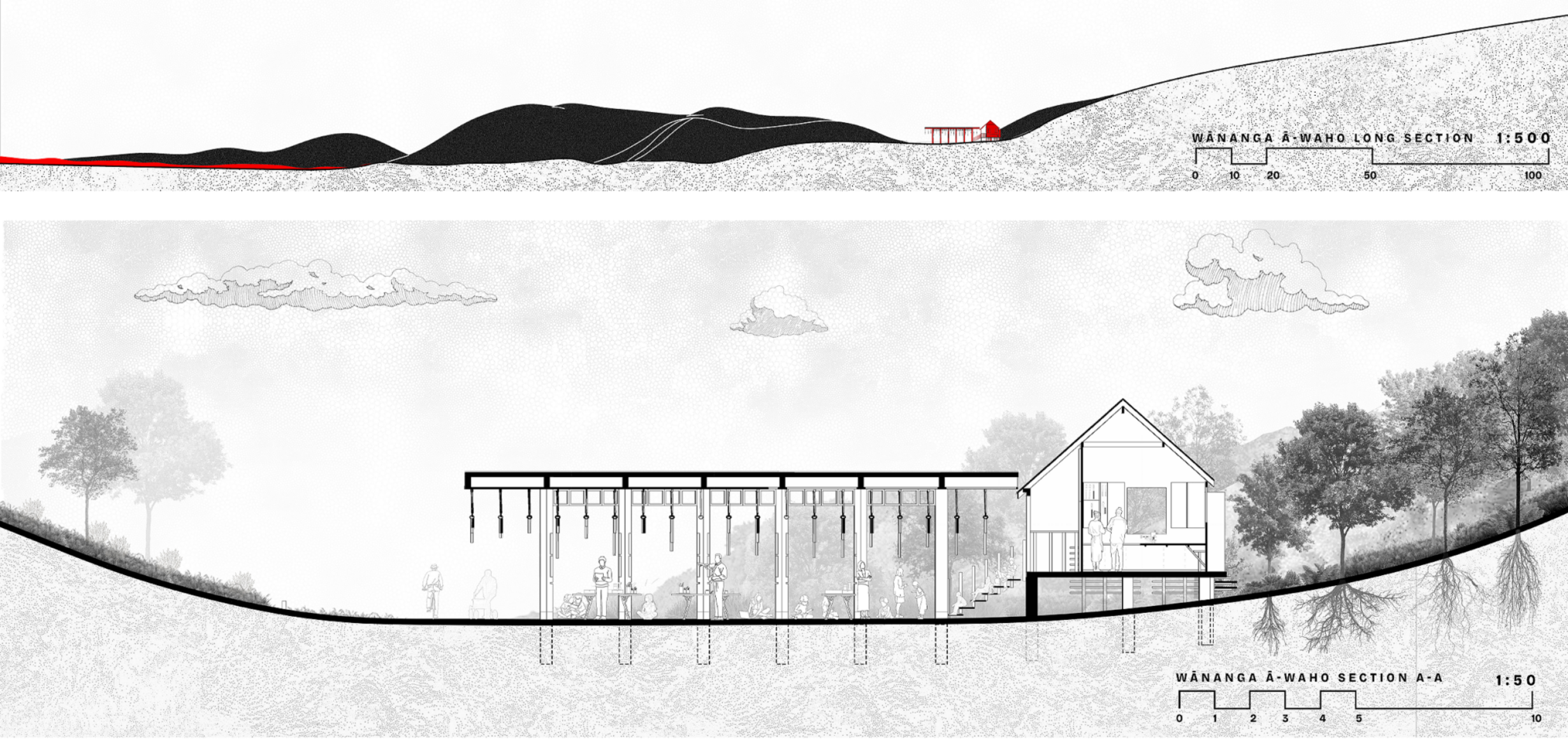
Wananga section long section

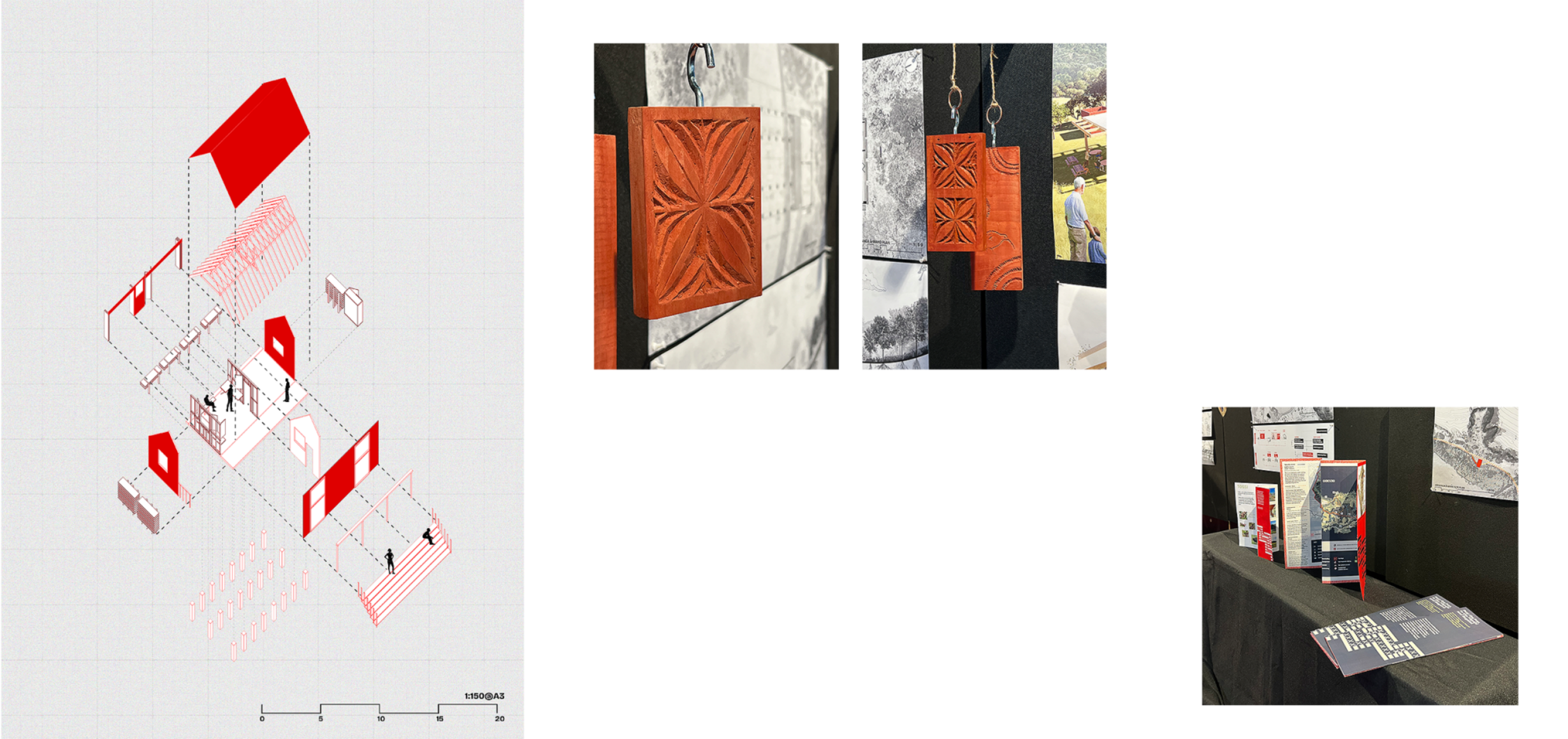
Active learning occurs at the Wānanga ā-waho hut, where participants engage with traditional Māori practices like carving and staining wood with locally sourced red ochre once harvested at Pāhi Pā, before suspending their wooden artworks to sway in the wind. The hut thus becomes a symbolic Pou, marking the beginning of the learning journey and a Tomokanga, a gateway to deeper cultural understanding.     

 
Models imgs exploded
2 renders 1
2 renders 2