Journeys of Remembrance: Atmosphere and Sensory Architecture in Cremation and Columbarium Spaces

IMG 0010

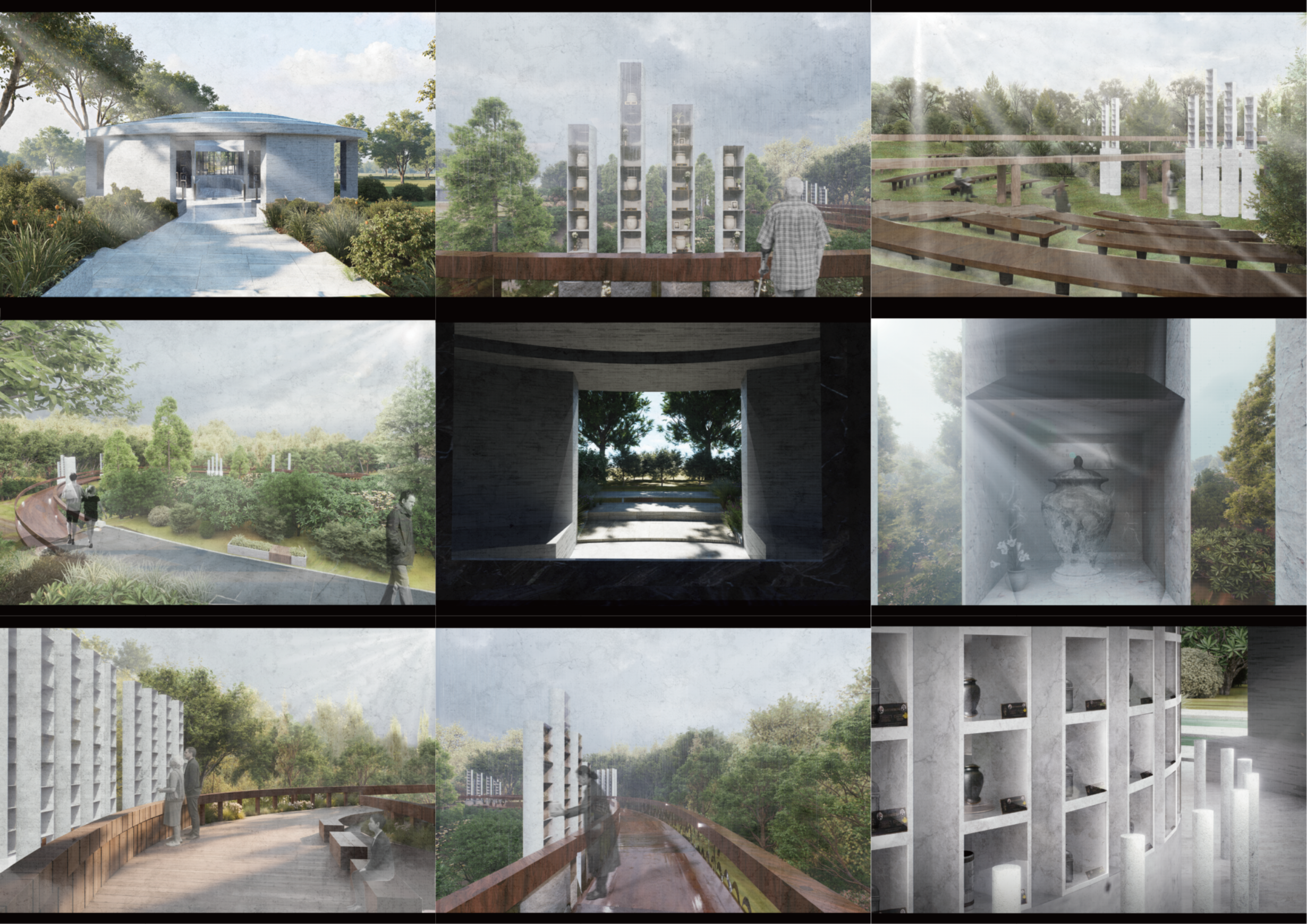
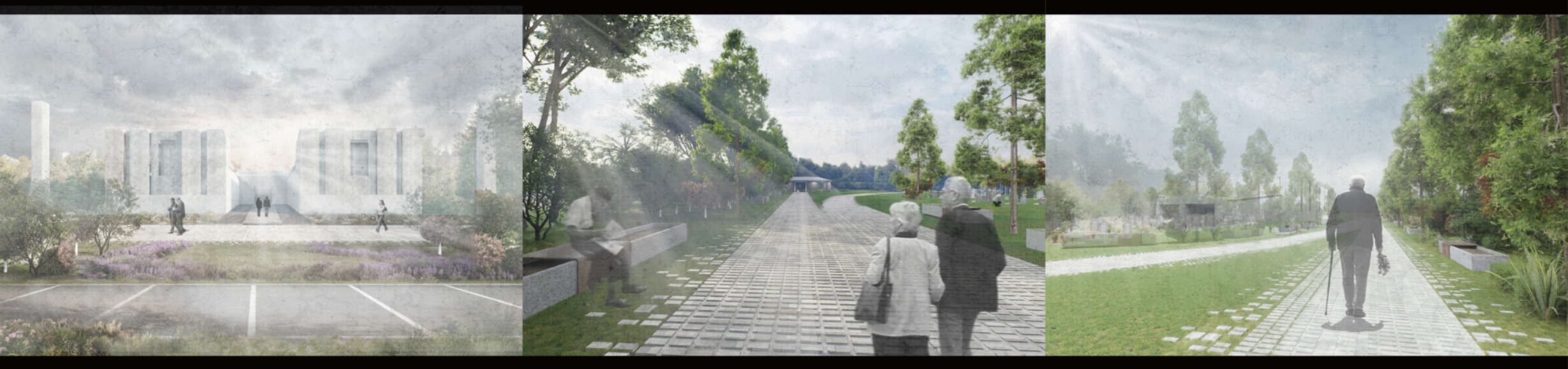
Journey of Remembrance is a close reading of how atmosphere can hold grief with dignity. Sited at Mauku Cemetery, the project links a crematorium, columbarium, and family column by sheltered paths and a stream-edge promenade. Rather than iconography, it works through light, shadow, form and shape, material: roof volumes graze with changing light; floors follow the natural slope to a quiet outlook; concrete, stone, glass textures invite the hand and memory. The sequence after the service moves from intensity to gentleness—read, place, touch, sit, watch—so private rituals can unfold without pressure. Grounded in phenomenology (Juhani Pallasmaa, Peter Zumthor), the work frames time and remembrance to give visitors a calm, personal way to leave—and to return.


This thesis explores how spatial atmosphere can support processes of remembrance, reflection, and emotional release.Atmosphere is the felt quality of a space.
The combination of light, shadow, material texture, form, and shape as they are received by the senses to be conducive to personal memory and shape intimate 
spaces of mourning. What is designed is not a space about death, but a space about remembering someone. The architecture looks to create a series of spaces 
and moments where embodied sensory experience supports the act of remembrance. An architecture that holds space for people to connect with their individual 
mourning, their loss, and the place of remembrance.
 
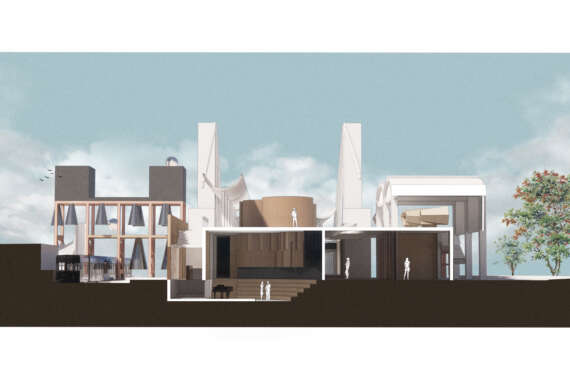
Long section
A journey from the cremation space, through the columbarium, to the remembrance bridge—tracing the emotional passage from farewell to remembrance.
The drawing traces the ceremonial journey through the crematorium and remembrance landscape at Mauku Cemetery. Light shafts mark moments of transition, 
while the slope of the ground carries the body gently from the ritual of cremation to the quiet of remembrance. The drawing reveals how the architecture 
of remembrance unfolds through atmosphere rather than symbol—visualize the spatial rhythm of grief from enclosure to openness, shadow to light, and silence 
to renewal. It expresses my thesis intent: to explore how architectural atmosphere shapes the spatial experience of remembrance, where light, forms, and 
material thresholds hold grief with dignity and allow memory to be felt through journey.
 
Short section 拷贝
Revealing the relationship between built form and terrain, the short section frames the cremation furnace space as a quiet threshold between ritual and landscape.
The crematorium sits above ground, while the furnace and service areas are recessed for acoustic and visual discretion. Visitors move from the entrance walkway
into a dimmed funeral hall where light pierces from above, washing across textured concrete and revealing its depth. The experience transitions from exterior 
to interior, from activity to meditation, from physical presence to spiritual stillness. Shadow becomes not absence but a soft presence—balancing illumination 
and creating a sacred calm. After the service, the reception space opens toward a quiet, green landscape where light softens, the stream’s sound rises, and the 
atmosphere invites decompression beneath trees. From here, the journey continues toward the columbarium, the heart of ongoing remembrance. Its vertical form 
grows over time, with light grazing the niches and seating integrated along edges to encourage touch and pause. Beyond, the remembrance bridge and garden extend 
the path into nature—spaces to walk through, touch, and rediscover—where visitors become part of the memory process. Through this continuous sequence, mourning 
transforms from a fixed ritual into a living, sensory journey of return and renewal.
 
Whole
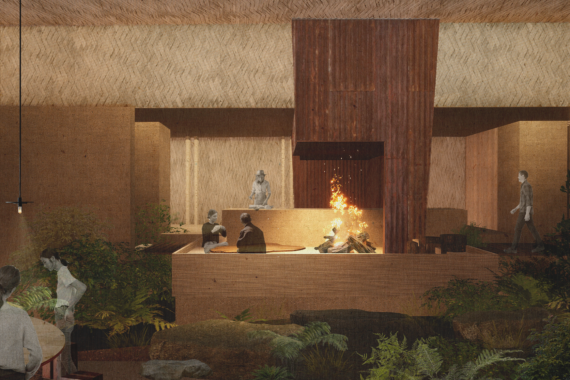
A continuous spatial narrative linking the cremation chapel, waiting lounge, and reception space. Light shifts from focused and sacred to open and diffused, guiding mourners from intensity toward calm release
About modo

Three Journeys of Memory : 

Journey 1 – The Day of Farewell: After the service, the path leads through trees and dappled light toward the columbarium. Light grazes urn walls, seating hugs the edges,
 and the architecture sets a rhythm of calm—place, read, touch, pause.
Journey 2 – The Return: A quieter visit marked by shifting light and gentle sound. Time becomes material, as wind and sun trace across stone. Visitors leave small tokens 
and depart slowly, carried by the same tranquil path.
Journey 3 – The Family Column: Over years, the columns accumulate memories, like rings of a tree. The spaces grow with the families who visit—intimate, tactile, and 
ever-changing, forming a grove of continuity and belonging.
 
6