Corridor of Care: From Passage to Platform
Scarlet Walker

Landscape Cover Photo

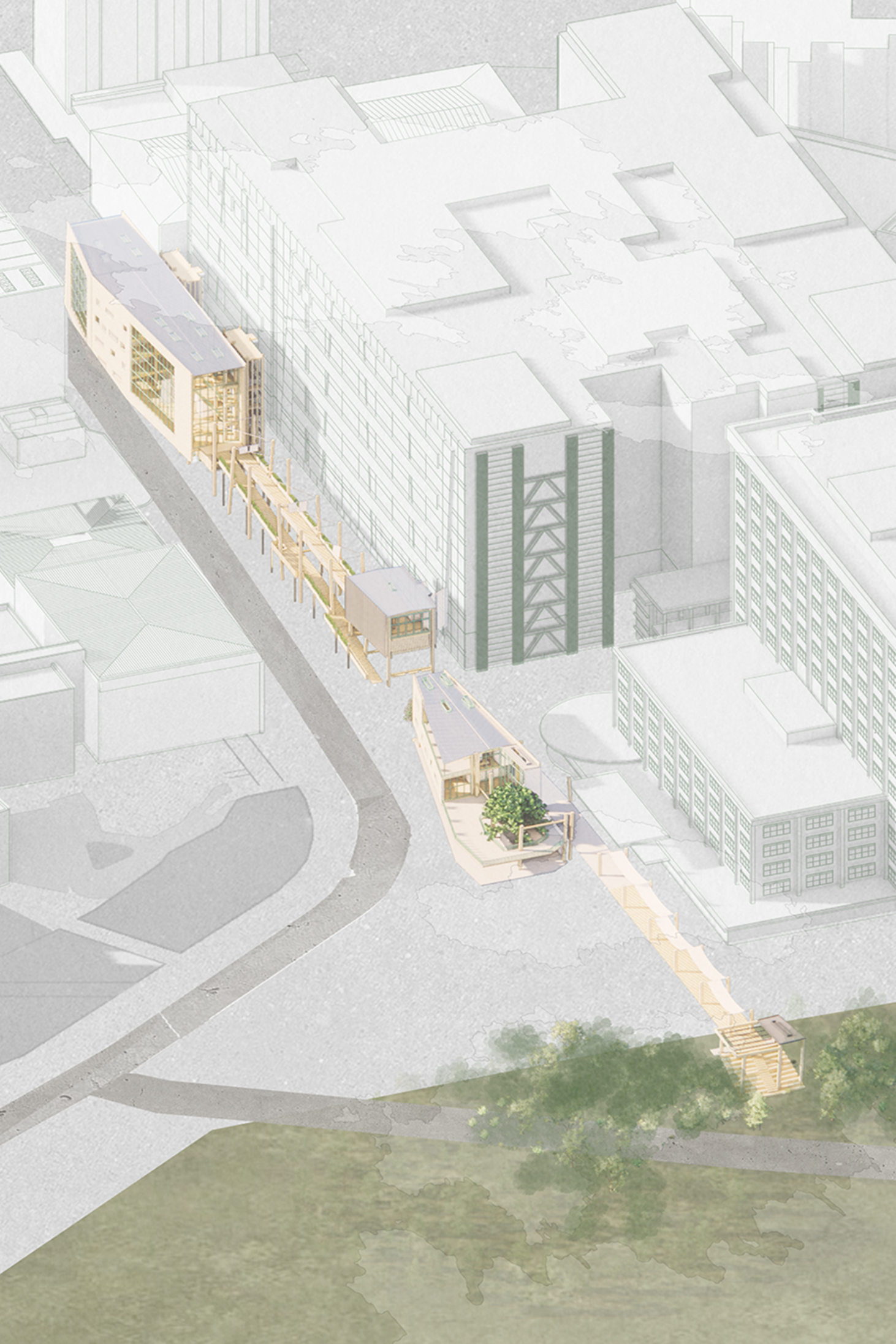
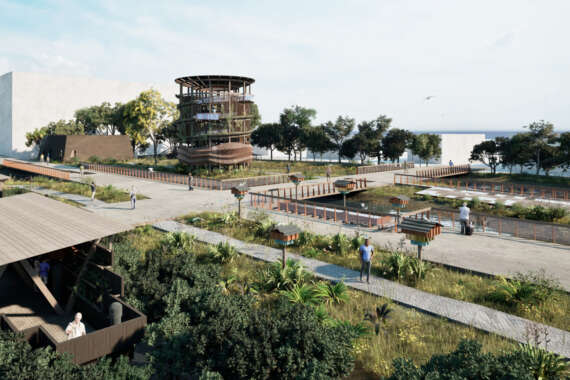
This thesis reconceptualises the hospital corridor by displacing it from its conventional role as an internal, clinically regulated conduit and repositioning it within the broader urban landscape. Rather than viewing the corridor as an enclosed circulatory mechanism embedded within hospital interiors, the project reframes it as a series of transitional urban conditions, the pathways and liminal zones that mediate between the institutional boundary of the hospital and adjacent greenspaces. 

Situated within the context of Aotearoa New Zealand’s ongoing nursing crisis, this expanded notion of the corridor foregrounds architecture’s capacity to operate as an agent of socio-spatial support. In this reframing, spaces typically dismissed as neutral or functionally predetermined are reconceived as sites capable of fostering advocacy and renewed forms of collective care and voice. 

This thesis has been shaped through emotive research, allowing personal narratives and lived experiences to guide the architectural response. It is grounded in meaningful spatial strategies and strengthened by a deep site analysis, using drawings and observations as the primary media to translate emotion into architectural form.
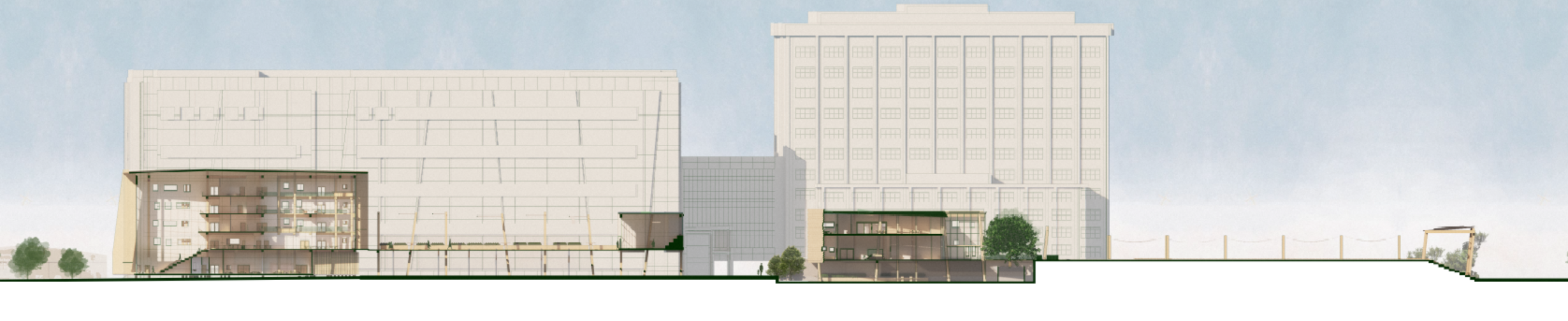
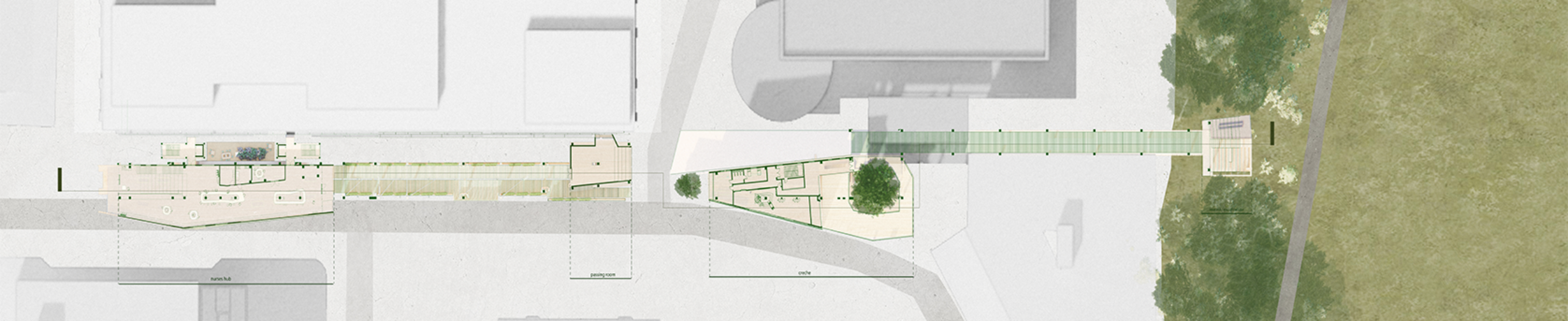
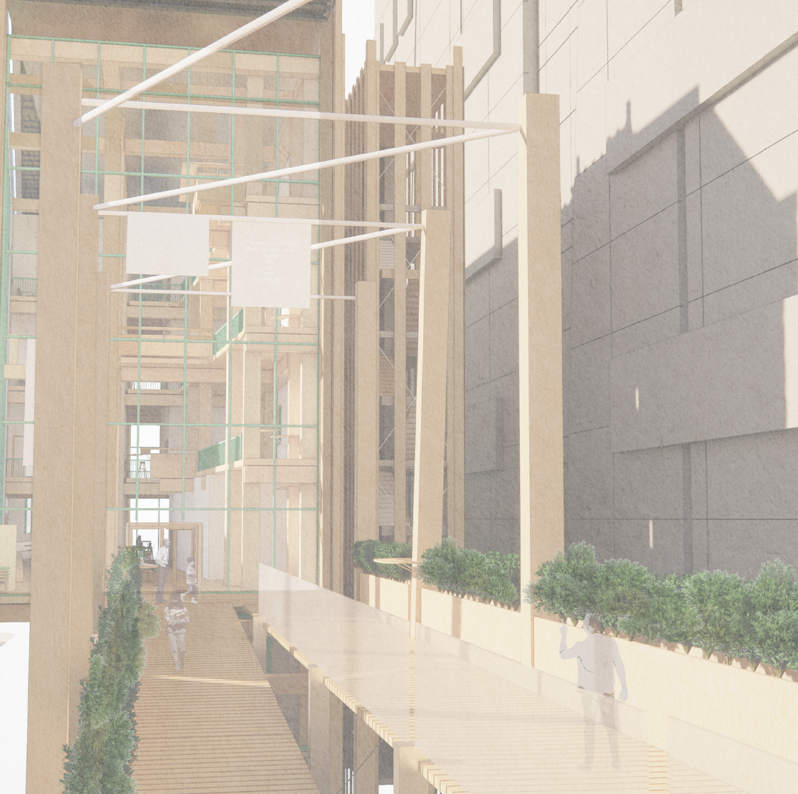
Located at the threshold between Auckland City Hospital and the Auckland Domain, the Grafton precinct provides a critical urban interface through which this thesis engages with the concept of the “urban corridor.” Park Road, running along the hospital’s eastern edge, functions not only as a major infrastructural artery but also as a spatial hinge connecting the institution to one of the city’s largest public greenspaces. 

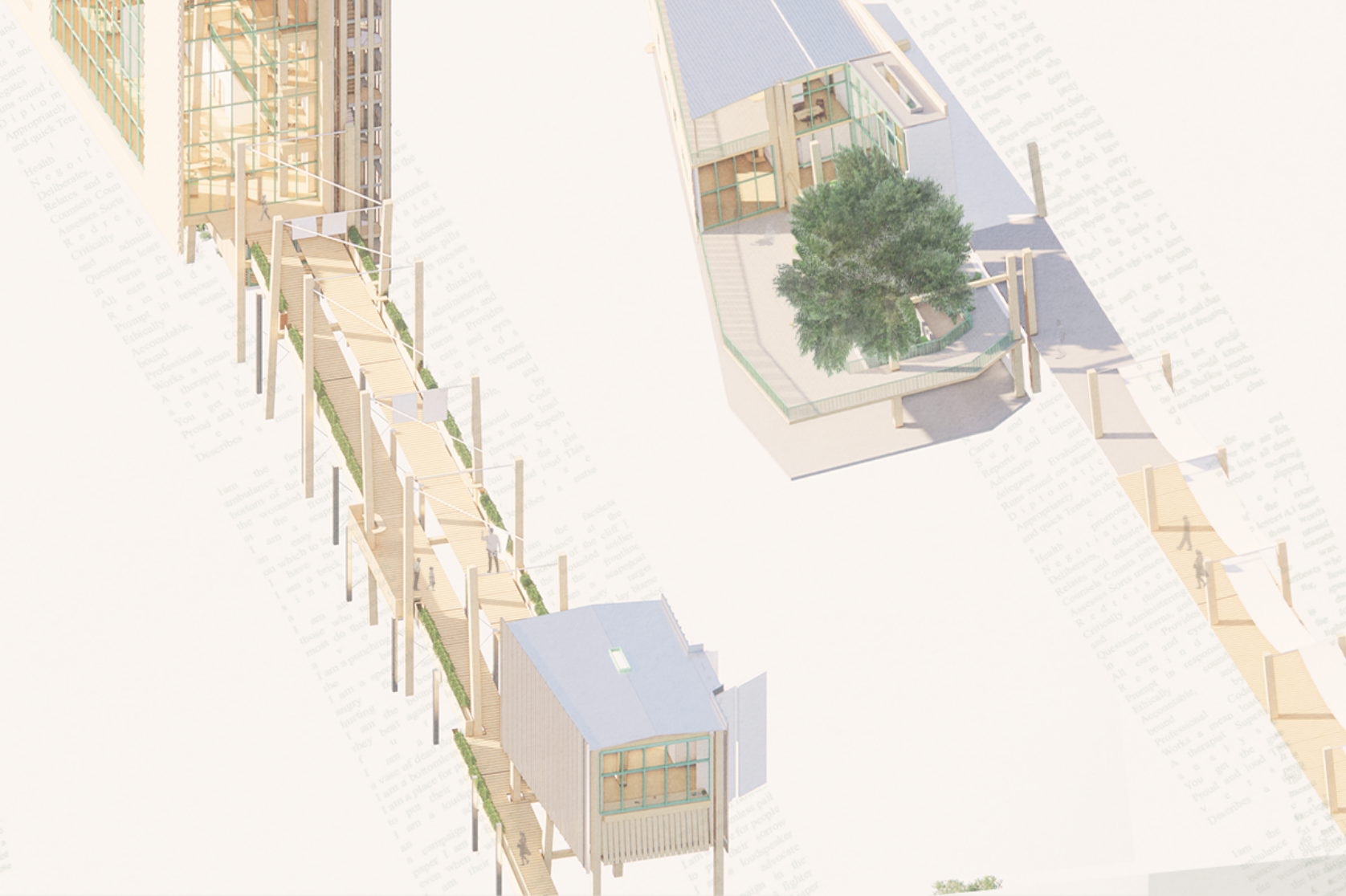
This axial relationship offers a unique opportunity to channel public movement and awareness directly toward the conditions of the nursing crisis. By situating programme elements such as a crèche, a nurses’ hub, and a reading room and multi-purpose space based reflection space along this transitional route, the design strategically embeds points of care, visibility, and advocacy into the everyday flows between the hospital and park.

 
Full Sec
Full Nurses' hub, Reading Room and Creche section along Park Road
Full Plan
Full Nurses' hub, Reading Room and Creche plan

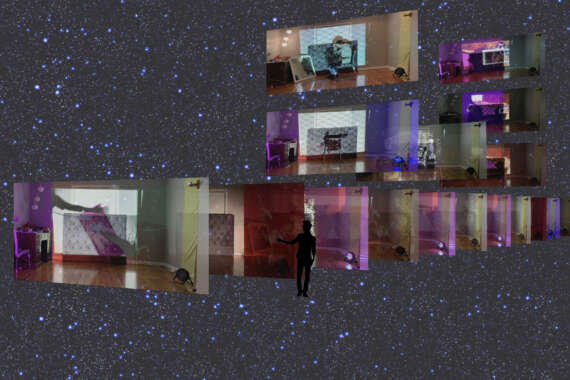
The use of poems written by nurses from across Aotearoa functions as a raw and deeply human layer of research, grounding the design in the effective realities of care work. 

These poetic accounts, ranging from exhaustion to compassion to grief, are employed not as decorative motifs but as generative frameworks that shape the project’s quieter, more intimate spaces. 

 
Renders Hub 1 and 2
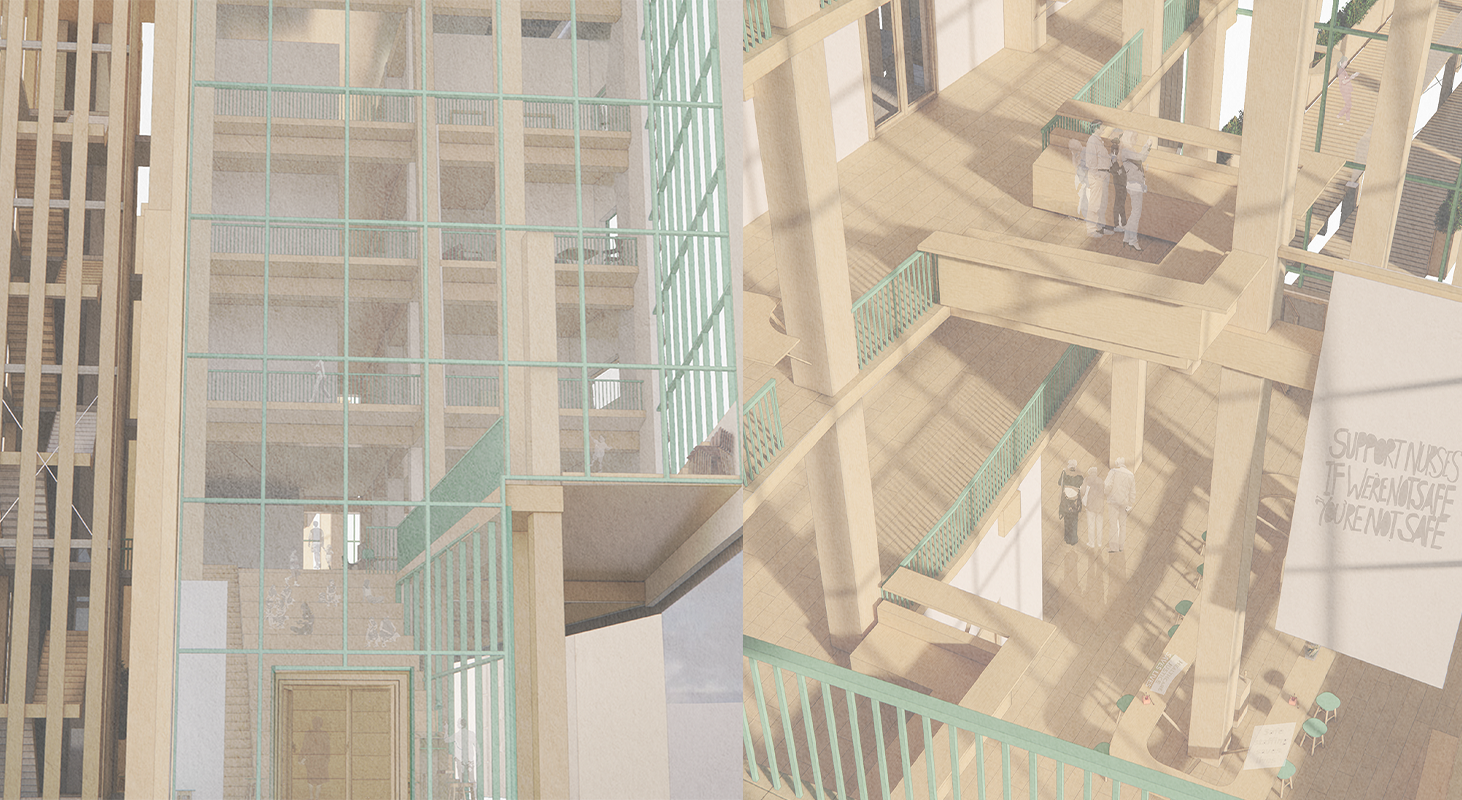
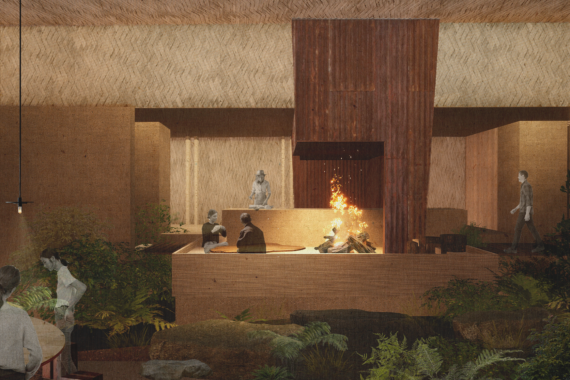
Nurses' Hub entrance and main atrium
Render 6
Nurses' Hub secondary entrance

The Nurses' Hub

At the heart of The Corridor of Care is the Nurses’ Hub, accessed directly from Park Road through a ground-level entrance that invites both openness and connection. This building rises as a vertical extension of care with each level designed to nurture a different facet of wellbeing and advocacy.

 
Landscape Creche
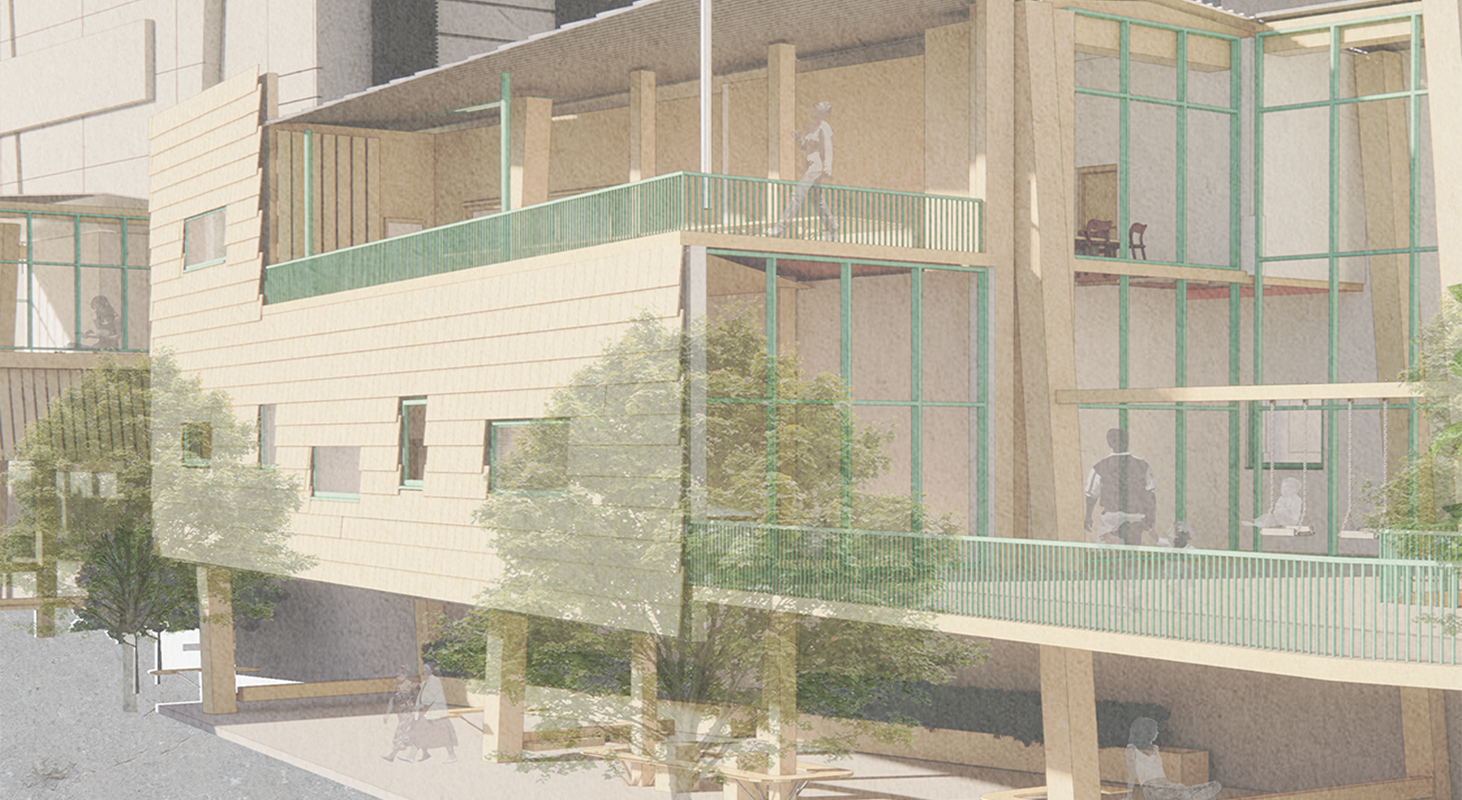
Creche within the Corridor of Care
Render 4
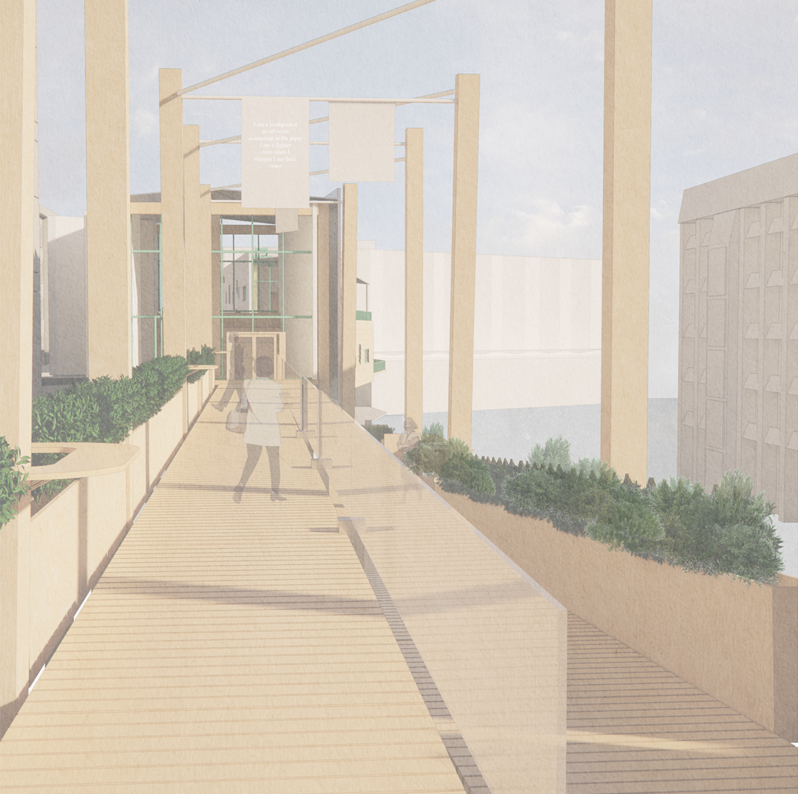
Reading room central in the Corridor of Care

The Reading Room and the Creche

The Corridor of Care also includes a reading room, a space that forms dialogue between the two structures creating a slow space for healthcare workers outside the hospital, where they can pause, reflect, and reconnect with themselves. This space invites stillness and gentle thought, neighbours the Nurses' hub, a space for for quiet creative expression.

The thesis also has a small crèche a space that continues the language of care in a different, softer form. The crèche is designed primarily for the children of nurses, though it also welcomes drop-ins from patients’ families. It offers moments of play, comfort, and presence for those who are often waiting or working within the hospital system.

 
Axo
Full axonometric of 'The Corridor of Care'